Get Full Government Meeting Transcripts, Videos, & Alerts Forever!
Get email alerts on the Corporate Governance topic
No spam. Unsubscribe anytime.
Committee approves bill requiring proxy advisers to disclose basis for recommendations against management
Summary
House Bill 12-73 would require proxy advisers to disclose whether negative voting recommendations are supported by a written financial or value-based analysis; proponents said the change would increase transparency and better protect retirement investors who rely on outsourced proxy advice.
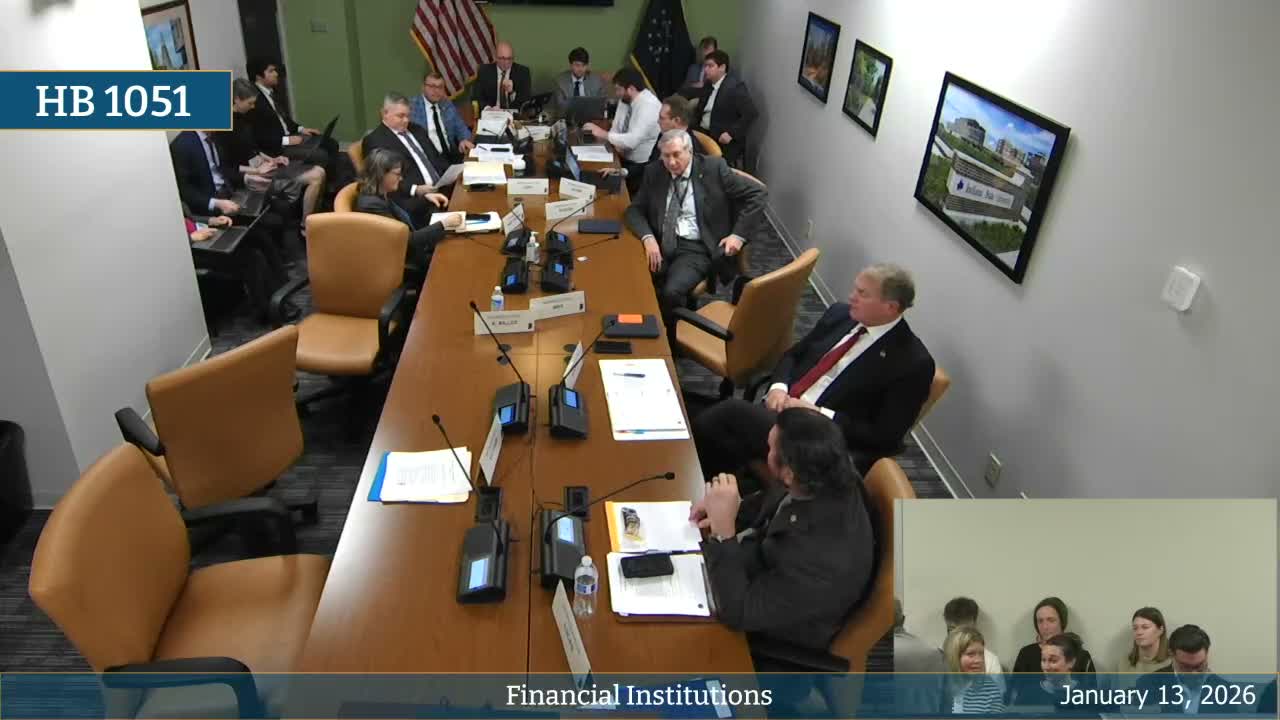
The Financial Institutions Committee voted to advance House Bill 12-73, a transparency measure targeting proxy-advice firms that recommend institutional investors vote on corporate matters. Representative Pierce, sponsor of the bill, described proxy advisers as an industry that provides voting recommendations to asset managers and trustees. He and supporters said the advisers historically promised financial-value analysis but may not uniformly produce it.
Witnesses including Matthew Dumay (Fusion Law) and Sal Nuzzo (Consumers— Defense) told the committee that proxy advisers occupy an outsized role in shareholder voting, that two large firms control the market and that some advisers recently acknowledged they do not always prepare written financial analyses before issuing recommendations. HB 12-73 would require disclosure when an adviser recommends a vote against company management and whether that recommendation is accompanied by a written financial/value analysis; if advisers rely on a blanket policy, they must disclose that policy to clients and to companies whose votes are affected.
Proponents framed the bill as a narrow transparency reform to help fiduciaries and retirement savers evaluate whether following an adviser—s recommendation satisfies fiduciary duties. The committee voted to move the bill out of committee on a unanimous voice/roll call (10-0).
Why it matters: Institutional investors and retirement-plan fiduciaries frequently rely on automated or outsourced proxy advice, and opaque or blanket recommendations can affect corporate governance outcomes and shareholder value. The bill targets transparency rather than banning advice.
What—s next: HB 12-73 will advance to the next legislative stage for further consideration; stakeholders indicated they will monitor drafting for unintended consequences.