Get Full Government Meeting Transcripts, Videos, & Alerts Forever!
Get email alerts on the Public Notice Portal topic
No spam. Unsubscribe anytime.
Committee approves phased state public-notice website after debate over newspapers and broadband access
Summary
Lawmakers advanced an amended House Bill 12-83 to allow state and local units to publish public notices on a state-run website on a phased schedule beginning July 1, 2028; supporters cited cost savings and timeliness, while press groups warned about transparency and reach in areas without internet access.
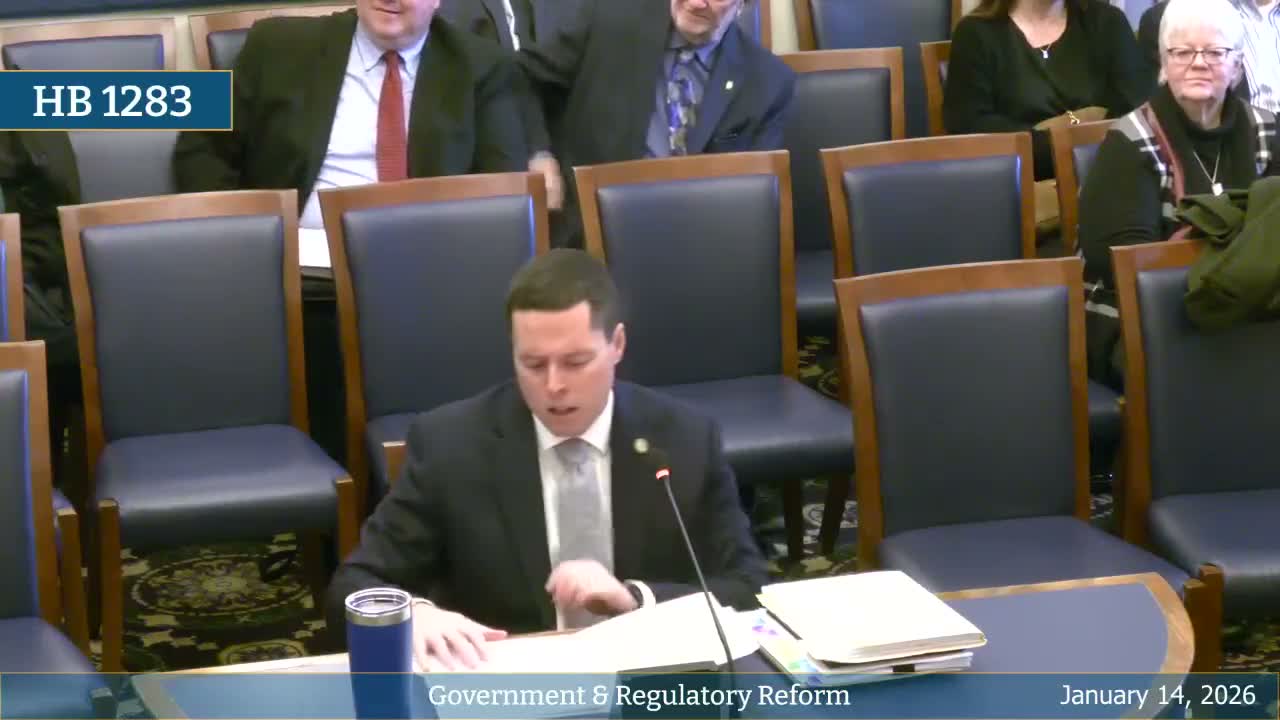
Representative Zimmerman offered an amendment to House Bill 12-83 that would require the Office of Technology to create a state public-notice website and would phase in which political subdivisions could post on it. Zimmerman said the amendment phases access beginning on 07/01/2028 for subdivisions in counties with population not more than 50,000, expands in a second phase on 01/01/2029 for larger counties, and completes the phase-in on 07/01/2029 for remaining units.
The committee heard several hours of testimony. Supporters — including Scott Bowling of the Indiana Association of School Business Officials, Jake German on behalf of county commissioners, and municipal officials — said a state portal would reduce repetitive publishing costs for schools, municipalities and the state and make notices more timely, especially where a local paper publishes weekly. Rhonda Cook of the County Auditors Association told lawmakers the state needs a daily place to publish notices and obtain proof of publication to meet statutory deadlines.
Opponents, led by Steve Wolf of the Hoosier State Press Association and several local newspaper editors, argued the bill risks diluting discoverability and independent verification. Wolf cited a fiscal note showing implementation costs could reach $800,000 and testified that an estimated 25% of Hoosiers lack home internet access; local publishers warned that dispersing notices across multiple platforms could reduce the number of "activators" who find and act on public notices.
Several committee members, including Representative Campbell and Representative Hatcher, raised concerns about rural broadband gaps and the value of third-party newspapers. Zimmerman reiterated that the bill preserves the option to publish in a newspaper, that posting to the state site would be discretionary and free to local units, and said he would work to tighten any definitions (for example to prevent use of social-media pages as the official posting site) if members want that change in later stages.
After extended discussion and a roll-call vote, the committee approved the bill as amended. The transcript records several recorded "no" votes and the chair announcing the bill passed; Representative Zimmerman said the bill is expected to move toward Ways and Means and further floor consideration.