Get Full Government Meeting Transcripts, Videos, & Alerts Forever!
Get email alerts on the Child Placement Foster Care topic
No spam. Unsubscribe anytime.
Committee approves amendment to SB171 to strengthen placement stability for children in foster care
Summary
The Judiciary committee voted 12–0 to pass an amended Senate Bill 171 that adds notification, consent and confidentiality provisions and prevents courts from changing a child's placement when an adoption petitioner has been the child's placement for at least 12 months.
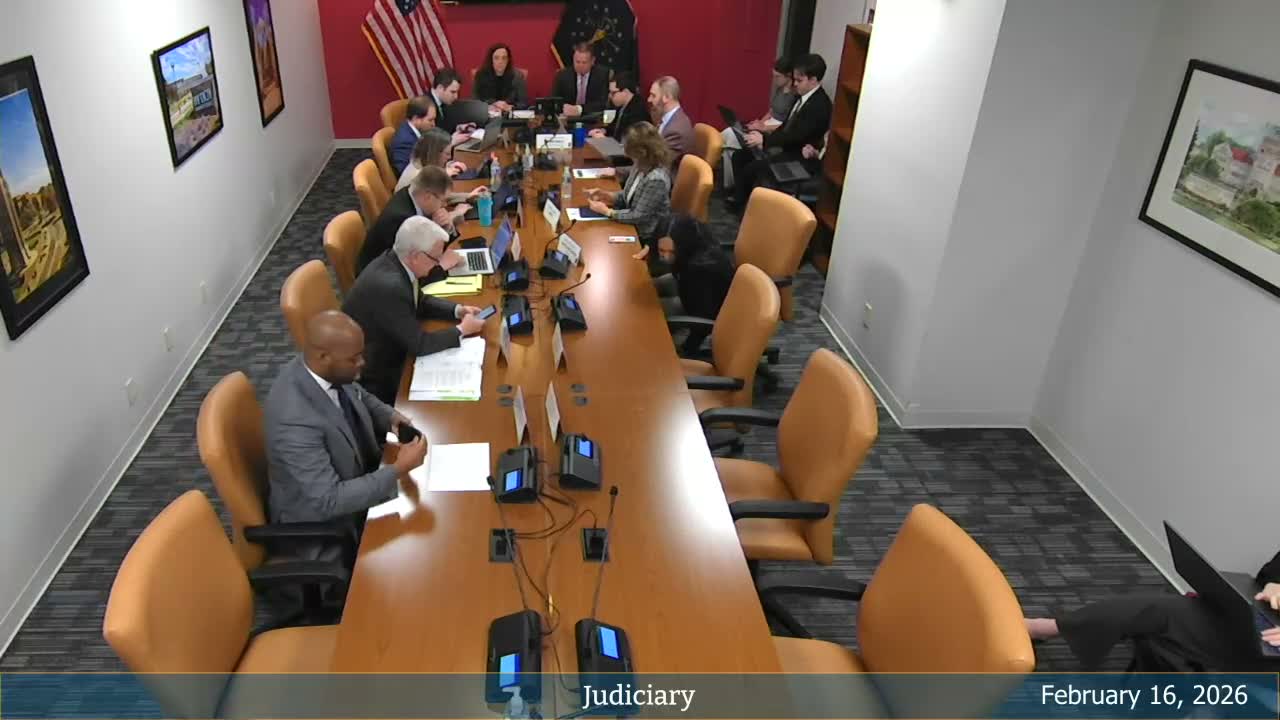
The Judiciary committee on Feb. 16 passed an amended version of Senate Bill 171, approving the measure 12–0 after sponsor testimony and brief committee discussion.
Senator Johnson, who explained Amendment 7 to the committee, said the change removes some temporary-custody language from the original bill and adds judge-requested notification provisions, consent rules and confidentiality safeguards intended to protect the child and the foster family. "If the adoption petitioner has been the child's placement for at least 12 months, the court shall not change that child's placement," Johnson said, describing the 12‑month protection as a guard against arbitrary moves.
Why it matters: supporters said the amendment narrows the bill to better achieve its stated objectives — protecting safety while treating foster parents fairly — and accommodates judicial concerns about how notifications and consents should be handled. The change is aimed at providing more placement stability when an adoption petitioner already serves as the child's current placement.
The amendment and the amended bill drew no recorded opposition at the committee stage. A committee member moved to pass SB171 as amended, the chair called the roll and the measure passed unanimously, 12–0. The committee then moved on to other agenda items.
Supporters said the amendment combines legal safeguards with clearer notification mechanics for judges and case participants; the transcript records comments emphasizing confidentiality and safety exceptions retained from the underlying bill. The committee did not take additional amendments after the roll call.
The bill passed the Judiciary committee 12–0 and will advance in the legislative process for further consideration.