Get Full Government Meeting Transcripts, Videos, & Alerts Forever!
Get email alerts on the Hoa Governance topic
No spam. Unsubscribe anytime.
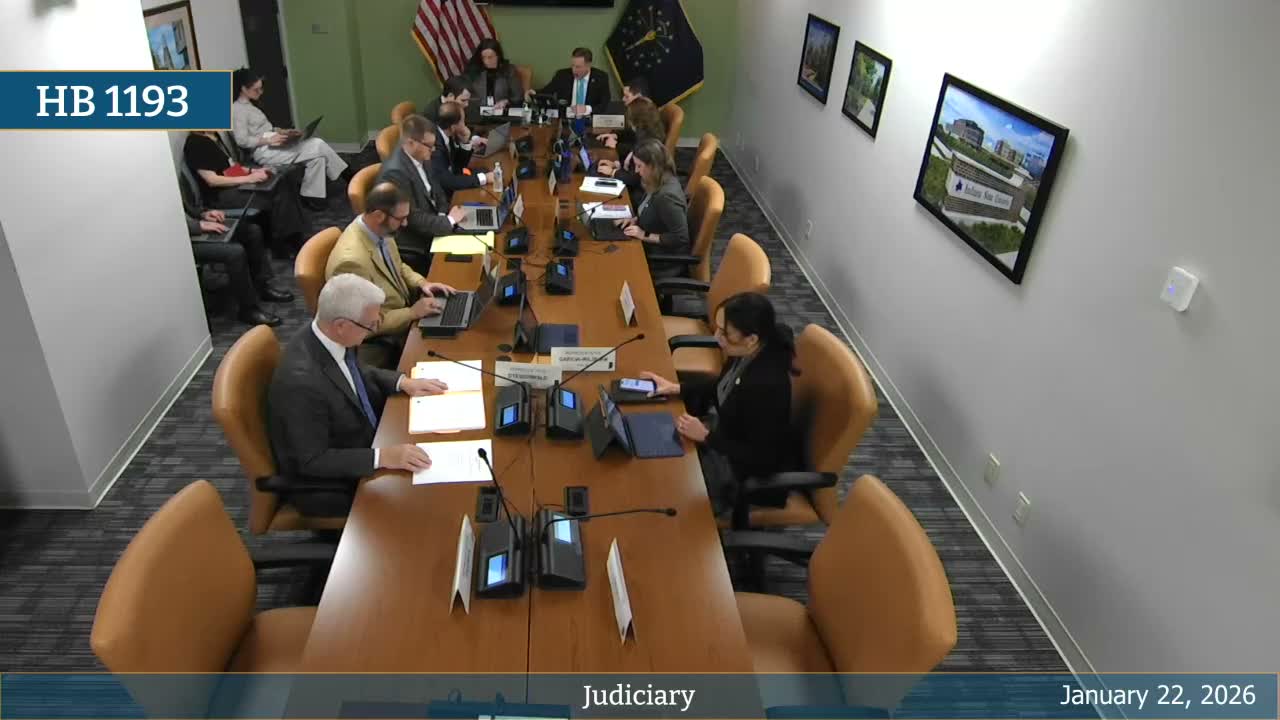
Panel backs HOA transparency bill requiring notice, remote participation and published fines
Summary
The Judiciary Committee advanced HB 11-15 after sponsors and supporters described provisions requiring four days' written notice and agendas for meetings, disclosure of the number of members needed to demand a special meeting, permissive remote participation that counts for quorum and votes, a schedule-of-fines requirement, and a 10‑day due-process window for challenged fines.
The Judiciary Committee voted to advance House Bill 11-15, legislation aimed at increasing transparency and due process for homeowners associations.
Representative Olthoff presented the bill and explained it would require written notice and the meeting agenda to be provided at least four days before board meetings and would require HOAs to publish the number of members needed to demand a special meeting (the speaker noted Indiana code currently sets a 10% baseline but the bill would require the actual number to be disclosed). The bill allows boards to hold meetings remotely and counts remote participants as present for purposes of participation and voting. It also broadens acceptable electronic posting locations for minutes and establishes a schedule-of-fines process with a 10‑day timeline for a member who wishes to request a meeting or show the violation has been cured.
Public testimony came from Francois Mershow, who told the committee he supports the bill and urged clearer notice and limits on board authority, saying some HOA boards “operate in secrecy” and at times act beyond what covenants allow. The committee accepted a chairman's amendment removing language on quorum and an amendment dropping an automatic attorney-fee provision; members then moved to pass the bill as amended and recorded a favorable vote in committee. The chair said the vote would be held open to allow late-arriving members to log their votes.
Next steps: the amended bill was sent forward by the committee and will proceed through the legislative calendar; committee members signaled support for the transparency measures but did not debate fiscal impacts at length during the hearing.