Get Full Government Meeting Transcripts, Videos, & Alerts Forever!
Get email alerts on the Insurance Recoupment And Regulation topic
No spam. Unsubscribe anytime.
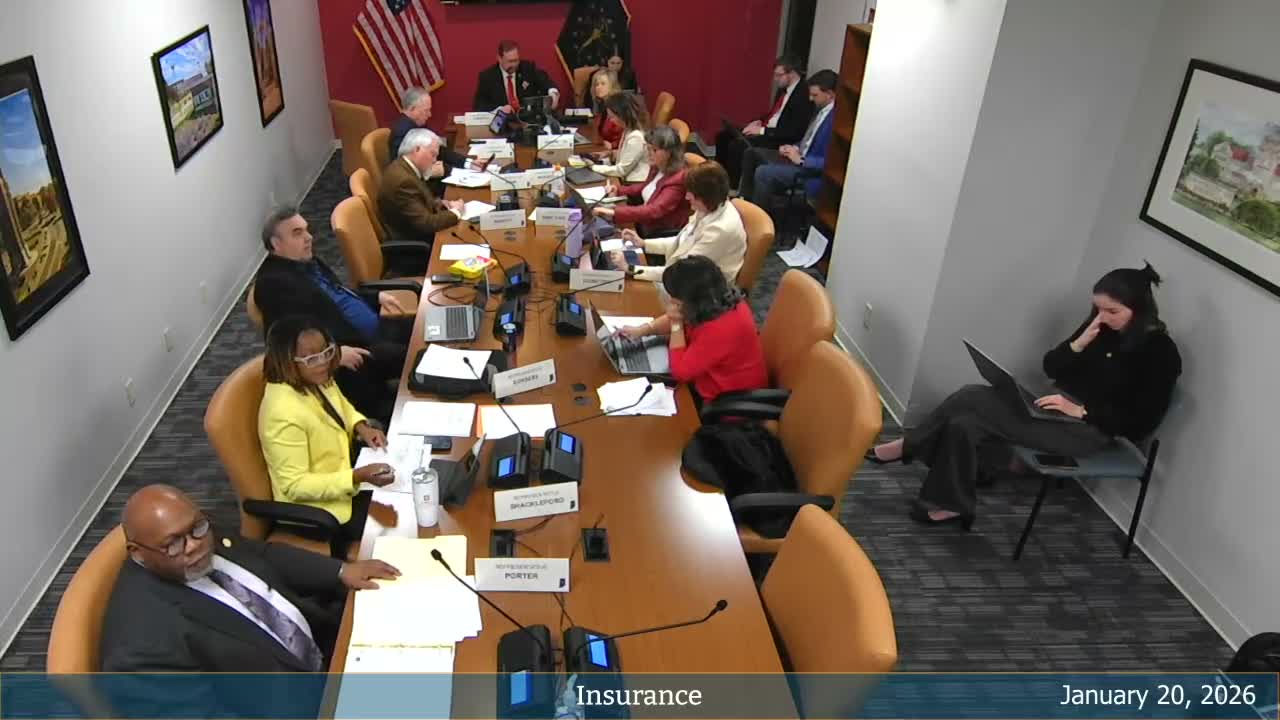
Insurance committee backs broad insurance package after heated debate over claim-recoupment window
Summary
The committee advanced a broad insurance amendment package (HB 12-60) that includes fraud-reporting changes, all-claims database fees, network data access and a contentious reduction in recoupment/audit timelines for fully insured plans from two years to 180 days; the amendment passed the committee 11–1 with insurers urging a one-year compromise for fraud detection.
The House Insurance Committee on Thursday approved an amended insurance package, House Bill 12-60, after extensive debate over a provision that shortens the time insurers may pursue recoupments and audits for fully insured commercial claims.
Representative Lehman introduced the broad amendment that also covers fraud-reporting pathways, an all-claims database fee structure, farm mutual acquisition appeal timelines, guarantee-fund compliance and network-provider list access for insurance producers. Several sections were taken by consent.
Representative McGuire offered a contested amendment to reduce the commercial recoupment and audit window from two years to 180 days for fully insured plans, saying recent increases in program-integrity recoupments are "killing providers," especially small independent and mental-health practices. "In 2024, they paid $40,000 for these program integrity fees. In 2025, between January and November, they paid $500,000," McGuire told the committee, arguing a shorter window would create predictability for providers.
Insurer witnesses including representatives of the Indiana Association of Health Plans said the bill as drafted affects only fully insured plans and urged either implementation with the next plan year or a compromise timeline of one year to preserve investigators' ability to discover fraud. "We would respectfully request that this be effective beginning with the next plan year so that we can build that in, to the Department of Insurance's rate review," Joey Fox of the association said.
Committee members raised both the risk that a shorter window could prompt insurers to audit more aggressively and the providers' testimony that large delayed recoupments have forced some practices to draw on reserves. Members said they would work on clarifying language to preserve fraud investigations while limiting routine late recoupments.
The committee voted to pass the amended bill, 11–1. Sponsors said they will continue negotiating language on fraud exceptions and implementation timing as the bill moves forward.