Get Full Government Meeting Transcripts, Videos, & Alerts Forever!
Get email alerts on the Nutrition Policy topic
No spam. Unsubscribe anytime.
SNAP purchase limits draw sharp retailer and hunger-group pushback in committee hearing
Summary
Representative Ryan Lauer's bill to ban certain 'accessory foods' from SNAP elicited extensive testimony about implementation burdens, UPC and coding problems, and the potential to worsen food-access barriers; the committee did not move the bill after debate.
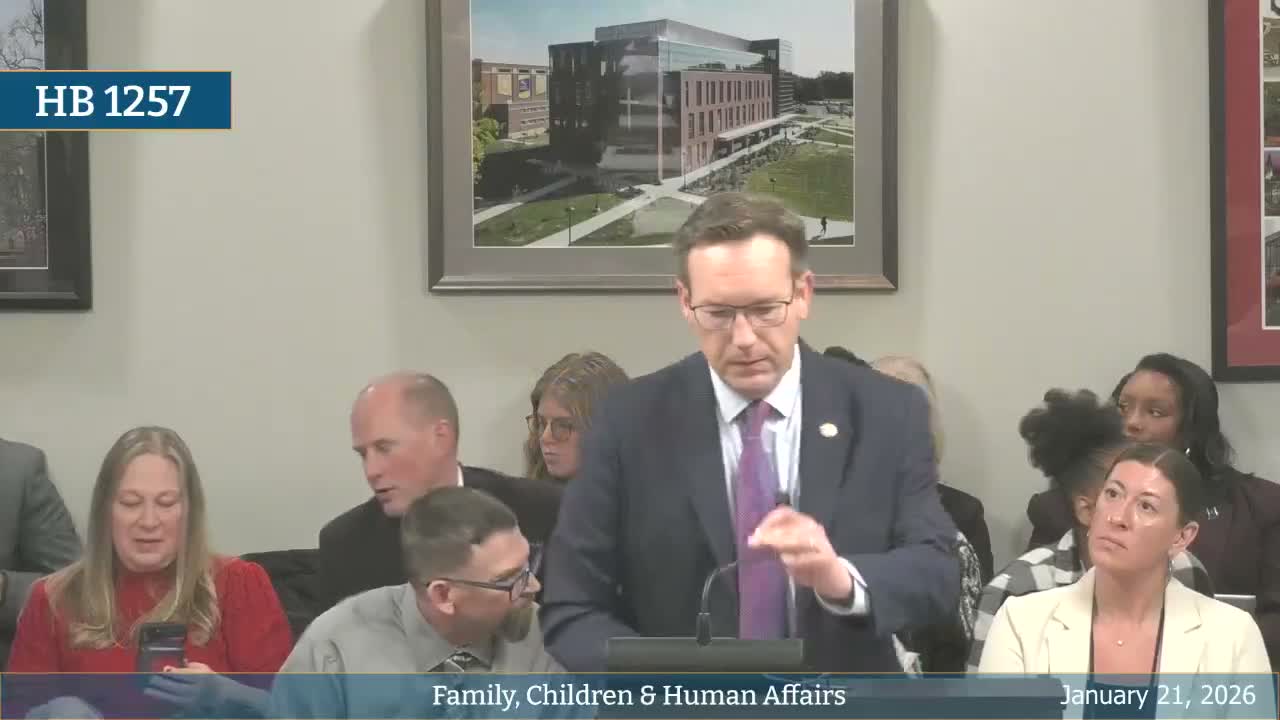
Representative Ryan Lauer presented House Bill 12 63, which would limit SNAP purchases of "accessory foods" defined to include sodas and sugary drinks, many snacks and desserts, while allowing exceptions such as milk, infant formula, juices and (newly included) rotisserie chicken. Lauer said the measure continues the governor's executive-order approach and aims to shift SNAP spending toward staple foods, reduce child obesity and boost purchases of local produce.
The hearing focused less on the policy goal than on practical implementation. Melissa Coxy of the Indiana Retail Council told the committee that trying to implement a statutory ban requires either an item-by-item list or reliable product coding; she said that neither the tax-code approach nor relying solely on GS1 product categories proved reliable during the earlier waiver rollout and urged the state to provide clear lists or tools for retailers. "I really feel like unless we have a list... everyone is certain about what should be excluded and what isn't," she said.
Convenience- and grocery-sector witnesses told the committee the change could require recoding tens of thousands of UPCs, impose heavy IT and compliance costs, and risk some small retailers choosing to stop accepting SNAP. Feeding Indiana's Hungry and the Indy Hunger Network endorsed the bill's nutrition goals but warned of unintended consequences: federal SNAP-Ed funding was reduced recently, restricting choices could increase food insecurity, and evidence tying SNAP to obesity is methodologically limited.
Committee members raised access and equity concerns: members asked how exemptions for medical necessity (for example, people with diabetes) would work, and whether limiting purchases could harm families in food deserts where the nearest fresh-food options are distant. Lauer said the bill includes health-care exceptions and an education campaign, and he emphasized a long implementation window (more than a year) to let retailers adapt.
After extended debate and public testimony, Representative Summers declined to move the bill, saying she wanted to let ongoing implementation under the executive order play out before making statutory changes. The committee took no vote on HB 12 63 during this hearing.