Get Full Government Meeting Transcripts, Videos, & Alerts Forever!
Get email alerts on the Foreign Adversary Policy topic
No spam. Unsubscribe anytime.
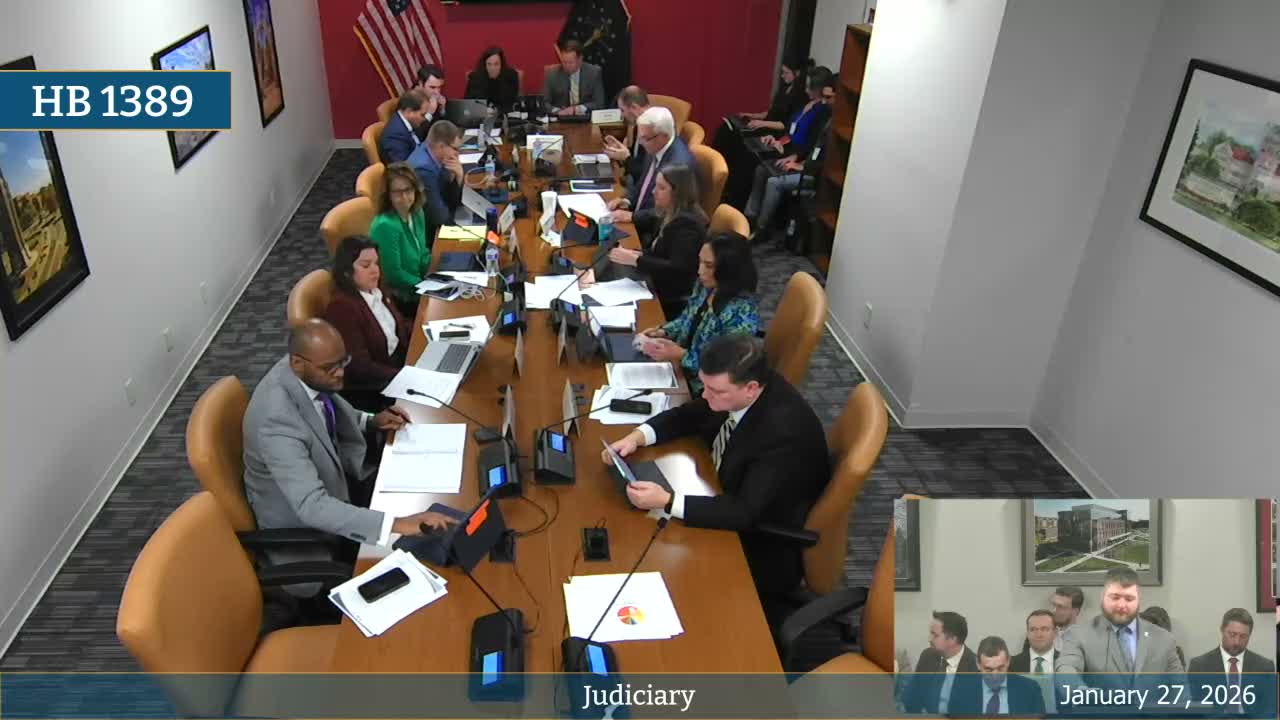
Committee clears bill targeting foreign-adversary risks in procurement, research and land ownership
Summary
House Bill 10-99 would tighten state rules on tech procurement, institute research-security reviews at state institutions, and expand real-property restrictions tied to foreign-adversary actors; committee passed the amended bill 12–0 after testimony from agricultural, industry and national-security advocates and discussion of research exemptions.
Representative Comments introduced House Bill 10-99, a multi-part measure addressing foreign-adversary risk across three areas: state technology procurement, a security-review process for sensitive academic research at state institutions, and expanded restrictions on real-property ownership by designated foreign-adversary actors.
The bill’s author presented amendment number 1 to refine definitions and to adapt the research-security review process; Representative Meltzer offered an amendment adding a mens rea requirement to civil-penalty language. Agribusiness representatives (including a principal representing Syngenta) urged preserving research exemptions and raised concerns about unintended consequences for agricultural R&D and existing federal reviews by CFIUS. National-security advocacy groups and former officials testified in support of the measure as a necessary protection for state infrastructure and research.
Members debated the bill’s scope—particularly whether private higher-education institutions should be included in the research-review provisions and how state lists of foreign adversaries should be maintained. After amendments by consent and votes to adopt technical language, the committee passed HB 10-99 as amended, 12–0.