Get Full Government Meeting Transcripts, Videos, & Alerts Forever!
Get email alerts on the Child Welfare Adoption topic
No spam. Unsubscribe anytime.
Committee hears bill to limit placement moves and accelerate permanency; judges and defenders raise funding and jurisdiction concerns
Summary
Senate Bill 171 would require motions and notice before moving a child who has lived in a foster/relative home 12 months, strengthen kinship recognition and bar placement changes while temporary custody is pending; judges and public defenders cited funding, duplicated litigation and due-process risks at the committee hearing.
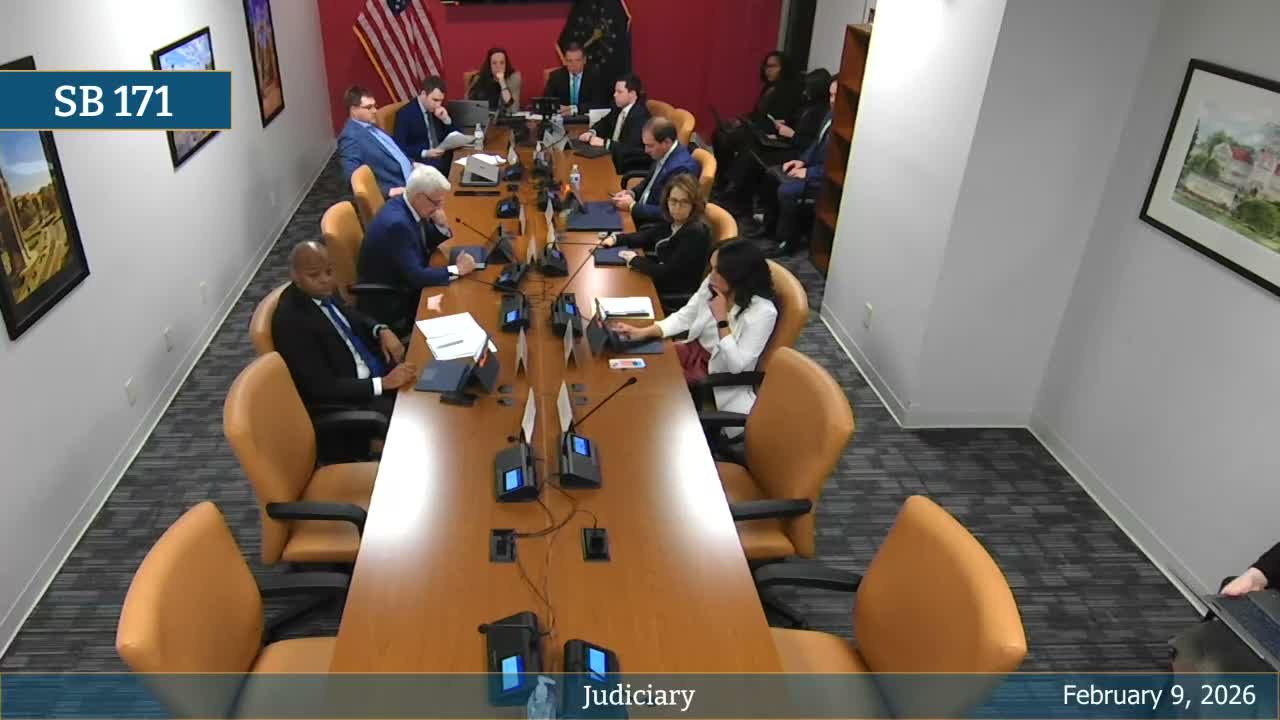
Senate Bill 171, presented to the House Judiciary Committee by Senator Johnson, seeks to reduce placement instability and speed permanency by requiring formal motions and notice before changing the placement of a child who has lived in the same foster or relative home for 12 months, creating presumptive recognition of kinship and restricting placement changes while temporary-custody petitions are pending.
Senator Johnson, a sponsoring lawmaker and a foster parent, said the bill is aimed at ‘‘how we treat our children in need of services’’ and described concurrent‑jurisdiction questions between adoption and CHINS (child-in-need-of-services) courts that the legislation seeks to address.
Judge Stephanie Campbell and other members of the Indiana Judges Association and the Council for Juvenile and Family Court Judges said they do not oppose the bill’s goals but urged changes. "As it is written right now, we must oppose it," Judge Campbell told the committee, citing worries that adoption courts might not make the same funding, permanency and statutory findings required in CHINS cases and that the changes could create duplicated litigation and venue complications.
Public defenders and the Indiana Public Defender Council also flagged due‑process concerns, noting SB171 could allow ex parte temporary‑custody orders in adoption court and create the risk of two courts deciding a child’s fate on overlapping records.
Foster-parent advocates, contested-adoption attorneys and several former foster youth urged the committee to advance the bill. Brad Schwimmer (attorney) said he supports portions of the bill that allow agreements for children over 12 and said the risk of conflicting custody orders is real under the current system. Dionia Dior Valentina (founding executive director, Strength Over Struggle and a former foster youth) said the bill ‘‘begins to correct’’ instability and urged the committee to add youth voice, clearer timelines for placement evaluations and written justifications when kinship or long-term placements are bypassed.
Witnesses described stark personal cases of instability and harm under the status quo. Shelby Waugh, a court‑appointed special advocate, recounted a case she said involved multiple court-ordered visits with an abuser and long-running trauma for the child. Contested-adoption attorney Charles Rice and grant Kirsch and foster-parent advocate Braylon Earrington described instances where contested adoptions were pursued to protect children they said otherwise would have remained at risk.
Committee members and the sponsor said they plan additional amendments and further stakeholder conversations. The committee did not vote on SB171 today and signaled more work was needed on funding, jurisdictional language and procedural safeguards.
What’s next: Sponsors and judicial stakeholders said they will negotiate specific amendments, including potential ‘‘stay-put’’ language and clarified jurisdictional rules, before returning the bill to committee.