Get Full Government Meeting Transcripts, Videos, & Alerts Forever!
Get email alerts on the Pretrial Detention topic
No spam. Unsubscribe anytime.
Committee advances constitutional amendment to let judges deny pretrial release on public-safety grounds
Summary
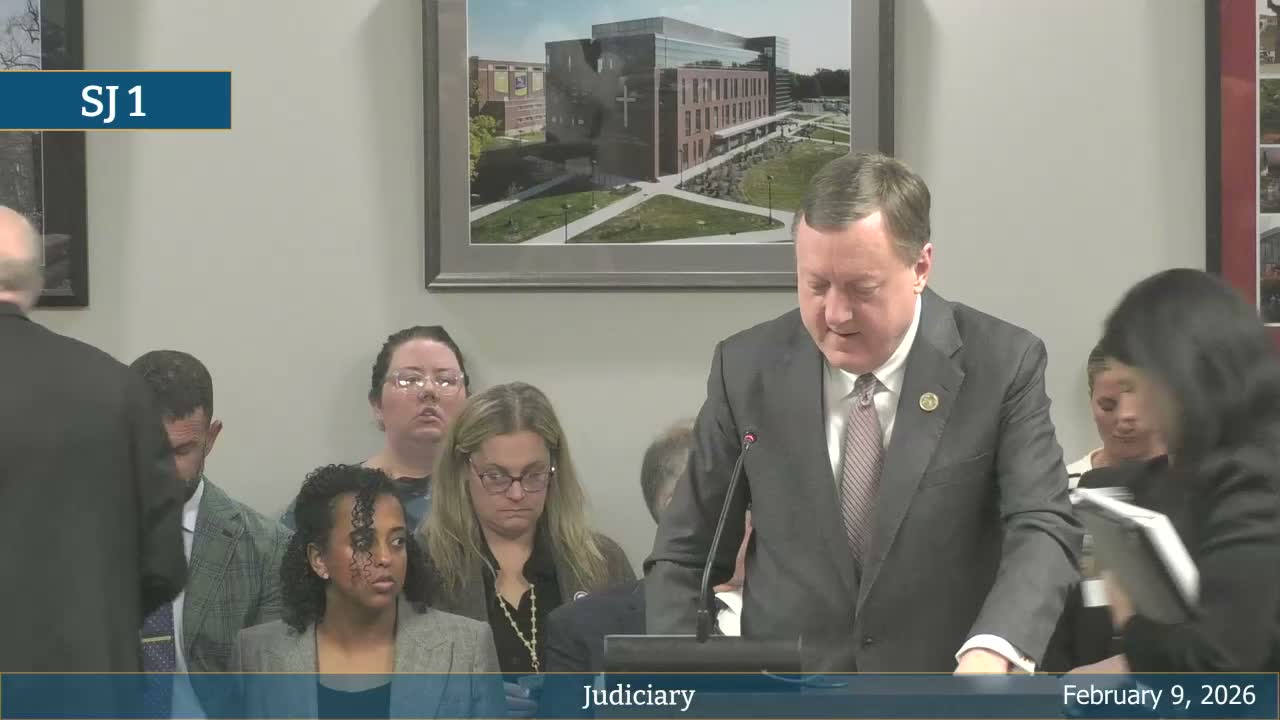
The House Judiciary Committee voted to advance Senate Joint Resolution 1, a constitutional amendment to allow judges to consider public safety when deciding pretrial release; backers said it fills a gap in current law, while defenders and civil-rights groups warned it expands preventative detention and risks disparate impacts.
The House Judiciary Committee advanced a proposed constitutional amendment that would let judges deny pretrial release on public-safety grounds, a change supporters say would give courts clearer authority to hold dangerous defendants before trial.
Senator Sarah Cook, the amendment sponsor, told the committee SJR 1 would permit judges ‘‘to consider public safety in setting bail’’ and is paired with statutory trailer bills and ballot language. She said 31 other jurisdictions already permit similar preventive-detention authority and cited the U.S. Supreme Court’s 1987 decision in U.S. v. Salerno as the controlling precedent for constitutionality.
Opponents, including Zach Stock of the Indiana Public Defender Council, urged rejection. ‘‘Authorizing preventative detention . . . represents a significant shift in Indiana’s pretrial system,’’ Stock told the committee, warning that detention before trial ‘‘threatens the presumption of innocence’’ and could dramatically increase pretrial detention rates and strain jail capacity.
Advocates including Courtney Curtis of the Indiana Prosecuting Attorneys Council argued the amendment complements bail reform by focusing on defendants who pose substantial danger. Curtis said the amendment uses a clear-and-convincing-evidence standard and creates an appealable process for defendants.
Civil-rights advocates struck a cautionary tone. Samantha Bresnahan of the ACLU of Indiana said expanded preventative detention ‘‘would increase the number of Hoosiers jailed before conviction’’ and could undermine defendants’ ability to prepare a defense. Diane Dior Valentina of Strength Over Struggle said discretionary detention ‘‘is shaped by fear and bias’’ and falls disproportionately on Black and brown defendants and poor people.
Committee members heard technical and policy questions about implementation, including notice, evidentiary burden and appellate review. Supporters pointed to companion legislation—Senate Bill 2 and Senate Bill 3—that they said would establish due‑process safeguards and the ballot language voters would see if the amendment passes two consecutive legislatures.
After testimony and discussion, the committee voted to move SJR 1 forward (roll-call tally reported by the clerk). The committee also advanced related ballot-language legislation.
What’s next: Because SJR 1 is a proposed constitutional amendment, it must pass two consecutive legislatures before appearing on the ballot. Supporters said the amendment would then go before voters in the general election.