Get Full Government Meeting Transcripts, Videos, & Alerts Forever!
Get email alerts on the Public Nuisance topic
No spam. Unsubscribe anytime.
Committee advances narrower public-nuisance limits and raises qualified-settlement fee cap
Summary
The House Judiciary Committee voted 9–4 to pass an amended House Bill 14-17 that narrows public-nuisance claims to traditional uses by government entities and raises the qualified settlement-offer (QSO) attorney-fee cap from $5,000 to $100,000; supporters say it restores predictability, opponents warn it could bar individual public-health suits and chill access to courts.
Representative Laymon introduced an amended version of House Bill 14-17 that the committee narrowed on the floor to two primary provisions: a tightened definition and remedy for public nuisance and a raise in the qualified settlement-offer fee cap to $100,000. The author said the amendments are intended to prevent "policy-making through litigation" while preserving municipal authority to abate localized harms.
The bill’s proponents, including David Long of the Indiana Alliance for Tort Reform and Steve Wolf of the Indiana Alliance for Legal Reform, told the committee they are seeing a national trend of what they called "nuclear verdicts" and third-party litigation funding that creates unpredictability for businesses. "The bill simply clarifies that to bring a public nuisance action, there must be an underlying illegal act," Wolf said, arguing that manufacturers should not be sued over criminal activity by third parties.
Opponents, including attorney Scott Faltlis and Bob Johnson of the Indiana Trial Lawyers Association, urged caution. Faltlis argued the narrower definition could bar long-standing public-nuisance claims brought by individuals for public-health harms such as opioid litigation, lead contamination and toxic fires, and raised concerns about retroactivity and limits on compensatory remedies. "If this law were in place, it would limit who you could sue," Faltlis said, warning that individuals harmed by contamination could lose a remedy.
Committee members questioned whether existing statutes (for example, provisions of Indiana Code cited in committee materials) would operate as exceptions and sought assurance that environmental and public-safety actions by local governments would remain available. The author and supporting witnesses repeatedly said the bill preserves municipalities’ abatement powers and environmental remedies while limiting monetary damages and private-party use of public nuisance as a catch-all tort.
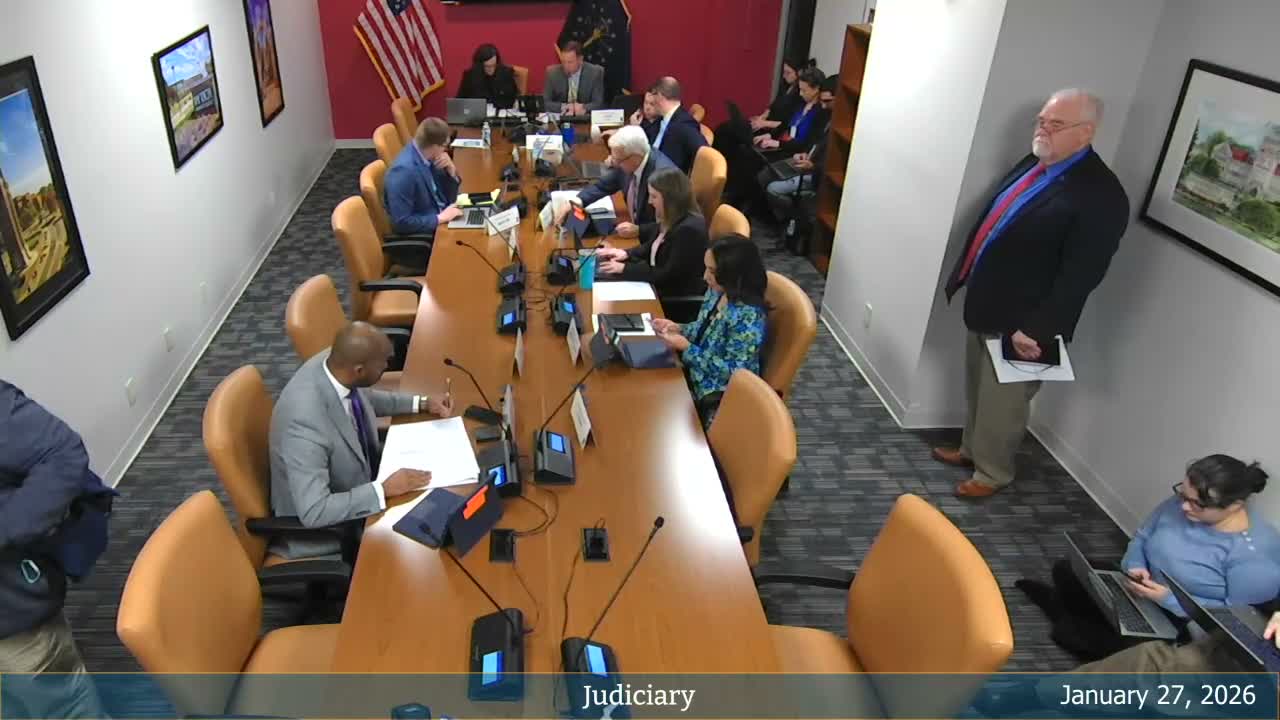
After discussion and floor amendments were agreed, Representative Zimmerman moved to pass HB 14-17 as amended. The roll call recorded nine votes in favor and four opposed; the committee recorded several members giving brief explanations of their votes.
The committee’s action advances the bill to the next stage of the legislative process. Supporters say it will bring predictability for employers and insurers; opponents say it risks leaving individuals without an effective remedy for broad public-harm claims. The author pledged to continue stakeholder work to refine statutory language before later action.