Williston and other districts report early gains from BARR coaching; statewide adoption expands
Loading...
Summary
BARR advocates described evidence‑backed improvements in attendance, academic outcomes and teacher retention; Williston Basin Schools reported district‑wide rollout across nine schools and cited grant support for implementation.
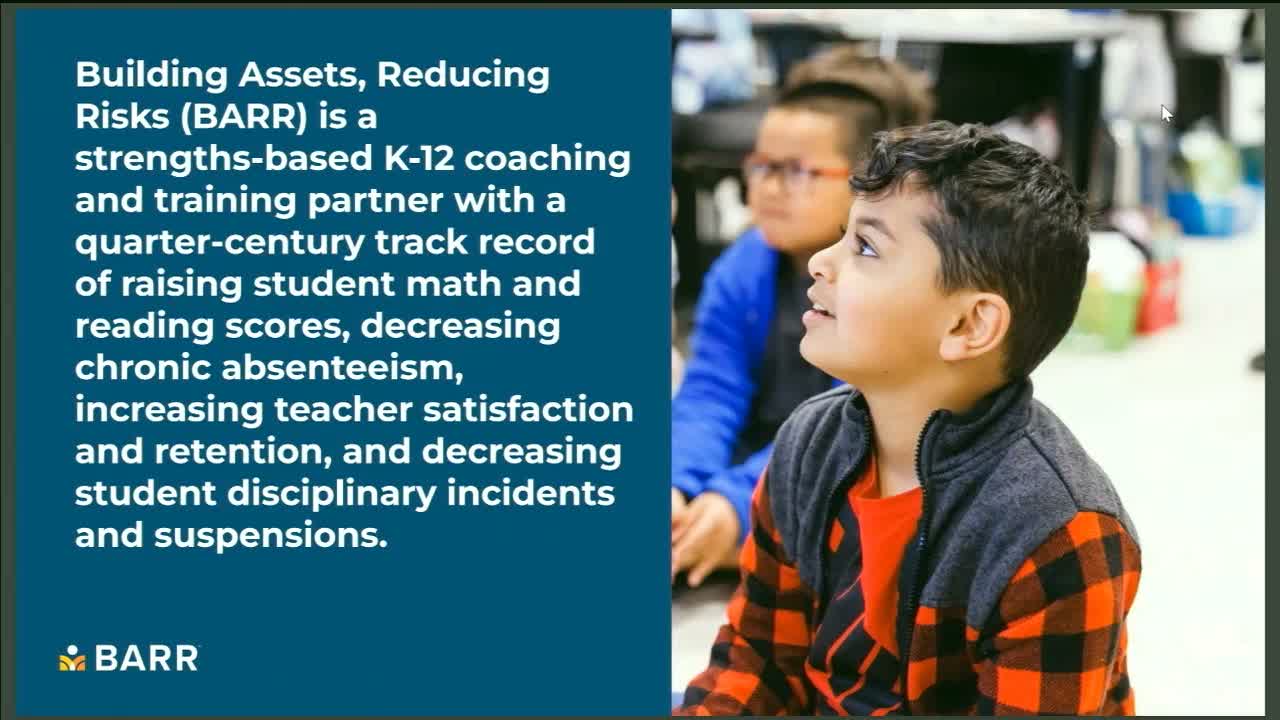
Rob Metz, deputy director of BARR, opened the afternoon session describing BARR’s two core pillars: relationship‑building activities and teacher teams that examine near‑real‑time student data. He summarized a decade‑long randomized evaluation by the American Institutes for Research that identified multiple statistically significant student and teacher outcomes and said BARR is now operating in 47 North Dakota schools.
"When you change the way you work, everything gets better," Metz said, describing weekly relationship activities and tiered team meetings that catch student needs earlier and reduce reliance on late remediation.
Williston Basin School District Superintendent Dr. Jason Germinson described district‑wide adoption across nine schools, saying BARR became a foundation of the district strategic plan and that the program helped unify grade levels around common protocols. Darla Ratzak, the district’s chief academic officer, described the district’s phased funding model — initial subsidized entry followed by full pricing — and said the district obtained ND Climbs grant support to cover expansion costs. She estimated first‑year paid implementation at roughly $80,000 per school under the initial arrangements (district‑specific financing and grant support vary by year).
Williston officials reported measurable operational benefits: teachers collaborate more, chronic absenteeism declined in several schools during the second and third years of implementation, and two participating schools reported marked reductions in teacher turnover after BARR adoption. "It's not a program that comes and goes — it's part of how we work," Germinson said.
Committee members asked about ongoing costs, sustainability after grant periods end, and whether BARR’s schoolwide protocols translate across very different district sizes. Metz said BARR’s model intentionally includes a three‑year handoff period — the organization trains and coaches schools intensively and then exits when local teams can maintain practices.
The hearing then returned to earlier education items after the BARR testimony concluded.