Attorneys describe federal wetland easement disputes and farmers’ appeals to committee
Loading...
Summary
A Pacific Legal Foundation attorney described litigation and administrative appeals over U.S. Fish and Wildlife Service wetland easement maps and a 2024 agency rule adopting a strict 'no‑effect' standard; lawyers said mapping and setback interpretations have materially reduced productive acres for some landowners.
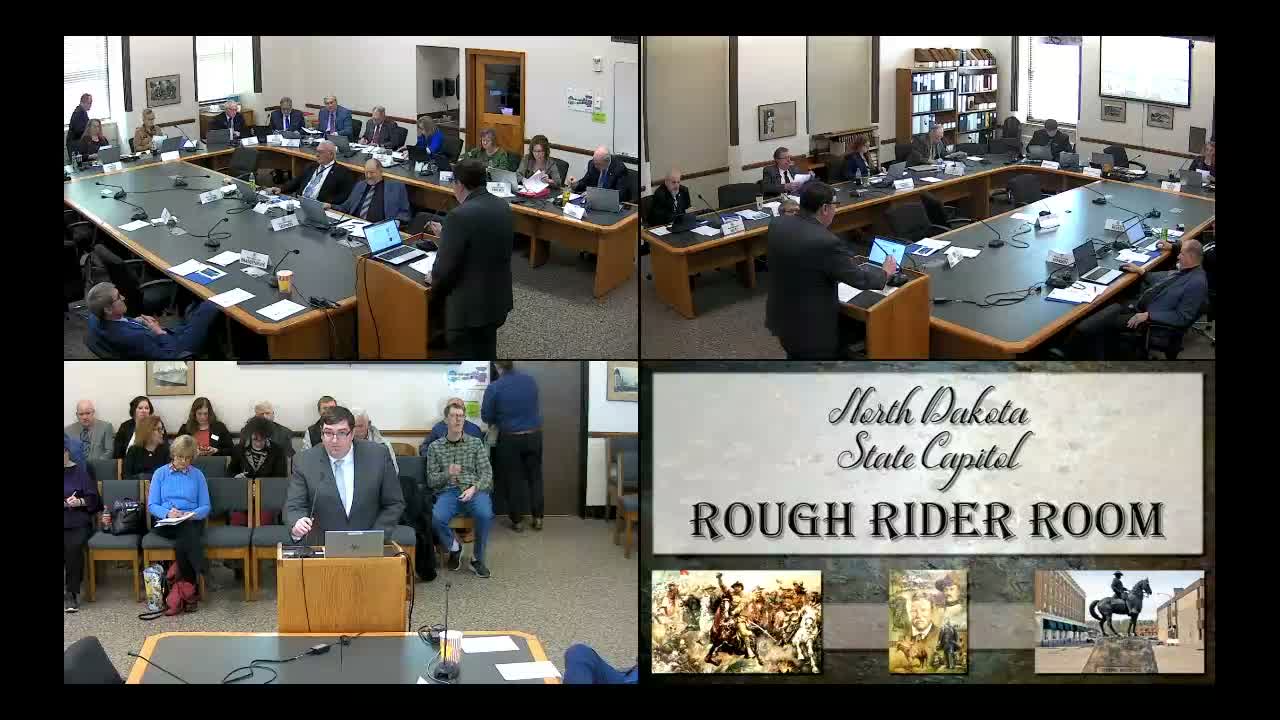
Jeffrey McCoy, senior attorney at the Pacific Legal Foundation, told the Agriculture and Water Management Committee that his organization is litigating and administratively appealing Fish and Wildlife Service wetland easement mapping and the agency’s 2024 rule that purports to treat any effect on mapped easement wetlands as a violation.
McCoy said the federal agency historically purchased wetland easements and did not provide maps on many deeds from the 1960s, and that recent agency maps and rule language have expanded the footprint of regulated wetlands on some parcels. He described cases in which the agency’s mapping reduced the acreage the agency itself appears to have purchased and in which new setback calculations — in some instances expressed as a one‑hundred‑plus‑foot buffer — left landowners with substantial unusable acreages for production. He said the agency’s 2024 regulation disavows previously used engineering equations (such as van Schiefelgard) and instead adopted an unspecified 'best available science' test and a de facto “no effect” enforcement posture.
McCoy discussed two pending matters: litigation challenging the agency rule where standing remains an issue for some plaintiffs, and a pending complaint on behalf of a Lamar County farmer who received a map that his consultants say misstates the wetland footprint that existed when the easement was conveyed. He argued the no‑effect standard is inconsistent with property‑law principles governing easements and with other federal programs (such as NRCS Swampbuster) that allow minimal impacts.
Why it matters: if courts uphold a strict no‑effect interpretation or if maps continue to expand setback footprints, farm operations and drain‑tile installers could face substantially reduced productive acreage. Committee members asked about federal rulemaking, the role of Chevron deference and the prospects for negotiated map revisions.
Next steps: McCoy said litigation and administrative appeals are ongoing and that local landowners have pursued administrative appeals; he and others urged continued legislative attention to federal mapping impacts and to coordination with affected landowners.