Advocates press Appropriations Committee to require annual tracking of student-parents in public higher education
Loading...
Summary
Advocates and sponsors told the Senate Appropriations Committee that SB420 should require Maryland public colleges and universities to collect and report student-parent data annually to the Maryland Higher Education Commission (MHEC), saying a one-time report will not create accountability; opponents raised concerns tying the measure to campus reproductive services.
Advocates urged the Senate Appropriations Committee on Friday to require annual collection and reporting of student-parent data at every public higher education institution in Maryland, arguing that a one-time report will fail to track trends or produce accountability.
Supporters, including Tammy Bartlett of Student Veterans of America and Javette Lizzapone, told the committee that SB420 should cover all public community colleges and four-year institutions and require the Maryland Higher Education Commission to collect the data each year rather than only once. "Ask, track, act," Lizzapone said, summarizing the bill's aim to identify student-parents and use data to inform supports.
The bill’s sponsor and witnesses said the change reflects the lived reality that students’ parental status can change from semester to semester. Bartlett, vice president for government affairs at Student Veterans of America, told the committee that Maryland hosts more than 360,000 veterans and more than 20,000 students using GI Bill benefits, and she argued those parents contribute substantial economic value and need supports to complete degrees: "These investments reach their full potential only when students are supported through completion." She recommended restoring annual reporting language so the General Assembly and campus leaders can track trends.
Several witnesses and the sponsor discussed technical differences between the Senate and House versions of the bill. The Senate amendment, as presented, makes the reporting a one-time submission to the General Assembly and delegates rulemaking to MHEC; witnesses said delegating definitional and collection details to MHEC regulation could be useful, but that the reporting frequency should remain annual.
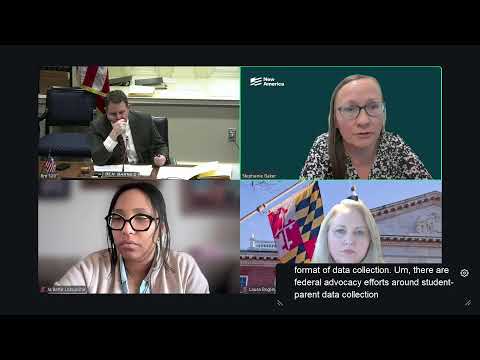
Opponents raised concerns about connections to prior campus reproductive-services requirements. Laura Bogle, executive director of Maryland Right to Life, told the committee she opposed the bill and said it was "inextricably tied" to earlier 2023 legislation about campus coordination of reproductive services; she asked for an amendment to ensure Title IX accommodations for students who choose to continue pregnancies. The chair limited debate on sponsor intent and invited probative comments about the current amendments.
The committee’s questions focused on whether advocates preferred the House or Senate text and on the value of annual reporting versus a one-time report. Witnesses were clear that annual collection captures changes in student status and creates a basis for accountability across institutions. The hearing paused for a two-minute break before the committee moved to a vote on other items.
SB420’s next procedural step, as discussed in the hearing, is whether the committee will conform the Senate text to the House version or retain Senate amendments; witnesses urged restoring annual reporting and broad application to every public higher education institution in Maryland.