Get Full Government Meeting Transcripts, Videos, & Alerts Forever!
Get email alerts on the Urban Trees topic
No spam. Unsubscribe anytime.
Alameda advisory board approves removal of three protected coast live oaks for Tilden Way project
Summary
The Historical Advisory Board approved a staff-recommended certificate allowing the removal of three protected coast live oaks on Tilden Way to accommodate a bike/pedestrian path extension and dog park; Public Works said eight replacement coast live oaks will be planted in 24-inch boxes and CEQA documentation was updated.
The Alameda Historical Advisory Board voted unanimously to approve a certificate of approval allowing the removal of three protected coast live oak trees on the north side of Tilden Way to make way for the Clement Tilden improvement project.
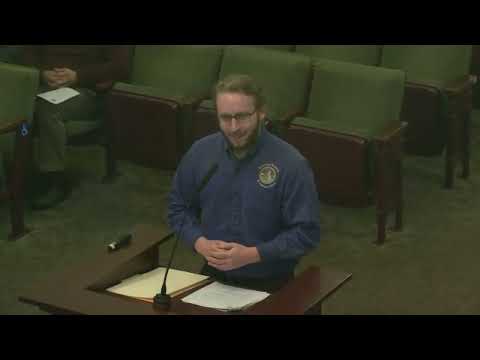
Tristan, a planning staff member who presented the item, told the board the trees are within the footprint of a planned extension of the pedestrian and bicycle path and a new dog park and that the project’s excavation and grading would likely damage the trees’ root zones. He said the Alameda Municipal Code requires a certificate of approval for removal of protected trees and requires replacement planting; an updated CEQA note referencing the 2009 environmental impact report’s state clearinghouse number was added to the staff resolution.
The project team showed aerial images that, staff said, indicate overhead high-voltage power lines run through the three oaks and necessitate repeated trimming, restricting canopy growth. Tristan said alternatives were studied but concluded they would either remove more trees overall or not avoid likely long-term damage to the trees’ root systems. The project’s arborist determined removal was necessary given the planned earthwork and to preserve the greatest amount of overall canopy across the corridor.
Ale Hatefi of the City of Alameda Public Works said the replacement plan has been updated: public works now proposes eight replacement coast live oaks, and those eight will be planted in 24-inch boxes—larger than the municipal-code minimum of 10-gallon stock. Hatefi also noted other supplemental plantings (Engelmann and island live oaks) described in the updated plans.
Board members asked about tree age, relocation and reuse. Tristan said the arborist report did not provide tree ages and he would not speculate; he characterized the trees as fully mature. On reuse, Tristan and Hatefi said no plan for relocating the oaks had been provided and the oaks were not considered suitable for relocation; a limited opportunity to reuse some eucalyptus on site was identified for non-tree features within the project area.
On timing, Hatefi said the contractor had mobilized and that the item would go to the planning board on Monday, December 8, followed by the Alameda City Council on December 16; construction is expected to last about a year before landscape plantings occur. After discussion, a board member moved to adopt the staff resolution (including the updated CEQA language) and the motion was seconded. The board voted to approve the certificate of approval by unanimous vote.
The board had no further communications and the meeting adjourned.