Get Full Government Meeting Transcripts, Videos, & Alerts Forever!
Get email alerts on the Utility Rates topic
No spam. Unsubscribe anytime.
Council hears Raftelis study projecting about $58.83 monthly average utility increase over six years
Summary
A Raftelis presentation estimated an average Rock Springs household could pay about $58.83 more per month over the next six years for water and sewer, prompting councilors to press for clearer year-by-year figures and for modeling of conservation-minded rate structures.
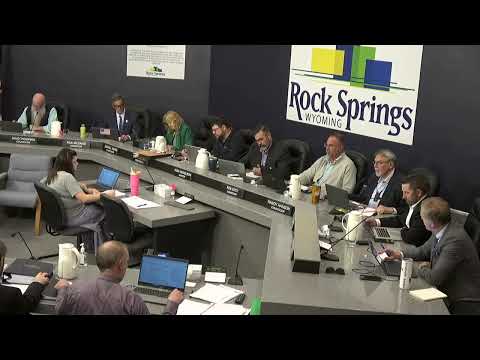
The Rock Springs City Council heard a remote presentation from consultants at Raftelis on a multi-year utility rate study that projects an average household increase of about $58.83 per month over the next six years.
Councilor Hickerson pressed the consultant for clarity on the calculation, saying, “the people of Rock Springs, on average, are looking at $58.83 a month change with that being 65% increase from today on average,” and asked whether that number reflected year-by-year increases or a summary average. A Raftelis representative confirmed the figures and pointed councilors to the underlying annual projections, which staff said show higher percentage increases in early years and smaller increases later in the plan.
Councilors discussed details of the forecast. One councilor pointed to the model’s page 14, which staff described as showing annual increases of roughly 12% in some years and about 11% in later forecast years. Councilor Zotti asked staff to run an alternative scenario that reverses the block-rate structure—making higher usage pay proportionally more—to see how a conservation-incentive model would change household bills and system revenues.
Mayor Max Mickelson emphasized the council’s priorities: providing safe, clean water and managing costs so that rate increases do not unduly burden residents. Council members asked for further modeling and for staff to meet with individual councilors to clarify the numbers before a decision on any rate ordinance.
What happens next: Staff and Raftelis will continue to refine the models, provide clearer year-over-year numbers, and run the requested conservation-focused rate scenarios. No rate changes were adopted at the meeting.