Get Full Government Meeting Transcripts, Videos, & Alerts Forever!
Get email alerts on the Municipal Finance topic
No spam. Unsubscribe anytime.
San Diego council approves 2% cannabis business tax increase to shore up city revenue
Summary
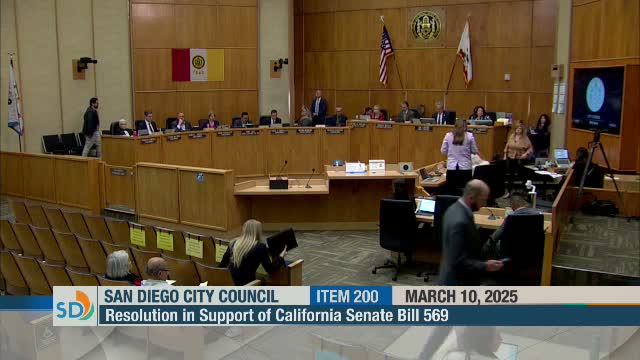
The council voted 8-1 on March 10 to raise the city's cannabis business tax from 8% to 10% (production facilities excluded), with staff estimating the increase could generate roughly $4 million in additional annual revenue if gross receipts hold.
The San Diego City Council voted 8-1 on March 10 to raise the city's gross receipts tax on most cannabis businesses from 8% to 10%, a measure the city treasurer said could bring nearly $4 million in additional revenue in a full year if sales remain steady.
City Treasurer Liz Correa told the council that cannabis gross receipts generated roughly $18.9 million in fiscal 2023 and $17.2 million in fiscal 2024, and that a 2 percentage-point increase (excluding production facilities) "would equate to nearly $4,000,000 in additional revenue for fiscal year '26" if gross receipts remain at current levels. The proposed increase was presented as one of several revenue measures to address an anticipated budget shortfall.
Public comment was sharply divided. Labor and worker advocates asked the council to tie any change to stronger enforcement against unpermitted sellers and protections for cannabis workers; Eric Eseit, a union cannabis worker, said the council should "work with stakeholders such as UFCW to ensure that there is real enforcement on unpermitted cannabis operations in the city." Industry representatives warned the hike would push customers to lower-tax neighboring jurisdictions or the illicit market; Phil Rath, representing legal retailers, said the measure would be "decidedly bad for them and more importantly, bad for consumers who ultimately pay this tax."
Councilmembers discussed benchmarking to other cities, the combined tax burden at the state and local levels, and enforcement of out-of-city sellers. After debate, the council president moved the staff recommendation and Councilmember Campbell seconded. The ordinance passed 8-1; Councilmember Foster cast the lone no vote. Councilmembers asked staff to monitor retail sales and report on impacts promptly, and several asked the administration to pursue parallel enforcement and regulatory steps to support local businesses.