Get Full Government Meeting Transcripts, Videos, & Alerts Forever!
Get email alerts on the Municipal Governance topic
No spam. Unsubscribe anytime.
Dover council adopts ordinance setting waiting period and criteria for naming city property
Summary
The City Council passed a revision to Chapter 29, Section 3, creating a two‑year waiting period and criteria for naming city property; proposed amendments to strike criteria failed, and the measure passed 5–4.
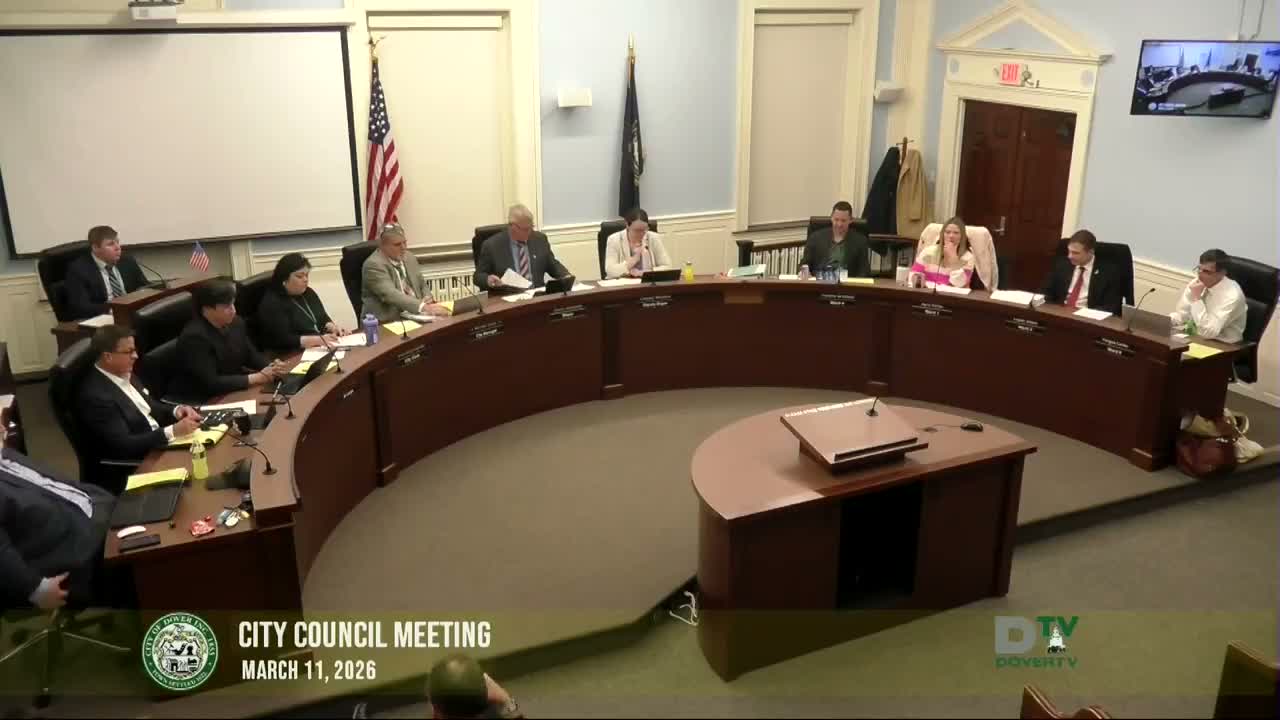
The Dover City Council adopted changes to Chapter 29, Section 3 on March 11, establishing a two‑year waiting period and criteria for naming city property. The ordinance formalizes a process that requires honorees to have lived in Dover and be supported by at least ten community members not related to the honoree; it also permits the council to amend the ordinance or approve exceptions by ordinance vote.
Councilor Cullen introduced the measure as a housekeeping item to create predictable standards and to avoid ad hoc namings driven by short‑term emotions. “This ordinance change establishes a waiting period … and it sets some basic criteria,” Councilor Cullen said when introducing the proposal. Council discussion focused on whether language requiring ten non‑related endorsers and subjective 'significant contributions' should remain in the ordinance.
Two attempts to strike parts of the criteria failed in roll call votes. One proposed amendment to remove the ‘significant contribution’ language did not pass. A separate motion to delete the ‘‘not related to the individual’ requirement in the sponsor’s language also failed, 7–2. Supporters argued the criteria set a reasonable bar for naming permanent public property and left alternative recognition (trees, benches) available for different types of memorials; opponents said the rules could unintentionally exclude worthy honorees who lack broad external networks.
The council approved the ordinance as proposed by a 5–4 vote. The measure will now be part of Dover’s municipal code (Chapter 29, Section 3) and will apply prospectively to future naming requests. Councilors said the ordinance preserves the council’s final discretion, requires a public hearing before adoption of any specific naming, and leaves a mechanism for exceptions if warranted.
The council debate also included discussion about fundraising naming rights and whether large donors could gain an advantage; proponents said the ordinance’s waiting period and public hearing process would provide safeguards and time for scrutiny. The council did not specify a change in funding as a result of the ordinance.
Next steps: the ordinance remains in effect for future naming requests; staff will incorporate the revision into the city code and update public guidance on how to request a naming.