Dover council reallocates downtown TIF proceeds, trims line items to meet FY2027 tax‑cap
Loading...
Summary
At an April 1 workshop, the Dover City Council shifted downtown TIF proceeds to both the general fund and schools and approved dozens of targeted budget adjustments intended to bring FY2027 under the state tax‑cap formula; the council declined a proposed $84,000 milfoil remediation line and left several staffing increases unfunded.
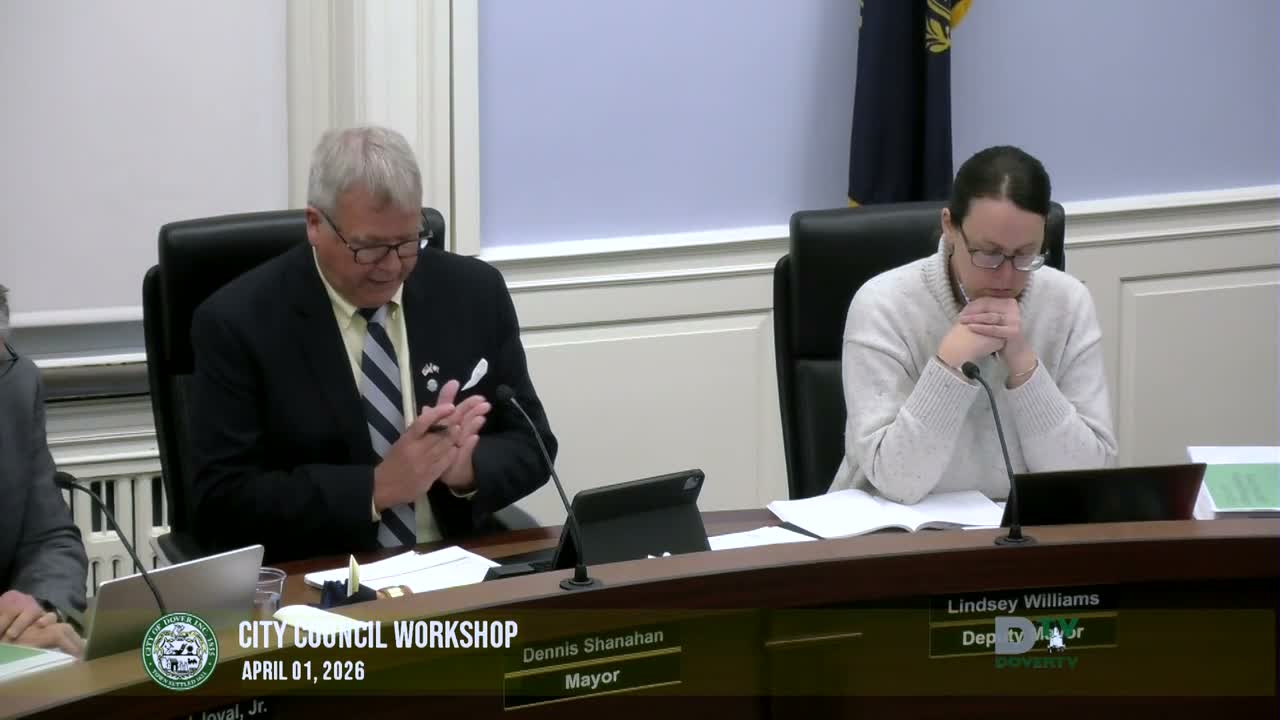
The Dover City Council met April 1 in a workshop to refine the proposed fiscal‑year 2027 budget, and members agreed to reallocate major downtown tax‑increment financing (TIF) proceeds to bring both city and school budgets under the tax‑cap formula.
City Manager: The council began by considering a set of options the city manager described as a “menu” to guide discussion. The council unanimously approved including $4,820 of new facility rental revenue from a recently signed train‑station lease, and accepted a $180 reconciliation to council grant funding.
TIF reallocation and tax‑cap math: Councilors spent the bulk of the meeting debating how much of the downtown TIF to bring back to the general fund and how much to shift to the school district. The city manager said the downtown TIF has performed better than expected and recommended increasing the proposed transfer from about $3.1 million to $3.6 million. After deliberation, the council voted to reduce the downtown TIF transfer to the city by $1,331,515 and to add a $1,831,515 transfer to the school side. The mayor announced the first motion passed with nine affirmative votes; the school transfer passed 8–1. Staff later told the council the adjustments put the overall budget close to or under the tax‑cap formula.
Police equipment and public‑safety lines: Councilors debated reducing purchases of traffic‑calming hardware. Police Chief Dave Trollomizian said the pole‑mounted speed radar signs are effective: “generally speaking, in reducing average speeds between 6 and 8 miles per hour.” Council voted 5–4 to eliminate one of two proposed pole‑mounted radar signs (about $6,000 saved). The council also approved eliminating a firefighter backfill position (roughly $97,944) after staff said the hire had been made to cover a long military deployment.
Capital and maintenance items: Councilors considered several CIP‑level restorations and cuts. They declined a $100,000 increase for paving overlay and rejected restoring a $50,000 traffic‑signal increase; they approved a $50,000 street‑lighting increase (7–2) and later restored a $15,000 line‑item for ball‑field maintenance to level‑fund the prior year’s amount. Council discussion repeatedly emphasized tradeoffs between keeping specific funds in a restricted TIF versus moving funds to the general fund to reduce the property‑tax burden.
Milfoil remediation debated: The council debated adding $84,000 to fund DASH divers for milfoil removal in Willen Pond. The city manager said state specialists from the New Hampshire Department of Environmental Services advised that DASH alone was unlikely to control the infestation and staff reported the vendor the city had considered was not yet certified to work in New Hampshire. The motion to add $84,000 failed (3–6).
Votes and next steps: Over the evening the council approved a number of smaller revenue and expenditure adjustments (alarm permit fee increases, several deferrals in fire department purchases, selected parks and streets allocations) and rejected others. At the end of the workshop staff reported the adjusted budget would be under the tax‑cap formula by roughly $140,161 with a net tax‑rate increase of about 2.7 percent. The council recessed to a special meeting to consider a resolution that will incorporate the workshop consensus.
What councilors said: The city manager repeatedly framed choices as optionality — “you can either do it through the general fund or you can do it with the remaining revenue that’s in the TIF.” A councilor opposing the milfoil allocation said the city should not pay for measures that lacked a clear guarantee of effectiveness; another councilor urged partnering with neighboring towns and state programs before committing city funds.
Where the budget goes from here: Staff will assemble the numerical changes into a resolution for the special meeting. If the council adopts that resolution, the adjustments will be folded into the FY2027 budget; if the resolution fails, the council may need to revisit decisions or fall back to a manager’s default budget.