Get Full Government Meeting Transcripts, Videos, & Alerts Forever!
Get email alerts on the Education topic
No spam. Unsubscribe anytime.
Dover superintendent says schools'' FY27 budget requires tax-levy increase as special-education costs surge
Summary
Superintendent Christine Boston and district finance staff told the Dover City Council the school department's FY27 proposal is over the city's tax cap, driven by a rise in health benefits, collective-bargaining assumptions and a 17% spike in special-education transportation costs. The district seeks limited new positions tied to legal requirements and program stability.
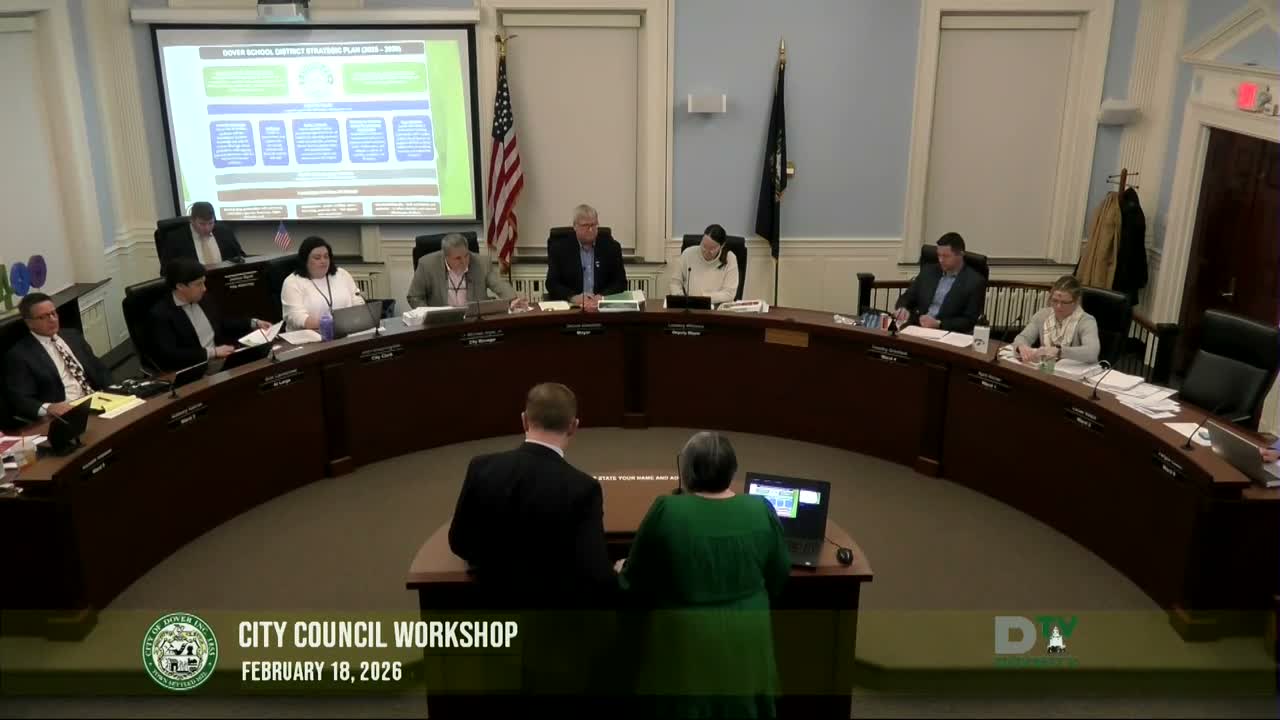
Christine Boston, superintendent of schools for the Dover School District, told the council the district is presenting a budget that preserves its strategic plan while limiting new programs and positions to those “required under changes in the law.”
The finance overview presented by the school district estimated the proposal will push the district’s portion of the levy over the tax cap and, when combined with other factors, would require a tax-levy increase the presenters described in the meeting as "about $5,700,000," according to the district revenue slides.
Why it matters: district leaders said the budget rise is driven by three main categories — personnel costs (wages and benefits), transportation for special-education placements and negotiated contract increases. The school presentation forecasted a 6.77% overall increase in the district budget and identified roughly $1.5 million budgeted for contract and wage increases across bargaining units.
School officials highlighted special education as the single largest pressure. The district reported an approximate 17% increase in special-education in‑ and out‑of‑district transportation costs — a driver they estimated at about $527,000–$528,000 — and explained that placement shortages increasingly force longer, costlier transports.
"If the district is unable to serve a student, even with the support of supplementary aids and services, the child's not getting access to a public education, we're obligated to then search out a placement that can do that for them," the district's special-education administrator said, explaining the legal duty that underpins those costs.
Councilors pressed district staff on enrollment and tuition revenue. The district said some sending districts (Nottingham and Barrington) will graduate large classes and that incoming freshmen counts are lower, creating a projected decrease in tuition revenue that contributes to the bottom-line shortfall.
Staffing requests in the proposed school budget were limited. The district said it is only requesting positions required by newly changed curriculum rules (for example, an additional social-studies teacher at the high school tied to state credit requirements), a full-time school psychologist to replace contract services (estimated to save roughly $20,000), and absorbing an existing adult-education counseling position that previously relied on federal and nonprofit match funding.
Board perspective: Robin Trefavin, chair of the school board, said bringing broad special-education services fully in‑house had been modeled in the past but required multi‑million-dollar startup costs and a multi-year ramp-up before realizing revenue; the board did not include such a startup in this year's budget but said it could present a plan in the future if the council requests it.
What happens next: the school portion will be the subject of a public hearing next Wednesday, after which councilors will continue budget deliberations. Any final adoption of a budget that exceeds the tax cap will require the supermajority the charter prescribes.