Experts warn proposed Rio Grande wall and buoy system could raise flood risks; council expands riverfront advisory scope
Loading...
Summary
An independent analysis presented to the Laredo City Council concluded that proposed bollard walls and a long buoy system could increase flood heights, trap debris and place bridges and riverfront neighborhoods at higher risk; council voted to expand its riverfront advisory committee to review buoy infrastructure and press for data from federal partners.
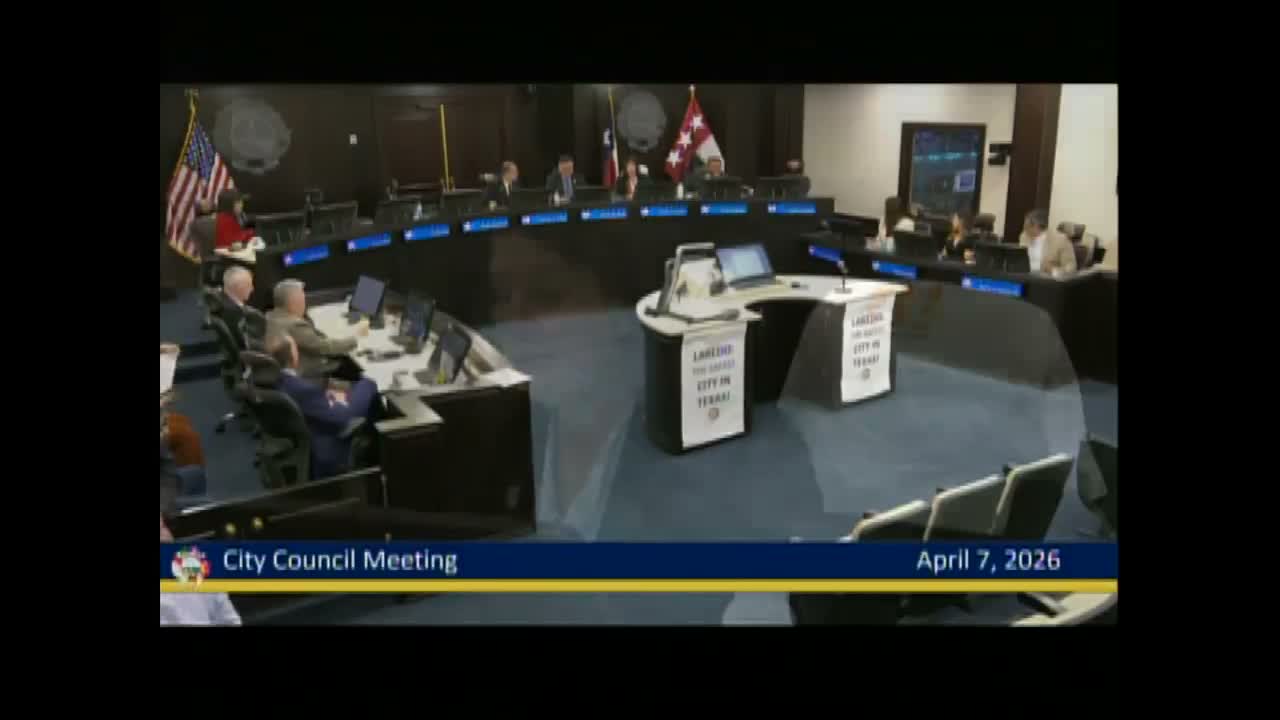
Martin Castro, watershed science director at the Rio Grande International Study Center, told the Laredo City Council on April 7 that an independent engineering analysis finds the proposed federal bollard wall and buoy infrastructure would materially change how the Rio Grande carries floodwaters and debris. "This proposal would be constructed along one of the most dynamic river systems in the entire United States," Castro said, urging council members to scrutinize the engineering and flood modeling now being used.
Why it matters: Council members and residents said the question crosses public-safety, infrastructure and fiscal lines — bridges, water-treatment plants and low-lying neighborhoods could face higher flood forces if a continuous wall or long buoy array traps debris and redirects river energy. The council voted to expand the Riverfront Coordination Advisory Ad Hoc Committee to include the river bend and buoy infrastructure so the technical committee can gather and evaluate federal plans and mitigation measures.
What the analysis said: Castro summarized findings prepared by Dr. Mark Tompkins, a civil engineer and fluvial geomorphologist. Among the conclusions presented were that a continuous wall and buoy network would (1) increase peak water levels and flow velocities during extreme events by constraining floodplain flows; (2) trap large amounts of debris, turning otherwise porous bollards into de facto solid barriers; (3) create failure points where anchored sections could detach and move downstream; and (4) concentrate forces on bridge piers and other infrastructure, raising the risk of structural damage. Castro said these effects would be most severe during the rare but high-energy flood events engineers plan for.
Public comments and legal concerns: Residents and riverfront stakeholders urged the council to demand federal engineering plans and an environmental review before any work moves forward. Manuel Ramirez, a Via Del Sol resident, told the council the corridor "is not just a line on the map. It is a living ecosystem" and asked that Laredo press for a comprehensive environmental-impact assessment. Riverfront advisory member and attorney Ricardo De Anda told council members a unified legal strategy could be pursued if independent studies show the barriers would cause substantial harm: "If we can prove that the barriers...will cause death and destruction, we can win in court," he said, and urged coordination among local governments and landowners.
Council response and next steps: Council members pressed staff for any federal plans and asked management to continue environmental and hydraulic studies already under way. Several members emphasized that federal waivers of environmental reviews make local, independent analysis more critical. The council approved an amendment expanding the Riverfront Coordination Advisory Ad Hoc Committee's scope to include the buoy system and the river bend so the committee can examine buoy-related engineering, debris scenarios and potential mitigation measures.
What the council asked staff to do next: Staff was directed to press for federal design specifications and to bring any available engineering data to the expanded advisory committee for review. The committee and council also discussed legal options and coordination with regional stakeholders; council did not vote on any regulatory or land-transfer actions at the meeting.
Context and caveats: Presenters based their conclusions on publicly available river data, historical flood records and expert modeling summarized in the Tompkins report; council members noted that the federal government has not publicly released the detailed designs and that some statutory environmental reviews have been waived. The speakers repeatedly framed findings as engineering projections that merit further study and planning.
Ending: The council's vote to broaden the riverfront group's remit signals the city will continue to push for technical data and analysis and to evaluate mitigation options, while residents and experts prepare to press federal partners for designs and risk assessments.