Get AI Briefings, Transcripts & Alerts on Local & National Government Meetings — Forever.
Massachusetts Senate advances Farm Bill, adopting measures to codify food programs and shield farmers from PFAS tax penalties
Loading...
Summary
The Senate moved Senate Docket 3029 (the Farm Bill) to third reading after debate and a series of amendment votes. Lawmakers codified programs such as HIP and the Food Security Infrastructure Grant, created a statewide farmland registry, and adopted an amendment exempting PFAS-contaminated farmland from rollback and conveyance taxes.
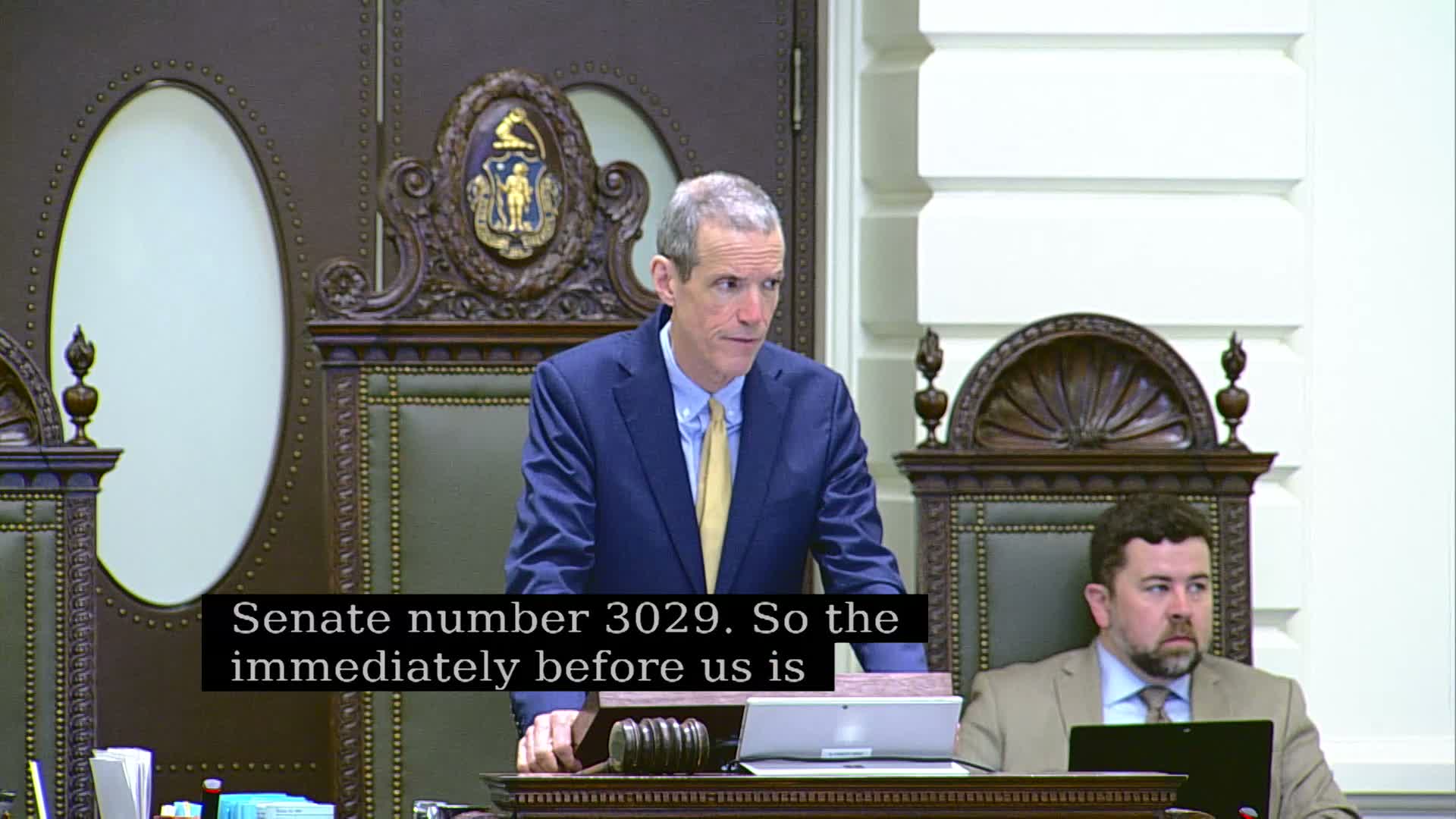
The Massachusetts Senate advanced Senate Docket 3029, an act fostering agricultural resilience, to a third reading after extended debate and several amendment votes on Wednesday.
Senator Paul Rodricks, the bill sponsor, told colleagues the measure codifies programs meant to support local food and farm viability, including the Healthy Incentives Program (HIP) and the Food Security Infrastructure Grant (FSIG), and aims to help farmers make capital improvements and develop agritourism. “This bill will help strengthen this industry, which supports our economy, feeds our families, and contributes to a sustainable future,” Rodricks said.
Senator Jo Commerford emphasized the stakes for farmers on the floor, citing long-term trends of farmland loss and financial strain. She said Massachusetts lost about 27,000 acres of farmland between 2017 and 2022 and that, in 2025, "more than 1 in 3 Massachusetts households" experienced food insecurity. "Farms are our way of life," Commerford said, urging support for the bill’s provisions to shore up local food systems.
The bill directs state agencies to develop an emergency food-system preparedness plan, requires reporting on the distribution of local food through state assistance programs, authorizes programs to support next-generation farmers and workforce training, and calls for a publicly accessible statewide map and registry of agricultural land to improve data for policymaking.
Floor action included a mix of adopted and defeated amendments. The Senate adopted Amendment No. 3 (carbon removal in the climate-smart agricultural program), Amendment No. 4 (adding farm location reporting for state-funded food assistance sourcing), and Amendment No. 31 (streamlining farmland registry administration by clarifying roles between the Department of Revenue and the Massachusetts Department of Agricultural Resources). Those changes were approved by voice vote.
Several other proposed changes failed: Amendment No. 13, concerning conveyance of parcels at the Templeton Development Center; Amendment No. 21 on vehicle and overweight permit regulation; Amendment No. 28 on Chapter 61A acreage thresholds; Amendment No. 32 on aerial mosquito spraying; and Amendment No. 35 (a net-zero exemption for farming equipment) were not adopted.
A contentious but ultimately adopted change was Amendment No. 40, offered by Senator Mark Cyr, which exempts farmland taken out of agricultural use because of PFAS contamination from conveyance and rollback tax penalties. Cyr framed the amendment around fairness for farmers who unknowingly applied materials that later proved to contain PFAS: "You're a farmer, you followed the rules, and then you learned your soil is contaminated with PFAS through no fault of your own," he said. Supporters cited Maine examples where contamination pushed some farms out of production and urged the Commonwealth not to compound the harm with tax penalties. The amendment was adopted by voice vote.
Senators also debated adding the Division of Marine Fisheries (DMF) to agency consultations on seafood and coastal resilience issues, and discussed the need to balance incentives, land preservation, and oversight to prevent abuse of tax and land programs.
The Senate ordered the bill to a third reading. Several senators requested a recorded roll-call when final passage votes are taken. The Senate took a brief recess after the votes.
What happens next: The bill is headed to a third reading on the Senate floor, where senators may cast recorded votes. If passed, the measure would be returned to conference or transmitted as appropriate under Senate rules for further action.