Massachusetts conference committee signs package to modernize cannabis rules in Springfield
Loading...
Summary
A legislative conference committee presented and signed a conference report in Springfield proposing a package of reforms to the Commonwealth's cannabis laws, including agency restructuring, new reporting tools, license reforms and expanded equity provisions.
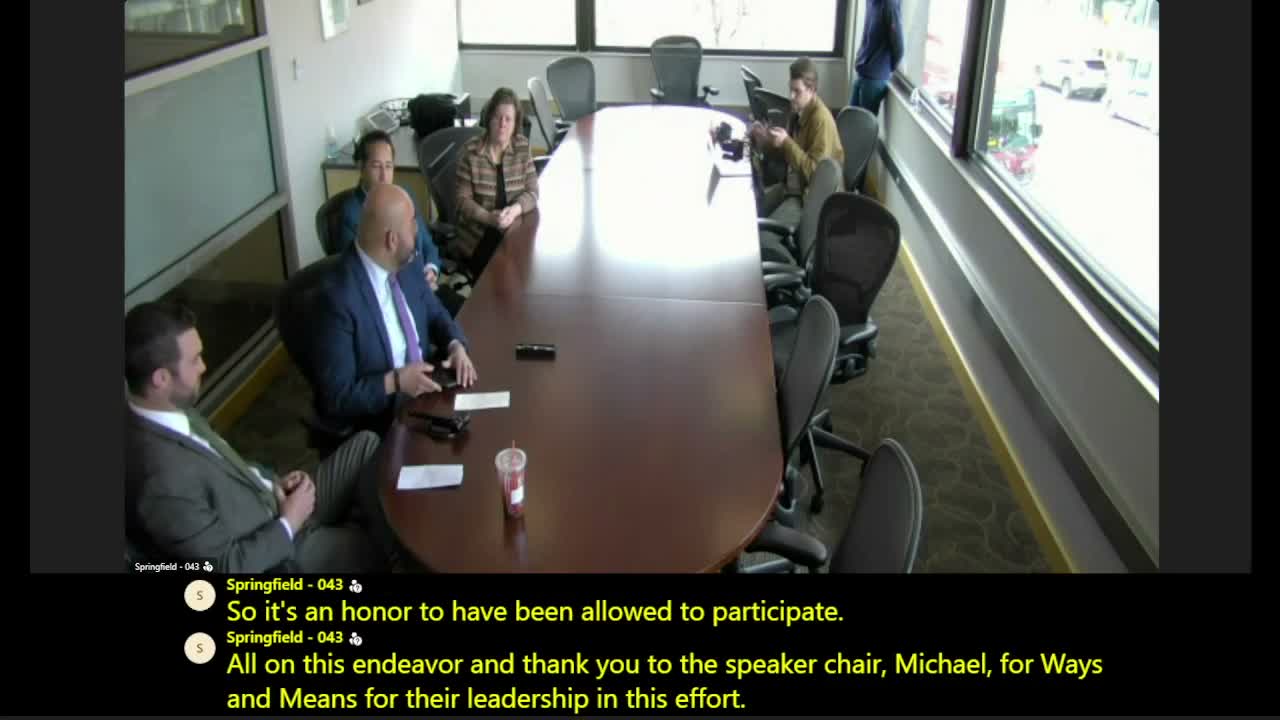
A Massachusetts legislative conference committee gathered in Springfield to present and ceremonially sign a conference report that would update the state's cannabis regulatory framework, officials said.
The committee's chair, Donahue, told attendees the talks leading to today's agreement "have been very fruitful" and framed the signing as the conclusion of a collaborative process. "It's wonderful to welcome us here to beautiful city of Springfield," Donahue said.
The conference report, as read by a committee member, proposes multiple changes to state policy intended to strengthen oversight, increase public accountability and expand economic opportunities. "The bill strengthens oversight and accountability by restructuring the cannabis control commission, streamlining its leadership and clarifying roles and responsibilities so that agency can operate more efficiently and transparently," the committee member said.
Why it matters: Legislators framed the package as a modernization effort after several years of piecemeal changes. Committee members said the bill balances regulation and market access, removes barriers to entry for medical operators and expands pathways for social equity businesses.
Key provisions described by the committee member include:
- Restructuring the Cannabis Control Commission to clarify leadership and improve transparency.
- Creating a public portal for reporting illegal conduct and requiring updated public-health reporting and a study of workplace safety standards.
- Modernizing license caps and allowing more flexible ownership structures to support small and social-equity operators, including exclusive opportunities in the medical marijuana space.
- Removing a vertical-integration mandate for medical operators to reduce barriers to entry.
- Updating purchase and possession limits, clarifying delivery rules across municipalities, and allowing more modern advertising within regulated environments.
- Directing further study and policy work on hemp-derived products and cannabinoids.
Committee members characterized the bill as imperfect but worthwhile. One lawmaker noted this marks the third cannabis-related bill the legislature has considered in recent years and said the repeated attention reflects a continuing effort to refine policy.
The event concluded with a ceremonial signing of the conference report. The committee member invited colleagues to participate in the signing and then moved to close the meeting; a second was recorded and the gathering ended with thanks to staff and attendees.
The transcript records the presentation and signing but does not include a roll-call vote or detailed legislative docket numbers. The committee described next steps as implementation and further study on specific issues such as hemp-derived cannabinoids.