Get Full Government Meeting Transcripts, Videos, & Alerts Forever!
Get email alerts on the Environment topic
No spam. Unsubscribe anytime.
Riverwoods trustees discuss dark-sky–style lighting limits and enforcement challenges
Summary
Trustees reviewed a staff memo and resident request proposing timers, motion sensors, holiday display windows, and brightness/shielding limits for residential outdoor lighting. Members asked about enforceability, lumen standards and forming a working group or using the sustainability committee to draft changes.
Village attorney Martin introduced a packet memo and a resident request urging changes to the residential outdoor lighting ordinance, framing options such as requiring timers for exterior or holiday lights, using motion sensors so lights are only on with movement, limiting holiday display periods (for example, Dec. 1–Jan. 31), and tightening shielding and brightness limits to better align with dark-sky principles.
Martin said the 2006 ordinance attempted to adopt dark-sky provisions (for example, downcast lighting and shielding so bulbs are not visible) but that enforcement and the variety of fixtures — driveways, bollard lights, motion-security lights and landscape lighting — make blanket rules complicated. He told the board staff has not yet evaluated how today’s bulb types compare to older standards and that some “low-hanging fruit” such as limiting display windows might be easier to implement.
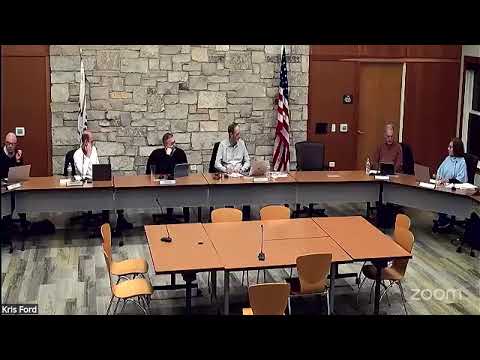
Trustees raised practical concerns. Trustee Trevino questioned enforcement: “the 1 thing that hit me as I think this was discussed before is just the ability to enforce this since the lights are on at night and people don't work at night.” The Chair and other trustees noted that the ordinance currently sits under police regulations (not building or zoning) and that many low-voltage decorative lights are installed without permits, which reduces the building department’s ability to enforce. Trustee Smith said she supported dark-sky principles but worried about defining holiday periods that may not match every resident’s calendar and suggested placing the issue with the sustainability committee or a small working group to craft enforceable, high-impact changes.
Trustee Eastman urged prioritizing the top one or two changes “that would give us the most bang for the buck” and be enforceable so the rules are not merely performative. The board did not vote on ordinance amendments; members asked staff to form a working group or bring back a recommended, enforceable set of policy options for the board’s consideration.
Why it matters: Proposed changes affect residential lighting practices, neighborhood character and the village’s environmental goals. The board emphasized enforcement practicality and community equity when considering limits on holiday displays and required security lighting.
Next steps: staff and a small working group (or sustainability committee) will refine recommendations and return with enforceable language and enforcement options for future consideration.