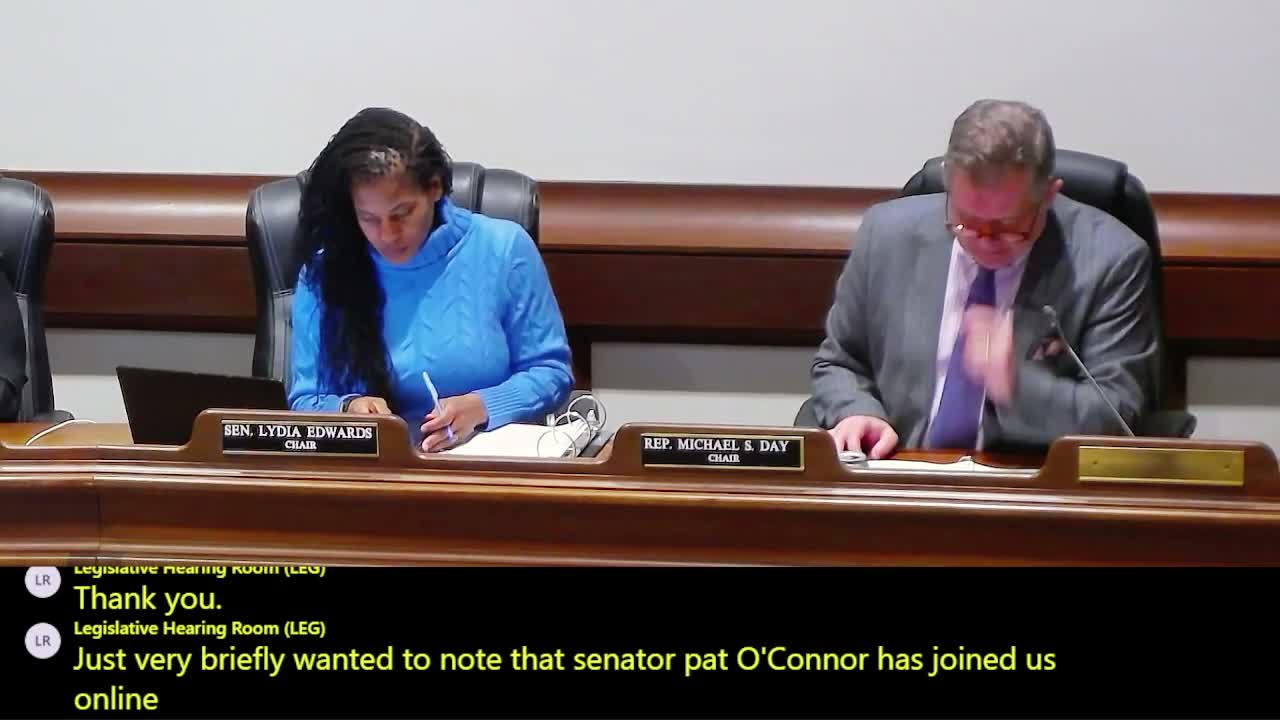
Panel and Attorney General’s antitrust chief push to expand state enforcement in H.5111
Loading...
Summary
A late-filed bill, H.5111, would broaden Massachusetts' antitrust enforcement powers — allowing state suits even when the federal government is investigating, expanding multi-jurisdictional reach, increasing penalties and adding protections for labor markets, supporters told the joint judiciary committee.
Representative Dave Rogers and the Attorney General's Office told the Joint Judiciary Committee on Tuesday that H.5111 would strengthen the Massachusetts Antitrust Act to give state authorities more independent tools to address anti-competitive conduct.
"It would amend the statute to allow our antitrust team to enforce the antitrust act even if the federal government is undertaking its own investigation or litigation," Anthony Mariano, chief of the antitrust division in the Office of the Attorney General, told the committee. Mariano said the bill also would make it easier to establish jurisdiction over activity that takes place across multiple locations when there is an effect in Massachusetts and would enhance penalties to align more closely with federal law.
Sponsor Representative Dave Rogers said he filed an initial draft after hearing from consumers and small-business groups in his district and then worked with the Attorney General's Office to refine the bill. "They put their shoulder to the wheel," Rogers said, describing the draft as a "from-the-trenches" proposal intended to give state enforcement the capacity it needs as federal agencies scale back.
Senator Will Brownsberger emphasized market fairness and the bill's goal of preserving efficient competitive markets. Mariano told lawmakers the bill would also clarify that invitations to conspire — such as price-fixing or bid-rigging — are themselves violations and would explicitly extend antitrust protections into labor markets.
Committee members questioned the bill's reach. Mariano said the proposed jurisdictional language focuses on conduct that has an effect in Massachusetts, noting peer states use similar formulations. "What we're trying to address is the problem of a national scheme or a regional scheme that would affect Massachusetts," Mariano said, adding the office needs the ability to "independently focus on the merits of that case."
The proposal would also extend the statute of limitations from four to five years. Supporters argued the changes would allow Massachusetts to pursue enforcement in cases where federal authorities decline to act, while opponents at the hearing suggested the committee consider guardrails to limit extraterritorial conflict with other states.
The committee did not take a vote on H.5111 during the session; sponsors said they were seeking input and ready to provide written amendments.
Next steps: sponsors asked the committee to consider the draft language and said they would submit technical edits in writing.