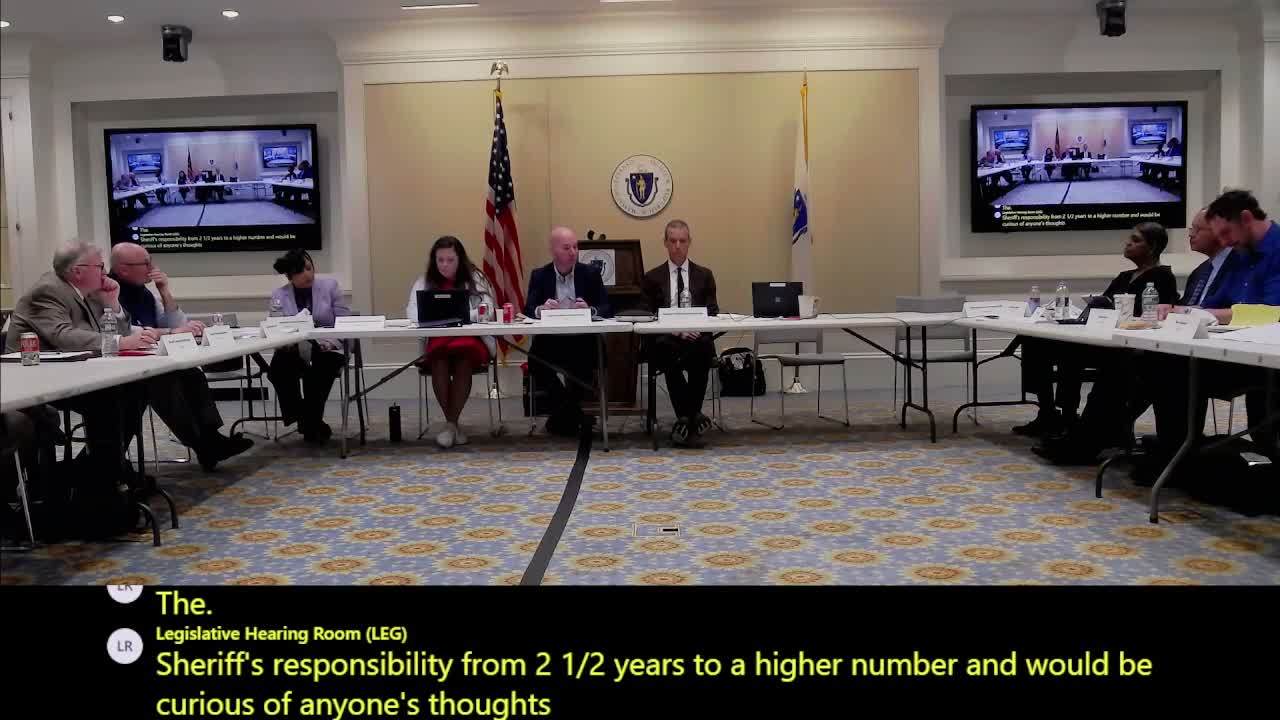
Commission examines sentence jurisdiction, step-downs and contraband risks including K2
Loading...
Summary
Members debated moving the last years of some state sentences to sheriff custody to increase step-down opportunities while warning that mandatory classification overrides, bed availability and K2 contraband are immediate operational constraints.
Commissioners discussed two linked operational concerns: (1) whether to expand sheriffs’ jurisdiction so more people could serve the final years of their sentences locally and access prerelease services, and (2) an urgent contraband problem — particularly K2 — that affects safety in facilities.
On jurisdiction, chairs floated legislative options ranging from modest changes (adding judicial discretion to send people to sheriffs for the last portion of their sentence) to a larger idea that judges could place people with 5 years or less in county custody. Supporters argued this would increase access to prerelease centers, day reporting and local reentry supports; opponents cautioned that statutory language, mandatory classification overrides and capacity constraints complicate a simple transfer.
"We should think of ourselves as capable of writing legislation and changing anything," Senator Brownsberger said while recognizing the practical barriers. Speakers observed that mandatory overrides and classification rules sometimes prevent eligible individuals from down-classifying even when low-security space is, in principle, available.
Separately, sheriffs and commissioners described K2 (synthetic cannabinoids) as a major contraband and safety crisis: it is being smuggled in paper, changes chemically to evade detection, and has been linked to suicides, violent behavior and staff terminations. "K2 is the most difficult contraband substance being introduced... you can't train a dog to sniff it," a sheriff said; others noted recent fatalities and the high street value of contraband inside facilities.
Commission direction: prioritize operational countermeasures for contraband, quantify minimum/prerelease bed availability, and ask legal staff to map statutory pathways if changes to jurisdiction or earned-good-time rules are proposed.
Next steps: invite judiciary and classification staff for a focused hearing; ask DOC and sheriffs for bed-availability and mandatory-override data; develop short-term contraband mitigation options.