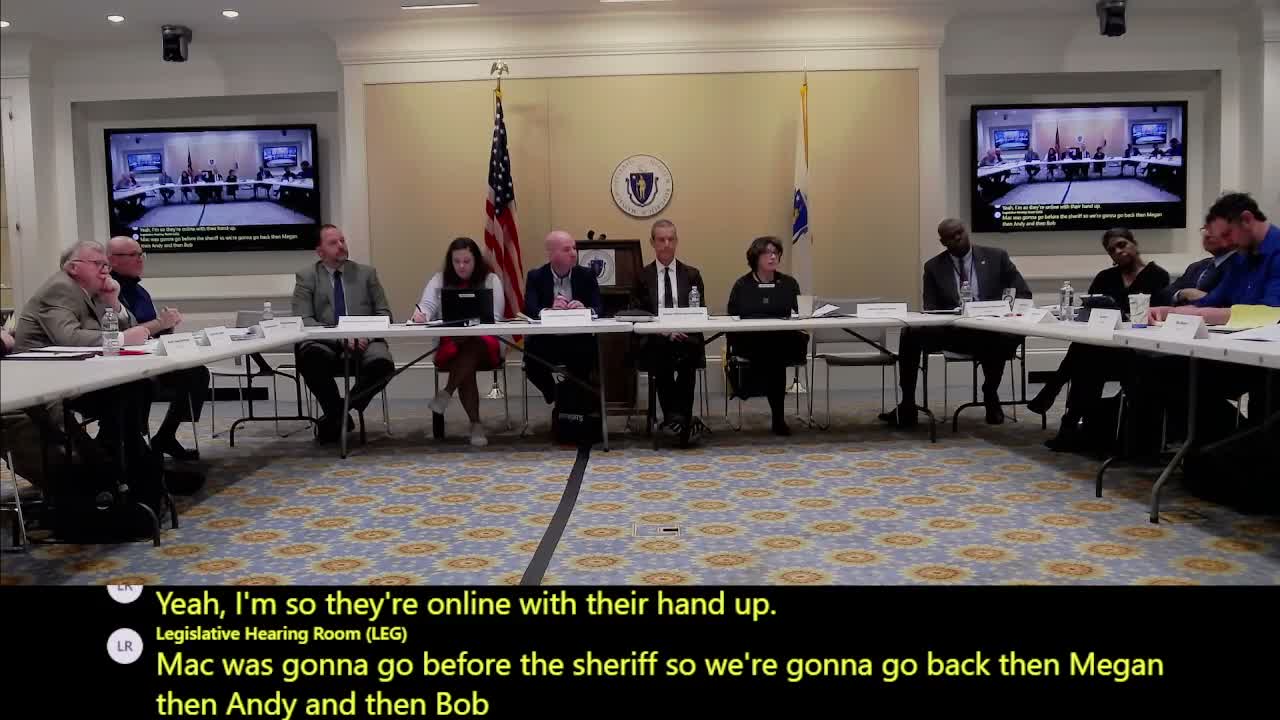
Commission highlights reentry capacity, prerelease beds and housing barriers
Loading...
Summary
Members asked staff to produce a statewide inventory of prerelease beds, reentry programs and funding after sheriffs warned that housing shortages and limited program capacity block parole and reduce stepping-down opportunities.
Commissioners pressed the need for a comprehensive inventory of reentry capacity and funding after multiple speakers described housing and program shortages that impede parole, shorten prerelease options and complicate step-downs from DOC custody.
A commissioner asked for a full state breakdown of the Department of Correction and sheriff budgets, noting that only with a financial map can the commission identify duplicate spending and opportunities to repurpose existing assets. "We need a breakdown of where the money is allocated to these various services," one member said, urging a clearer picture of what is being spent on medical care, MAT/MOUD, community justice support centers, reentry centers and building maintenance.
Sheriffs described successful local reentry centers but said housing scarcity — and 90-day caps on many sober-housing placements — undermines long-term outcomes. One sheriff said the biggest factor for successful transitions was quick access to a driver’s license and steady employment, and argued outcomes-based contracting and local partnerships can improve placement rates.
Panelists also identified a perception problem: some people released from custody decline reentry center services because they view programs as extensions of custody, or too intrusive. Several sheriffs and community providers said that relationship-building, peer-led programs and co-designed community centers can increase voluntary engagement.
Commission direction: chairs asked staff to compile a program-and-funding inventory, including CRJ/justice-support centers, sober housing capacities, and service provider maps, and to report back with utilization rates so the commission can target where to expand capacity or remove legislative barriers.
Next step: staff to include funding sources, program capacity, and utilization rates in a data packet for the commission.