Get Full Government Meeting Transcripts, Videos, & Alerts Forever!
Get email alerts on the Stormwater topic
No spam. Unsubscribe anytime.
Fletcher council declines engineer’s weir-plate fix for Wilkie Way, urges property-level repairs
Summary
After an engineering review, Fletcher officials said the town will not install a weir-plate detention system on Wilkie Way because it could increase downstream flooding; councilmembers said property owners should pursue ditch and culvert improvements instead and staff will follow up with neighbors.
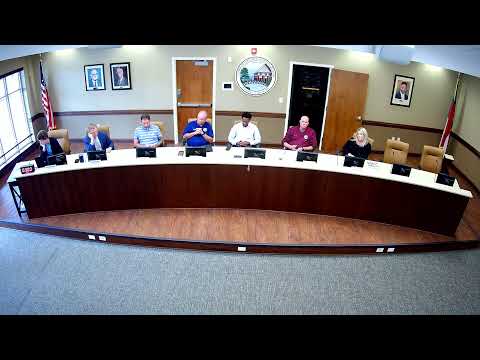
The Fletcher Town Council on Thursday reviewed a stormwater complaint from residents on Wilkie Way and agreed not to install a weir-plate detention system after an engineer warned it could worsen downstream flooding. Town manager (name not stated) summarized McGill Associates’ report and property-owner feedback and said staff would continue outreach to neighbors.
McGill Associates, represented in a prior presentation by Ben Cathy, recommended against a weir-plate detention system because it could increase stormwater flow downstream and cause water to “crest” on nearby lots, according to the town manager. The engineer proposed alternatives: deepen and widen the drainage ditch adjacent to 96 Wilkie Way and upgrade a culvert at 6 Wilkie Way from 12 inches to 24 inches.
The manager told the council he had contacted adjoining property owners listed in the report. Presley at 105 Wilkie Way said elevation likely protects his property from added flow; Mrs. Gudger at 109 Wilkie Way declined to engage because her house may be for sale; Ms. Rude at 115 Wilkie Way opposed any measure that could add load because she already experiences water over her driveway. James Caudle, representing 100 Wilkie Way, described two-to-three feet of ponding near driveways and supported improving the ditch between properties to better receive runoff.
Council member Keith said the town’s attorney and the engineering firm advised against altering flows in ways that could create municipal liability. “We shouldn’t take the responsibility of the repercussions of changing the water flow when there is actually a solution to the problem, but the homeowner would just have to handle it,” Keith said. Other council members voiced agreement with the attorney’s and engineer’s recommendations and said the town’s options are limited to noninvasive, public-right-of-way work.
The council directed staff to continue outreach to affected homeowners, including the Todds and Blans, and to report back. No formal motion to fund private-property work was made during the meeting; council members repeatedly emphasized the town’s limited authority and the risk of assuming responsibility for private drainage issues.
The council then moved to the next item on the agenda.