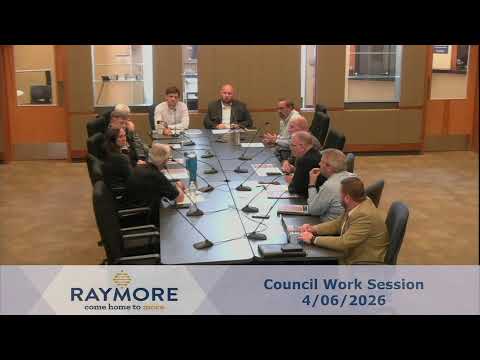
Raymore City staff pitch hot‑in‑place asphalt recycling as cheaper option for rural roads
Loading...
Summary
City staff told the Raymore City Council they can reuse existing asphalt with hot‑in‑place recycling (HIR) to treat roughly 60,000 square yards—about 10 lane miles—at roughly half the cost of mill‑and‑overlay, and said funds are available to put the work out to bid and return for contract approval.
Raymore City staff on Monday presented a plan to pilot hot‑in‑place asphalt recycling on low‑volume rural streets, saying the method could deliver roughly double the roadway coverage for about half the cost of a traditional mill‑and‑overlay.
Staff member Fearborn told the Raymore City Council the idea grew out of a demonstration the mayor observed on a rural Missouri road; city staff then invited a vendor to evaluate local candidate streets. Engineer Salisbury described the technical process—lab cores to confirm suitability, on‑site heaters, scarifiers and rejuvenating agent, followed by compaction—and played a vendor video that outlined the steps.
City staff stressed the financial case: Salisbury said a typical mill‑and‑overlay runs about $18 per square yard while the hot‑in‑place process is roughly $9 per square yard. Staff presented a proposed pilot covering about 60,000 square yards (about 10 lane‑miles). Fearborn and Salisbury said roughly $178,451 remained in the street preservation budget, a prior curb project had a surplus of about $446,000.08, and together—plus an identified $57,000 stormwater portion—about $624,539 could be applied to the pilot.
Why it matters: Staff argued HIR can reduce truck traffic, shorten project timelines and lower carbon emissions compared with hauling and placing new asphalt. The vendor video shown to the council claimed a 28% reduction in carbon emissions and emphasized that the process can close some subsurface cracks by heat penetration.
Council discussion focused on suitability and procurement. Staff said the city used the vendor to vet candidate streets and that the selected roads are in need of repair but are lower‑traffic, which staff judged appropriate for a pilot. Salisbury said the Midwest currently has two main vendors he and staff had encountered; the city intends to issue an RFP so multiple firms may bid.
Councilor Sonya Abdelghawad asked about vendor availability and was told there appear to be two regional suppliers. Councilor Kevin asked about recycled content and surface treatment; staff replied that the process reuses on‑site asphalt and that the planned wearing course is a microsurface (staff emphasized this should not be called a chip seal) to seal surface voids after rejuvenation.
Staff also said the pilot would include replacing culverts in selected neighborhoods as part of the work and that they plan to put the project out to bid soon. If there are no objections at this work session, staff said the council will next receive the RFP results and have the choice to approve or reject the contract at a future meeting.
The presentation closed with general support from council members and no formal vote on the pilot at the session; staff will return with procurement documents and bid results for council action.