Get Full Government Meeting Transcripts, Videos, & Alerts Forever!
Get email alerts on the Rezoning topic
No spam. Unsubscribe anytime.
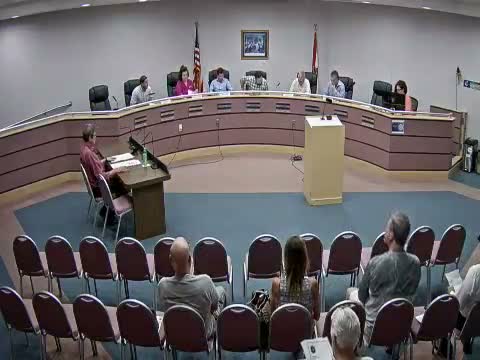
Neighbors urge board to oppose rezoning request for 1253 A1A; board declines to recommend change
Summary
Residents told the Planning & Advisory Board that rezoning 1253 A1A to commercial would threaten the Park Avenue beach access, worsen parking and set a precedent; the board moved to not recommend a zoning change and to seek more information from the applicant.
The Planning & Advisory Board on Feb. 17 debated a request to change the comprehensive plan and zoning for 1253 A1A from RM-3 (residential mixed use) to commercial, which an applicant says would make an existing engineering office conforming.
Neighbors speaking during public comment urged the board to keep the parcel residential. "I'm requesting on behalf of the residents that the property zoning is not altered," said Russell Green of 5 Park Avenue, citing safety near a pedestrian beach access where two people died within the last 18 months and limited street parking. Stephanie Hill, representing homeowners at 30 Park Avenue, said the city already has vacant commercial lots nearby and warned additional traffic would exacerbate existing parking problems. Daniel Genovese noted permitting records show a 1993 commercial building permit for the site, saying the use has been small-scale historically but that demolition-and-elevation in future scenarios could permit larger development.
Carl, the staff presenter, told the board the site is a long-standing nonconforming commercial use under RM-3 and that rezoning would be limited by the parcel's size and parking requirements. Board members discussed whether a binding development plan could be used to limit future uses (for example, to offices) and whether the board should require the applicant to attend to answer neighbors' questions. Several members said the 0.16-acre lot probably cannot support more intensive uses because of setbacks and parking constraints; others warned that rezoning could nevertheless open the door to different, harder-to-control businesses.
A motion was made and seconded to recommend that the council not change the zoning; the chair said leaving the board without a recommendation would preserve the current residential designation. The board discussed tabling the item to require the applicant to attend at a future meeting as an alternative.
The matter was closed for the evening and the board moved to the next agenda items. The board did not record a roll-call tally for this recommendation on the public transcript; the motion recorded in the minutes was to not recommend the change and leave the zoning as is.
What happens next: the board's recommendation (or lack of one) will go to the City Council for a final decision; members suggested the applicant be asked to appear at a future meeting to answer outstanding questions about intent, plans and parking.