Community banking groups push regulators to lower hurdles for fintech partnerships
Loading...
Summary
Representatives of community-banking trade groups told a Federal Reserve Board panel that vendor concentration, duplicative due diligence and restrictive supervisory information rules impede innovation; they proposed shared due-diligence frameworks, CSI reform and broader use of the Bank Service Company Act.
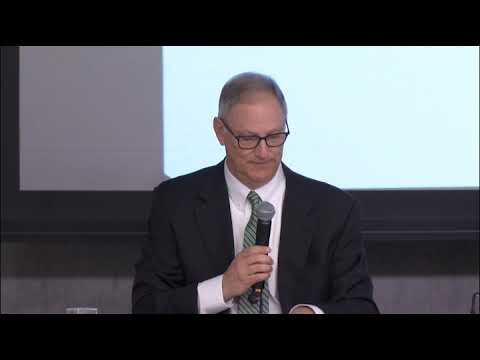
Todd Vermillion, senior advisor in the Division of Supervision and Regulation at the Federal Reserve Board, moderated a panel on facilitating innovation where community-bank advocates pressed regulators to reduce barriers that make fintech partnerships costly and risky for smaller banks.
Michael Emancipater, senior vice president at the Independent Community Bankers of America, said community banks "rely almost entirely on external providers for the technology backbone of their operations," and that market concentration lets a few vendors impose long-term contracts and limit data portability. He said "three core vendors serve more than 70% of community banks," and argued that that dynamic, combined with heightened supervisory scrutiny of newer providers, discourages banks from switching vendors.
Emancipater proposed three concrete steps for regulators: establish shared due-diligence frameworks and recognize third-party certifications as a form of regulatory passporting; modernize rules governing confidential supervisory information (CSI) so exam findings can be shared with fintech partners when necessary; and expand consistent use of authority under the Bank Service Company Act to examine service providers as if the services were performed by the bank itself.
"If regulators make the environment for innovation inside the banking system too difficult to navigate, we should not be surprised when that innovation migrates outside it to less supervised, less transparent corners of the financial system," Emancipater said.
Kelvin Chen, who coordinates policy for the Consumer Bankers Association, urged a pragmatic mix of faster subregulatory work and clearer expectations for smaller banks. He said lengthy Administrative Procedure Act timelines make formal rulemaking slow and recommended public–private collaboration on guidance and practical tools for third-party risk management. "TPRM is now also an MRM question," Chen said, noting that rapid advances in models and AI change how examiners and banks must evaluate vendors.
Philip Basel of Better Markets cautioned that facilitating innovation should not mean weakening safeguards. "Well-designed rules are actually necessary to facilitate beneficial innovation," he said, warning that some discussions about easing rules have been framed as ways to integrate crypto activities into banking. Basel urged agencies to prioritize innovations that demonstrably improve community-bank operations and customer service.
Panelists also discussed practical approaches such as consortia and resource-sharing among community banks, supervisor-led expert teams to handle novel technical examinations, and revisiting agency guidance formats (for example, FAQs) that can be updated periodically to provide clarity to smaller institutions.
The panelists did not propose immediate rule changes but offered to work with the Board and other agencies on pilot approaches and clearer supervisory tools. The discussion closed with panelists agreeing to continue collaboration; no formal regulatory actions were taken at the session.