Get Full Government Meeting Transcripts, Videos, & Alerts Forever!
Get email alerts on the Infrastructure topic
No spam. Unsubscribe anytime.
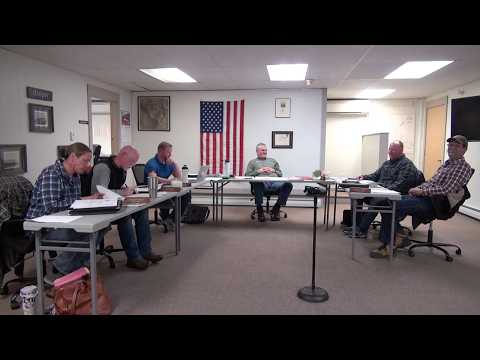
Select board flags sewer funding, transfer‑station fees and salt‑shed needs; authorizes action on Deer Cove Road
Summary
The board discussed long‑range sewer funding after state PFAS and DES direction, rising transfer‑station costs and a proposed salt‑shed, and authorized a member to pursue a remedy and record searches for the Deer Cove Road access dispute.
The select board used its March 1 meeting to put a series of infrastructure and service issues on the town’s radar and to authorize action on a longstanding access dispute.
Chair warned that state environmental requirements (PFAS and DES mandates) mean the town cannot rely on septic discharge indefinitely and that by 2030 many lagoons will have to be replaced or retired; the town’s water and sewer systems must be self‑funding, so rate adjustments and long‑range planning are expected. “Our lagoons are disappearing due to PFAS requirements,” the chair said, urging early planning to avoid a fiscal shortfall.
Separately, board members discussed transfer‑station hauling and disposal costs rising statewide and said user fees will likely need adjustment; the board also heard that a larger indoor salt and sand storage shed may be necessary as state supply arrangements change, and staff will look for potential grant funding to help defray the cost.
On a separate agenda item the board voted to authorize select board member Jim to pursue remedies, gather records and convene affected property owners regarding the Deer Cove Road parking and access dispute. The motion directs Jim to fetch recorded plans and assemble interested abutters for a summer meeting to gauge whether a negotiated resolution is possible before court action. A committee member said bringing all parties together would let everyone “hear the same facts” and possibly resolve the matter without litigation.
The chief also introduced a proposed police special‑duty policy expanding required patrol details to public‑service projects that create traffic, emphasizing that the detail account operates on a money‑in/money‑out basis and is not a taxpayer cost; the board agreed to place that policy on a future agenda for fuller public review.
Board members said the items will be scheduled for detailed discussion and possible budget planning in upcoming meetings.