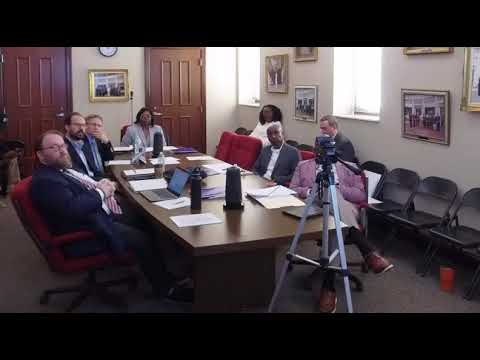
Audit committee hears plan-of-correction; Nathan Reed says FY24 is closed and remedies will reduce prior misstatements
Loading...
Summary
Finance staff told the Jackson City Audit Committee that FY24 closing adjustments are complete, software misconfigurations caused large-period postings that will be corrected, receivable and liability adjustments are underway and staffing/succession risks remain; the committee approved posting an internal-auditor job description.
Nathan Reed (S2) told the Jackson City Audit Committee that the city has closed its FY24 books and is implementing a plan of correction to address multiple audit findings, including software misconfigurations that caused cash misstatements and improper period postings.
Why it matters: The corrective steps and staffing decisions will shape the city's financial controls, the size of audit adjustments and the timeline for upcoming audits; committee members pressed for clearer timelines and succession planning as senior accountants near retirement.
Reed said the city had completed final adjusting entries for FY24 and verified reconciliations for FY25, and that changes to year‑end cutoff procedures will prevent the kind of period‑13 postings that produced large cash misstatements. "We were worried about closing FY24 final adjusting entries. We got that done last week," Reed said.
On the scale of prior misstatements, Reed told the committee he expects material adjustments to be much smaller than those reported in earlier drafts: "I think you're gonna find that it's gonna be a $100,000 adjustment rather than a $7,000,000 adjustment," he said, describing much of the previous variance as process‑driven and attributable to staff turnover and software configuration issues.
Reed described other corrective actions: verifying receivables and posting prior‑year property‑tax adjustments for FY25, revising cut‑off and review procedures for expenditures and liabilities, cleaning up legacy interfund balances created when the city simulated pooled cash, and ensuring FEMA reports align with internal financial records.
Staffing and succession were a recurring concern. Reed said the finance team currently includes three accountants and three accounting associates, with at least one funded vacancy and two senior accountants approaching retirement in the next 24–36 months. He argued for hiring accounting associates and backups to reduce operational risk, especially for payroll and capital-asset reporting.
The audit committee also reviewed and discussed a draft internal‑auditor job description and peer‑city benchmarking prepared by committee staff. Committee members discussed reporting lines (the committee directing internal-audit work while employees report administratively to the mayor under the charter) and a salary range for the posted role. Committee member (S3) moved to accept the revised job description; the motion was seconded and approved by voice vote.
Next steps: Reed said the team will continue to prepare the trial balance and package information for auditors, aim to shorten monthly close windows and provide monthly updates to the committee. The committee authorized posting the internal‑auditor job description and instructed HR and the audit committee to proceed with recruitment steps.