JLARC approves final report finding low ignition‑interlock installation rates, recommends better coordination and financial assistance
Loading...
Summary
JLARC approved distribution of a final report finding only 41% of drivers required to install ignition interlock devices did so (Jan 2018–Jun 2025); staff recommended clearer DOL financial goals, a formal DOL–State Patrol agreement, and a coordinated plan to raise installation rates. Agencies concurred and described ongoing coordination.
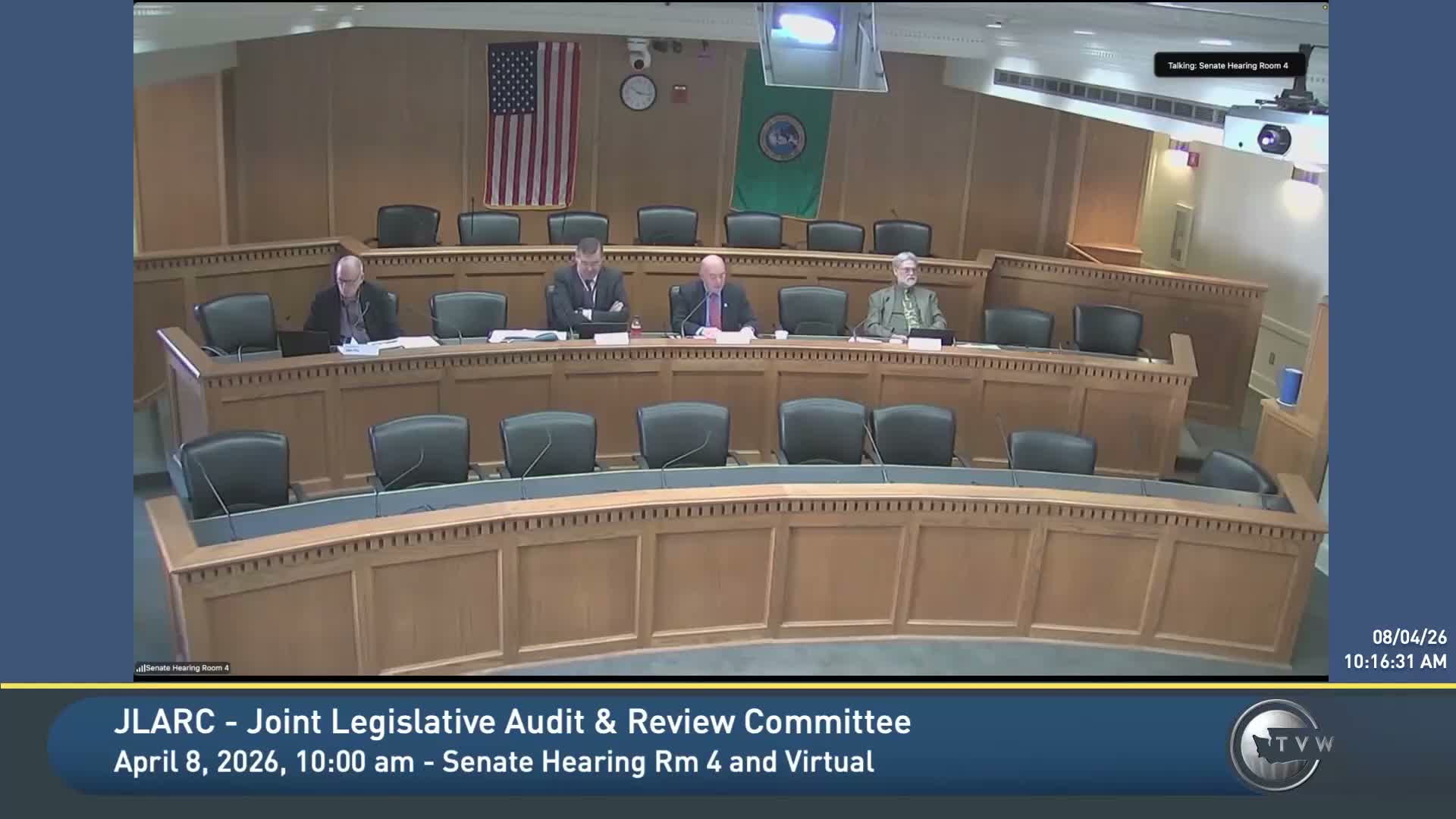
The Joint Legislative Audit and Review Committee voted April 8 to approve for distribution a proposed final report on ignition interlock device (IID) compliance that found low installation rates and stark income disparities among drivers required to have IIDs.
JLARC staff presented analysis of 66,000 driver records from January 2018 through June 2025 and reported that 41% of drivers installed an IID, 27% completed their requirements, 14% had a device installed at the time of the review, and 59% had not installed a device as of June 2025. Staff also reported that installation rates rose with income — roughly 30% installation among drivers with incomes under $10,000 and about 74% among drivers with incomes over $100,000 — and estimated a typical one‑year compliance cost of around $2,700, rising to about $5,000 when high‑risk insurance and court fines are included.
The legislative auditor offered three recommendations: the Department of Licensing (DOL) should set clear objectives and performance measures for its financial assistance program; DOL and the Washington State Patrol (WSP) should execute a formal agreement to clarify roles and jointly administer the IID program; and the two agencies should develop a coordinated plan to boost installation rates. JLARC staff reported that both agencies concurred with the recommendations.
Brad Benfield, assistant director of programs and services at the Department of Licensing, told the committee the agency concurs and is already working: "A key goal is to increase the ignition interlock device installation rate," he said, describing resumed quarterly meetings with the State Patrol, a customer‑journey map of the relicensing process, and plans to provide options on reimbursement rates by December.
Sergeant Brandon Vellante of the Washington State Patrol described enforcement work and a recent county emphasis that contacted drivers flagged in licensing data. Vellante cautioned that administrative data do not directly show who continues to drive without a device, but said enforcement contacts can identify some noncompliant drivers and that targeted outreach after stops led several people to obtain devices.
Committee members asked whether noninstallation necessarily means people continue to drive; staff answered that the available administrative data cannot definitively show driving behavior absent enforcement contacts but that related court data on reoffending can be summarized in follow‑up. Members also discussed that toxicology laboratory backlogs and related criminal case timing can affect whether pretrial ignition‑interlock requirements are in place.
After questions and discussion, a member moved to approve the proposed final report for distribution; the committee approved the motion by voice vote.
JLARC will publish the approved report and the agencies committed to follow up on the recommendations. The committee did not adopt additional legislative language at the meeting; next procedural steps for implementing staffing or funding changes lie with the agencies and the legislature.