Get Full Government Meeting Transcripts, Videos, & Alerts Forever!
Get email alerts on the School Closures topic
No spam. Unsubscribe anytime.
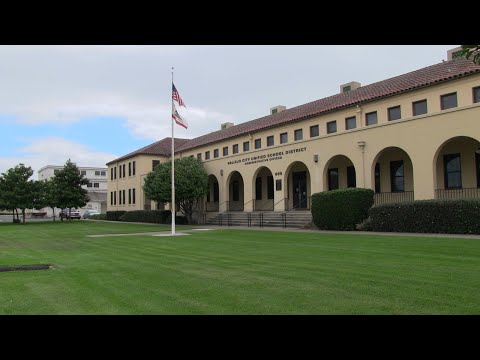
Vallejo superintendent lays out school‑closure options as community urges keeping Cooper open
Summary
Vallejo City Unified staff described Phase 2 of a school closure and consolidation review for the 2026–27 year, citing enrollment declines, a roughly $32 million two‑year structural deficit and the need to improve utilization; community members urged the board to spare Cooper Elementary.
Vallejo City Unified School District Superintendent opened a town hall to explain Phase 2 of a closure and consolidation review for the 2026–27 school year and to solicit public input. She said staff have identified seven campuses under study — Cooper, Federal Terrace, Highland, Lincoln, Pennycook, Stephen Manor and the John Phinney Education Complex — and that any final decision rests with the elected five‑member governing board.
The superintendent said the district has seen a post‑pandemic enrollment decline from roughly 11,700 to about 9,600 students and noted the district’s budgetary structure: "We roughly run a $200,000,000 annual budget," she said, and described a "$32,000,000 structural deficit over two years" that closures and other reductions are intended to help address. She also highlighted a milestone the district reached this summer: exiting state receivership on June 30 after repaying a state loan, a change she said the district wants to preserve. "We don't wanna close schools," she added, "however, we have to look at how we sustain this district fiscally so we can continue to operate the way we do." (Statements attributed to the superintendent.)
Staff described the analytic work informing recommendations: a capacity and facilities study to map modernization needs, parking and classroom space, an equity impact analysis that includes transportation modeling, and scenarios that examine combinations of the seven campuses. Assistant Superintendent Fernandez said the equity and transportation analysis will return to the board for formal acceptance in November and that the report includes scenarios to estimate how many students would face longer bus routes or walking distances.
Parents, students and school staff dominated the evening’s public comment. Multiple speakers urged the district to keep Cooper Elementary open, describing the school as a neighborhood anchor, a warm family community and a place where expanded‑learning programs and in‑school supports take place. "Cooper Elementary really has something special," said Mel Blair, a Cooper parent. Miss Brenda, Cooper’s after‑school coordinator, described serving 120 students and asked evaluators to account for rooms used for speech services, tutoring and expanded‑learning activities when judging whether a room is "empty." Laurie Tackmeyer, a long‑time district employee, urged staff to include those specialized uses in utilization calculations so the district does not undercount services that would be lost if a campus closed.
Residents also pressed staff on a range of details: what happens to five‑year grants awarded to a school (staff said grants tied to a school site may not continue if that school closes), how teachers would be placed (human resources staff said placements would follow seniority and staffing needs), whether class sizes would increase (the superintendent said negotiated contract caps govern class sizes), and how the district would prioritize family placement in receiving schools (families from closed campuses would receive priority in intra‑district placement, staff said).
Students raised separate concerns: one fourth‑grader said children should not have to "stress out" about school closures; a high‑school senior asked how the district will improve low assessment scores and expand AP and career pathways; a student speaker raised food waste and nutrition questions and staff explained federal rules limit taking served meals off site but outlined partnerships and pilots (second‑chance breakfast, weekend food bags) intended to address food insecurity.
On process and timing, the superintendent said she submitted a preliminary recommendation to the board — including proposals to close Cooper, Pennycook and Lincoln and to relocate the John Phinney Education Complex to Cooper's site — but stressed that a recommendation is not a final action. "That doesn't mean that's what's going to happen," she said. She told the audience the district is still gathering data and community feedback and that the governing board will consider closure and budget items at its regular meeting on Dec. 17; staff also plan additional town halls including a Spanish‑language session.
The meeting underscored community attachment to neighborhood schools and the tradeoffs district leaders say they face between preserving local control, sustaining programs and closing budget gaps. The board will decide whether to adopt any closures, consolidations or budget changes at upcoming public meetings after staff complete the equity, facilities and transportation analyses.
Next steps: the district will finalize analytic reports, continue community outreach and present closure/consolidation items to the board at the Dec. 17 meeting; any approved changes would take effect for the 2026–27 school year if the board votes to do so.