Ogden considers joining Community Clean Energy program; staff outline $4/month residential rate and opt‑out mechanics
Loading...
Summary
City staff briefed council on the Community Clean Energy program (previously Utah Renewable Communities) approved by the Utah Public Service Commission. Staff said residential participation would initially cost $4/month ($3.88 + $0.12 low‑income contribution), with mailed opt‑out notices and a one‑time $30 termination fee after an introductory free opt‑out window.
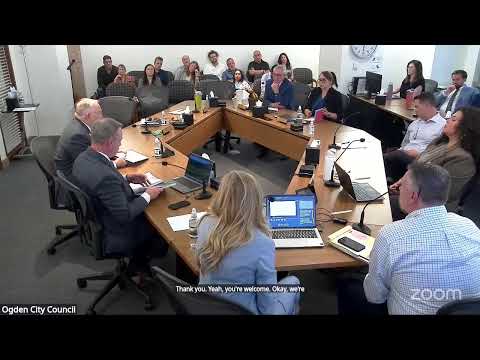
Ogden City staff presented a detailed briefing on the Community Clean Energy program, a multi‑jurisdictional option that would let Rocky Mountain Power customers in participating cities choose a municipal‑backed option to match annual electricity consumption with newly procured clean energy.
Lorenzo Long, the city’s sustainability coordinator, said the program was approved by the Utah Public Service Commission in March and that any city that chooses to participate must adopt a participating ordinance within 90 days of the PSC order (Ogden’s implied deadline was noted as June 2). If adopted, the utility will mail opt‑out notices and the earliest customers would see the program on their bills after Rocky Mountain Power completes estimated system and billing upgrades later in the year.
On cost, Lorenzo said the initial residential rate would be a flat $4 per month (described on the record as $3.88 plus $0.12), with the 12¢ portion funding a low‑income credit for eligible Rocky Mountain Power assistance customers. "For residential customers, it is going to be a flat rate of $4 per month," he said. Low‑income customers on the utility’s assistance schedule would receive a bill credit and would not be charged termination fees.
Nonresidential customers would pay a volumetric addition (about 0.0061¢ per kWh plus the $0.12 per month contribution). Staff used an example municipal facility and an example commercial bill to show how the volumetric charge would affect bills and said swapping the city’s Blue Sky subscription for this program could reduce costs in some cases.
Staff emphasized that the program is meter‑based: customers who hold their own Rocky Mountain Power account receive mailed notices and decide individually whether to remain in the program; apartment buildings with a single meter remain the landlord’s decision. Notices will include clear opt‑out instructions; customers who opt‑out within the first 60 days after the initial notice will never see the charge on their bill, and customers who opt out within the first four billing cycles after commencement can do so for free. After that a one‑time $30 termination fee applies to residential accounts.
Council members asked about inclusion of rooftop solar customers (some net‑metered customers are ineligible), variability of future rates (staff said rates may change and the PSC suggested they are more likely to decline after early build‑out costs), and whether the city or customers would be financially liable if participation rates were low (staff said the city would not be on the hook). Staff also noted a low‑income outreach commitment from Weber State to assist eligible households in enrolling in assistance programs.
The council discussed the June 2 adoption window, public outreach responsibilities if the city adopts the program, and plans for additional work sessions and public presentations prior to any ordinance vote.