Get Full Government Meeting Transcripts, Videos, & Alerts Forever!
Get email alerts on the Market Oversight topic
No spam. Unsubscribe anytime.
Oregon official outlines market-oversight program and use of conditions to protect access
Summary
An Oregon Health Authority official described a four-year market-oversight program that reviews health-care transactions, can approve/deny or approve-with-conditions, and emphasizes transparency, public engagement and follow-up reviews.
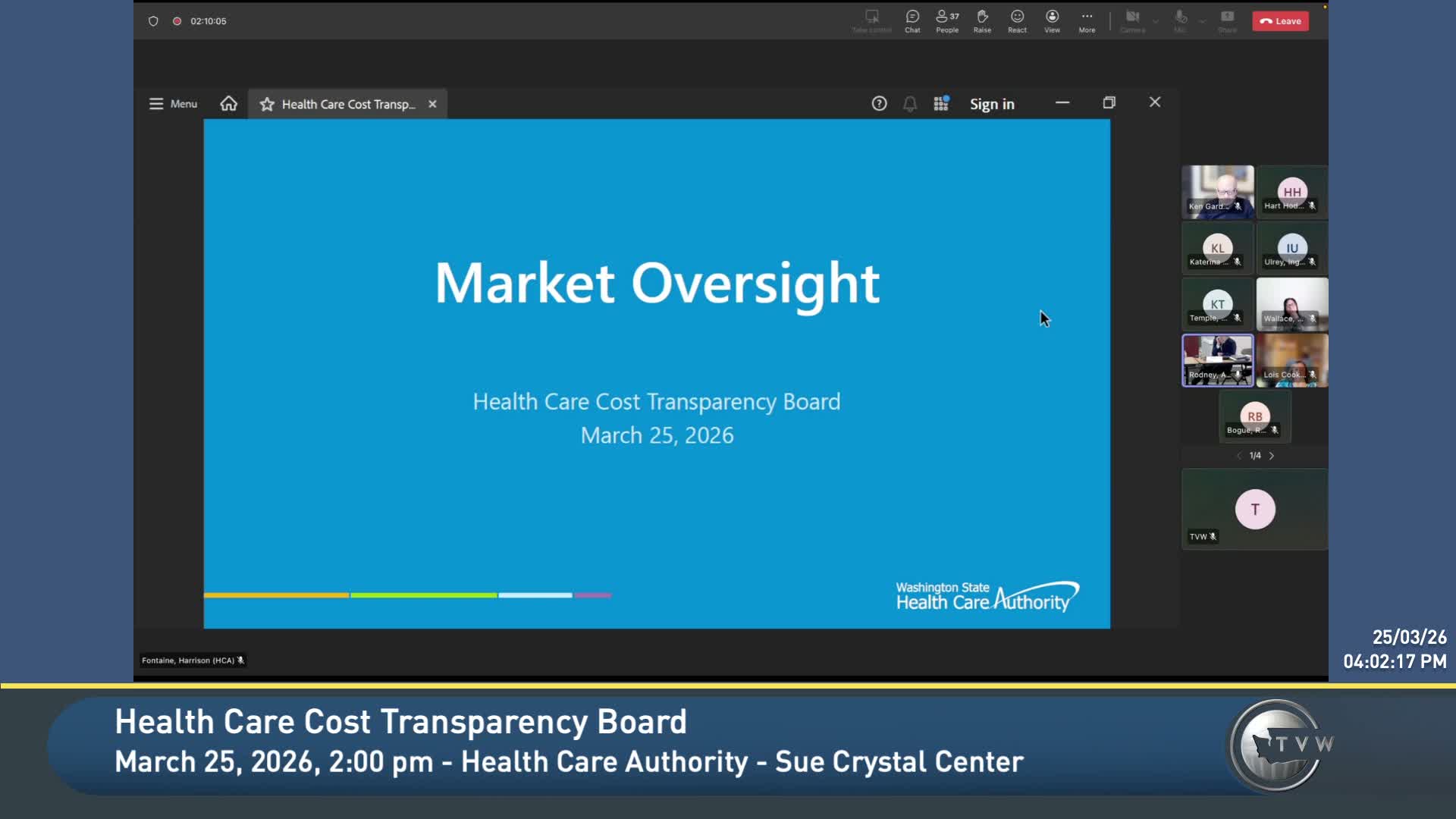
Erica, Cost Growth Program Manager at the Oregon Health Authority, told Washington's Cost Transparency Board about Oregon's Health Care Market Oversight (HCMO) program, created by the legislature in 2021 and active since March 2022.
She said Oregon requires notice for transactions that meet materiality thresholds and that the agency issues a determination to approve, approve with conditions, or disapprove. The review focuses on impacts to cost, access, quality and equity and includes a 30-day preliminary review (with public comment) and a potential 150-day comprehensive review. Erica said the agency has used conditions to require continued Medicaid participation, restrict clinic closures, preserve clinical decision-making and limit non-compete clauses; it also conducts 1-, 2- and 5-year follow-up reviews.
Oregon's program is fee-funded (initial fees were low and rulemaking to update fees is underway) and has imposed conditions on a subset of reviewed transactions while approving most without conditions. Erica said the program's chief strengths are increased transparency, public engagement and the ability to craft conditions to mitigate harms; challenges include staffing needs, delays in cost-data reporting, and limited centralized market registries.
Washington board members asked how the program enforces conditions and whether conditions could be treated as a cost of doing business. Erica said the agency can seek civil penalties or injunctive relief and has authority to modify orders and pursue legal remedies if entities fail to comply. She noted Oregon has seen rising activity in hospice/home health, private-equity deals, ambulatory-surgery centers and digital platforms.
Oregon's experience informed the Washington board's conversation about whether to expand state review of major health-care transactions and the design choices such a program would require.