Get Full Government Meeting Transcripts, Videos, & Alerts Forever!
Get email alerts on the Special Events Policy topic
No spam. Unsubscribe anytime.
Parks commission advances third‑party special events policy to city council with requested edits
Summary
The City of Corona Parks and Recreation Commission moved to advance a draft third‑party special events policy to the city council, asking staff and the city attorney to tighten language on timelines, residency rules and signage before council review.
The Parks and Recreation Commission on Tuesday voted to advance a draft third‑party special events policy to the City Council, asking staff and the city attorney to incorporate commissioners’ edits on timelines, residency thresholds and signage rules.
The policy, presented by staff, would centralize public inquiries for events, establish the special events team as a single point of contact, set minimum application timelines tied to event size, and give departments authority to add permit conditions such as traffic plans, security and public‑health approvals. “The purpose of this policy is to provide a fair, safe, and streamlined process for third‑party rentals of public spaces for special events,” the presenter said during the staff report.
Why it matters: commissioners said the changes aim to reduce repeated last‑minute large event requests and to protect neighborhood access to parks. Commissioners asked staff to clarify submission windows (a minimum of 90 days for major events), define which parks are suitable for large gatherings, and ensure enforcement language aligns with existing municipal code on signage and right‑of‑way restrictions.
What staff proposed: the draft divides applicants into priority groups (city and other government, resident nonprofits, resident for‑profit, nonresident groups), ties application lead times to expected attendance (major events, those over 300 people, require at least 90 days), and lists the parks appropriate for different event scales. Staff also proposed requiring a site plan, event logistics, insurance, waste management and a public‑safety plan; events that damage public property would be subject to progressive discipline, including ineligibility for future permits.
Commissioners’ concerns and requested edits: commissioners asked for clearer, consistent language about ‘prior to the event’ deadlines, for explicit inclusion of restrooms and parking in definitions of public‑space impacts, and for a photo documentation process during pre‑event walkthroughs to prevent disputes about post‑event damage. Commissioners also requested staff confirm whether deposits or flat fees will be used and to align the policy’s signage rules with the Corona Municipal Code.
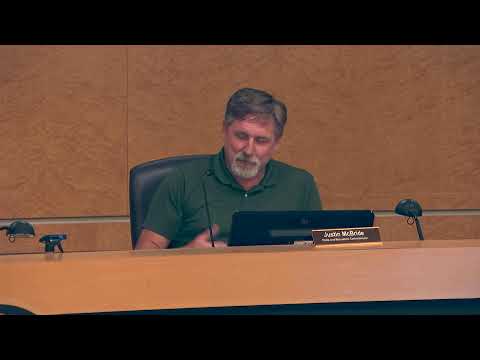
Next step: Vice Chair McBride moved to advance the draft with commissioners’ recommended edits and the city attorney’s input; Commissioner Munoz seconded. Staff told commissioners the item is scheduled for the first City Council meeting in April, and that staff will provide an item that notes the commission’s recommended changes.
The commission did not provide a recorded vote tally in the meeting transcript; staff said they will include the revisions and that council will consider the policy at its next meeting.