Lifetime Citizen Portal Access — AI Briefings, Alerts & Unlimited Follows
State board to set first drug price limits; county urged to host public forum
Loading...
Summary
Vinny DeMarco of the Maryland Health Care for All Coalition briefed Caroline County commissioners on the Prescription Drug Affordability Board’s work, including imminent upper payment limits for Jardiance and Farxiga and future consideration of Ozempic; he offered to help organize a local forum to gather county input.
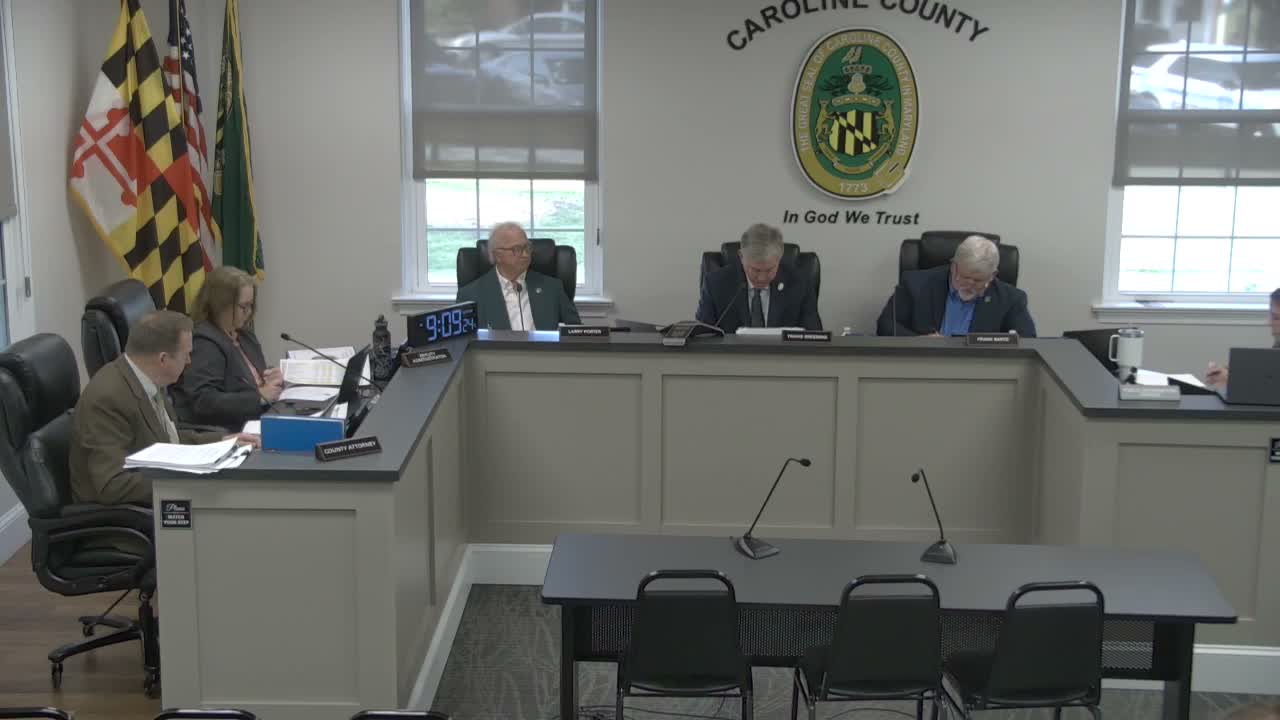
Vinny DeMarco, president of the Maryland Health Care for All Coalition, told the Caroline County board that Maryland’s Prescription Drug Affordability Board will set its first upper payment limits for two diabetes drugs — Jardiance and Farxiga — on April 13, 2026, and that those price limits take effect for local governments on Jan. 1, 2027. DeMarco said the board was created in 2019 to reduce the cost of high‑price prescription drugs for state and local governments and, later, for all residents.
"Drugs don't work if people can't afford them," DeMarco said, adding that roughly 40% of Marylanders struggle to afford needed prescriptions. He told commissioners the board’s initial limits are projected to save at least $340,000 a year for state and local governments based on those two drugs, and that future limits for drugs such as Ozempic could produce substantially larger savings.
DeMarco described the board’s process: it will set an "upper payment limit" tied to the federal maximum fair price used in Medicare negotiations and will phase in local participation. He said local jurisdictions can opt in initially, and the statute makes the program mandatory statewide beginning Jan. 1, 2028. He also offered to coordinate a public forum in Caroline County so residents can identify which high‑cost drugs are harming local budgets and access.
Commissioners asked whether manufacturers could withdraw drugs from the state market if price caps were imposed; DeMarco said the statute requires the board to track availability, and he judged that widespread market withdrawal was unlikely. He said some manufacturers have expanded operations in Maryland even after similar state actions elsewhere.
Why it matters: Local governments and taxpayers pay some portion of the cost of high‑price drugs through employee coverage and public programs; county officials said they welcome tools that could lower local government expenditures and asked staff to work with DeMarco on scheduling public outreach. The board’s action on April 13 is the next procedural step.