Get AI Briefings, Transcripts & Alerts on Local & National Government Meetings — Forever.
Panelists say Downtown Greenway will connect neighborhoods and spur downtown development in Greensboro
Loading...
Summary
City officials, developers and cultural leaders told a public panel the nearly completed Downtown Greenway will knit neighborhoods together, expand cultural tourism and attract private investment, while designers work through remaining engineering and NCDOT coordination for final segments.
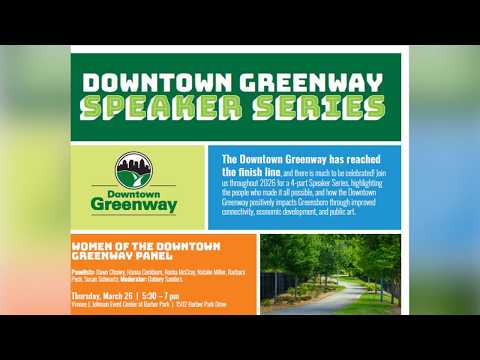
Panelists at a Greensboro City Downtown Greenway panel on April 8 described the nearly finished Greenway as a community connector that will support economic development, cultural tourism and everyday transportation as the city completes the remaining design work.
"We were so lucky in this community to have the City staff we have," said Susan Schwartz, executive director of the Seamaland Foundation, crediting long-term city partnerships and private fundraising that moved the project from design to reality. Schwartz recounted early milestones including discovery of a hidden underpass, Greensboro College allowing the Greenway across campus, and multiple rounds of private and foundation fundraising.
Developer Dawn Gee said the Greenway will change downtown commerce if zoning is updated to support neighborhood-serving businesses. "When that greenway is finished ... you will bring thousands of people to your business," Gee said, urging rezoning of land adjacent to the corridor so restaurants, cafes and small retail can open directly onto the Greenway.
Natalie Pass Miller, founder of the Magnolia House, framed the Greenway as a cultural corridor that helps tell neighborhood histories and attract visitors. "For North Carolina, the heritage and cultural tourism is a $36,700,000,000 industry," she said, arguing the Greenway gives local cultural sites better visibility and a path to draw tourism dollars.
Hannah, the city’s transportation director, described the remaining engineering work and funding approach for the unfinished northern section. "We are in design right now for that remaining section, and we are leveraging some earmarks that we were able to secure, from Congress," she said, adding that coordination with the North Carolina Department of Transportation—particularly scheduled structure replacements on Wendover Avenue—creates phasing and timing challenges the city must manage.
Nasha, assistant city manager, said the city treats the Greenway as infrastructure for connection and quality of life, not just a recreational path. "We view the Downtown Greenway not just as infrastructure ... but infrastructure in the sense of, it's a way to connect community," she said, describing expected benefits for health, neighborhood cohesion and maintenance standards for public spaces.
Panelists also emphasized design features and programming. Anna Marmar Packet, the Downtown Greenway’s public art consultant, said the project has commissioned "over 40 pieces of public art," using local, state and national calls to foster collaboration and development opportunities for Greensboro artists. Panelists suggested future activations including small-business pop-ups, sound guides tied to artworks, and distinct identities for different Greenway legs to encourage repeat visits.
On access and mobility, Hannah said the project incorporated leftover right-of-way to add ADA-accessible parking near Magnolia House and has partnered with private providers to offer bikes and electric scooters for visitors who do not bring their own. The panel also discussed longer-distance trail links: speakers noted connections to the Mountains To Sea Trail and the East Coast Greenway would expand bicycle tourism opportunities.
An audience member from the Wallerster community, James Virgen, said it was important the Greenway include and interpret neighborhood histories: "What was important to us is that our history was told," Virgen said.
Panelists said they expect the final segments to be completed in phases as funding and coordination with NCDOT allow; they also noted national interest in the project as other cities reach out for guidance. The panel closed with reflections on maintenance, programming and the Greenway’s role in day-to-day transportation as well as tourism.
The Greenway organizers said an interactive online map and brochure list parking and access features; city staff continue design work on the remaining sections and will phase construction around NCDOT bridge replacements and funding availability.