Neighbors oppose Palmer Gulch developer’s plan to exceed 40 homes; commission grants continuance
Loading...
Summary
A proposed variance that would allow more than 40 dwellings on a dead-end road in the Palmer Gulch area prompted hours of testimony. Developer Russell Johnson offered to create and maintain an emergency egress corridor; neighbors and the state’s attorney raised legal and safety concerns. The board continued the matter to May 19 to allow the applicant to pursue a recorded easement and other mitigations.
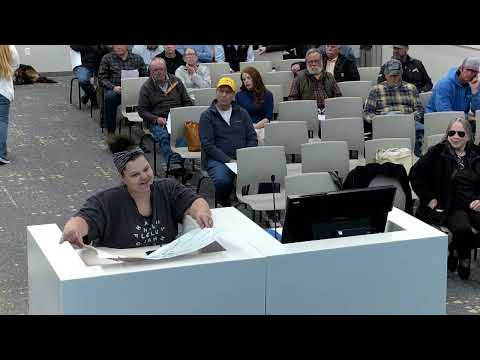
Russell Johnson, a Hill City-area developer, pressed the Pennington County Commission on April 7 for a variance that would allow him to exceed the county’s 40-dwelling limit on a dead-end road and eventually pursue a planned-unit development. Johnson said he would fund and construct a 20-foot, all-weather emergency corridor (a recorded 33-foot easement with a 20-foot driving surface) that would provide a second means of ingress and egress from Palmer Gulch Road to Hill City Keystone Road.
Neighbors and several public commenters objected, saying the proposed corridor would rely on a private easement that currently limits access to Snowbird Hideaway residents and guests. Neighbor Victor Alexander said the relief would not change day-to-day use of the dead-end road and warned the mitigation was insufficient because the easement language restricts use to specific grantees. Several residents, represented in part by an attorney, argued that day-to-day traffic and safety risks would increase substantially if the PUD were approved without clearer public access and road standards.
Tyler Sobzak of the Pennington County State’s Attorney’s Office told the commission that, on initial review, the recorded easement includes provisions that limit access to Snowbird Hideaway residents and specifies installation of a gate and signage; it also defines the easement’s activation in ways that may not cover every emergency scenario the developer described. Sobzak said those legal limitations mean any reliance on the easement as a county-wide emergency corridor needs explicit redrafting and a recorded change to the grant language.
Planning staff and commissioners also noted procedural issues: the planned-unit development (PUD) that would set ultimate density and infrastructure remains incomplete, and staff previously recommended denial administratively. Commissioners said they were unwilling to decide the variance without clearer mitigation and community protections. Several commissioners said they were open to compromise but wanted the applicant to secure a recorded easement and detailed maintenance and emergency access agreements before any vote.
Faced with multiple objections and unresolved easement language, the commission voted to continue the variance hearing to the May 19 meeting so Johnson can work with landowners and planning staff to record a usable emergency easement and supply clearer engineering and legal commitments. The board emphasized that the PUD, including any final unit counts, will be judged separately and would require additional hearings and approvals.
What’s next: The developer will attempt to secure a recorded emergency easement and return to the commission on May 19. If the easement language, maintenance responsibilities and emergency access provisions are not changed, the board signaled reluctance to approve the >40 dwellings variance.