Senate passes 'MAHA' health and nutrition bill after heated debate over SNAP rules and school-lunch costs
Loading...
Summary
The Senate passed House File 2676, the 'Make America Healthy Again' (MAHA) package, after debate about SNAP purchasing rules, removal of synthetic food dyes in school meals, screen-time limits and implementation costs; the final vote was 30–15.
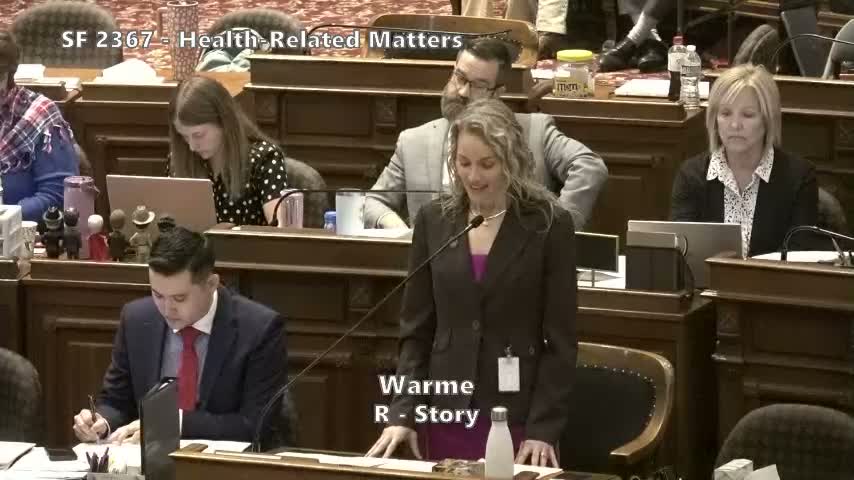
Senator Warmie (Senator from Story) opened debate on House File 2676, calling it the governor’s ‘‘MAHA’’ bill and saying it aims to improve nutrition and health outcomes across Iowa by broadening nutrition education, requiring continuing medical education in nutrition, updating medical-school curricula, expanding nutrition-focused SNAP pilots and summer EBT participation, restricting synthetic food dyes in K–12 school meals, expanding epinephrine options for school nurses, allowing over-the-counter ivermectin where pharmacies choose to offer it, and setting screen-time limits in K–5.
The bill drew sharp objections from Senator Detrone (Senator from Dallas), who said the SNAP restrictions are based on taxable status rather than nutritional content and will confuse recipients and retailers. ‘‘The nutritional content of that fruit has not changed, just the tax status,’’ he said, arguing the law could block useful items and create implementation problems. He also cited school-nutrition association estimates — presented on the floor — that dye removal could cost about $600,000 the first year and $455,000 annually thereafter, and he said the bill included no funding to help schools cover those expenses.
Supporters defended the bill’s public-health goals. Senator Warmie said the provisions include extended implementation timelines (including an 18-month phase-in for dye removal) and coordination with federal programs to limit cost impacts: "This is a starting, imperfect step, but we’ve come a long way toward reducing non-nutritious purchases on SNAP and improving child health," she said, arguing pediatric research links artificial colors to worsened attention and hyperactivity symptoms.
Senator Taylor echoed support for preventive nutrition measures and thanked Senator Warmie for assembling the multifaceted package. Senator Winkler acknowledged the health intent but warned of possible cost consequences and rising school-lunch debt that implementation could worsen if not managed, citing recent school-district meal-debt figures.
After floor debate and adoption of the committee amendment (Senate Amendment 5173) the Senate read the bill for final passage. The roll-call recorded 30 ayes and 15 nays; the bill passed the Senate and will be transmitted as required.
Next steps: the Senate recorded the passage and the bill will be messaged to the House as ordered on the floor.