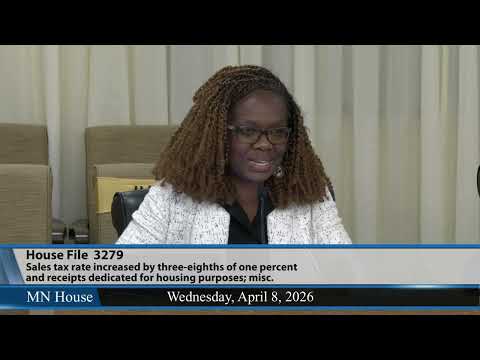
Proposal would ask Minnesota voters to approve a 3/8‑cent sales tax to fund housing
Loading...
Summary
House File 32‑79 would place a constitutional amendment on the ballot to raise sales tax by 3/8 of 1 percent statewide to create a 25‑year, estimated $400 million‑per‑year dedicated housing revenue stream. Supporters said it would fund vouchers, production, preservation and homeownership; opponents called it regressive.
Chair Howard introduced House File 32‑79, the “Our Future Starts at Home” constitutional amendment, and asked the committee to lay the bill over for further consideration. The proposal would ask voters to approve a statewide sales tax increase of three‑eighths of 1 percent to create a dedicated housing fund estimated to generate about $400 million a year for 25 years.
Howard said the amendment is designed to treat housing as a statewide infrastructure priority, funding a council to allocate revenue across four broad buckets: household and community stability, rental assistance (including Bring It Home Minnesota), rental and multifamily production, and homeownership opportunities. “This resource would generate an estimated $400,000,000 annually for 25 years,” Howard said.
Nalima Sitati Muneini, executive director of ACER and co‑chair of the campaign, told the committee the coalition represents more than 80 organizations and outlined projected impacts: preserving existing units and building new rental and starter homes over the life of the fund. “When we do fund the solutions, they're either temporary, short term, or we're not funding the right solutions at the required scale,” Muneini said.
Ben Helvick Anderson of Beacon Interfaith Housing Collaborative said predictable revenue could stabilize homelessness response systems that now rely on one‑time funding. He estimated the proposal could create thousands of supportive units and more housing vouchers over 25 years.
Public witness Dakota Morgan, a policy fellow with the Minnesota Coalition for the Homeless and a person with lived experience, emphasized preventing homelessness through sustained funding and the importance of including people with lived experience in decision making.
Several Republican members questioned the choice of a sales tax. Representative Johnson and Representative Nash called the sales tax regressive and urged pursuing regulatory reforms before adding more taxes. “You just admitted that this is a regressive tax,” Representative Nash said, arguing that layered taxes make Minnesota less competitive.
Howard and other supporters replied that housing costs already have regressive impacts and that both policy reform and dependable public investment are necessary to increase supply and lower housing costs over time. Howard framed the bill as a public poll to let voters decide. The committee did not vote on the bill; Chair Howard laid it over for future consideration.
The next step is additional committee consideration and follow‑up on questions members raised about distribution mechanics, impacts on construction costs and how the proposed council would be structured.