Cherokee Nation chief tells Oklahoma Legislature tribal investments and Medicaid expansion benefit state communities
Loading...
Summary
Principal Chief Chuck Hoskin Jr. addressed the House on Cherokee Nation Day, detailing tribal investments in education, health care and housing and arguing that Medicaid expansion delivers substantial reimbursement dollars and jobs to rural communities.
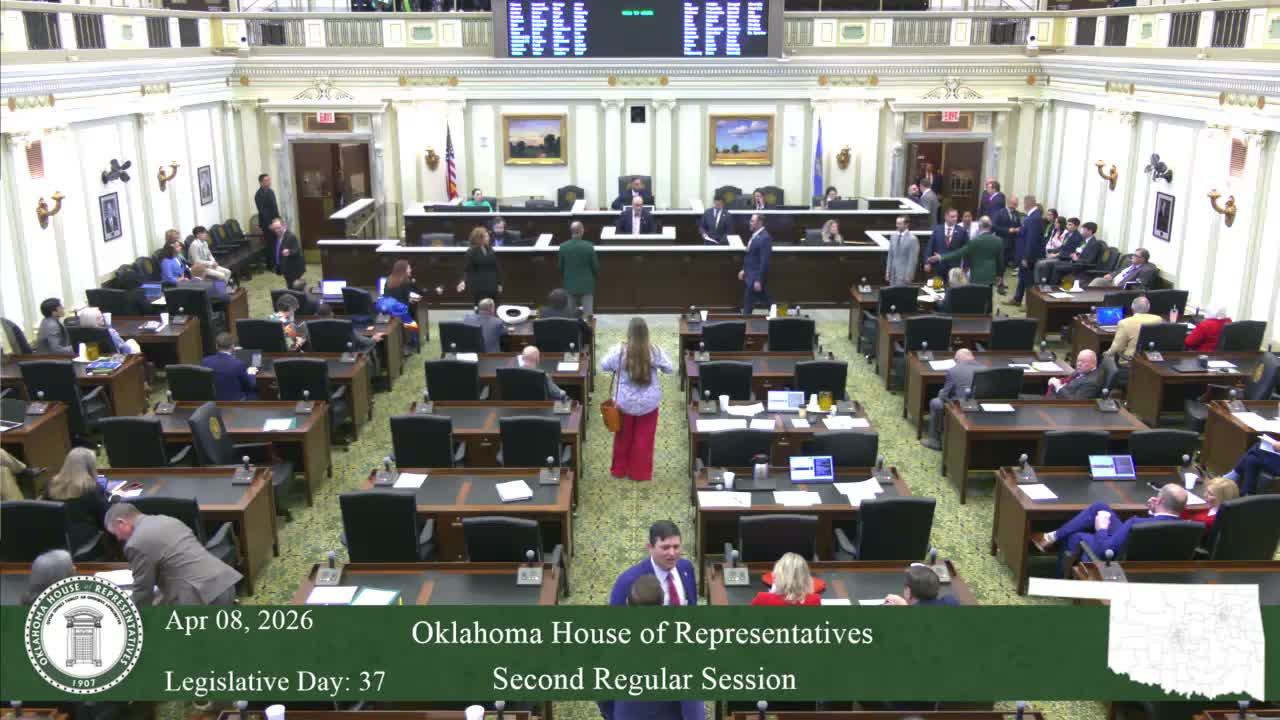
Principal Chief Chuck Hoskin Jr. addressed the Oklahoma House on Cherokee Nation Day, asking lawmakers to recognize the Cherokee Nation’s investments in education, health care and housing and urging continued cooperation between the tribe and the state.
Speaking to members in the House chamber, Hoskin described a series of recent Cherokee Nation commitments: $7,200,000 distributed to 107 school districts, $80,000,000 to replace Head Start facilities, a $25,000,000 scholarship program, and investments in child care and workforce training. He said the tribe is building housing and training workers locally rather than waiting on federal assistance.
Hoskin emphasized tribal health-system investment, citing a $450,000,000 hospital project in Tahlequah and an $85,000,000 outpatient center in Salina. “That $91,000,000 in reimbursements is one thing,” he said, referring to Medicaid expansion reimbursements to the Cherokee Nation health system; he added that expansion supports about 1,400 jobs and generates roughly $222,000,000 in economic impact, figures he presented to illustrate the program’s community effects.
The chief framed those investments as part of a broader strategy to strengthen rural communities and local workforces. He noted that many of the Cherokee Nation’s projects were financed without Oklahoma taxpayer dollars and argued that Medicaid expansion dollars flow back into local economies through health-system revenues and grants to communities.
Hoskin closed by calling for continued partnership between the Cherokee Nation and the state, saying the tribe will continue investing in education and health care and pledging ongoing cooperation on shared priorities.
The address was a ceremonial recognition of tribal-state ties and did not include legislative action on the floor; members responded with applause and acknowledgements. The House proceeded with its scheduled legislative business after the presentation.