Get Full Government Meeting Transcripts, Videos, & Alerts Forever!
Get email alerts on the Public Safety Transportation topic
No spam. Unsubscribe anytime.
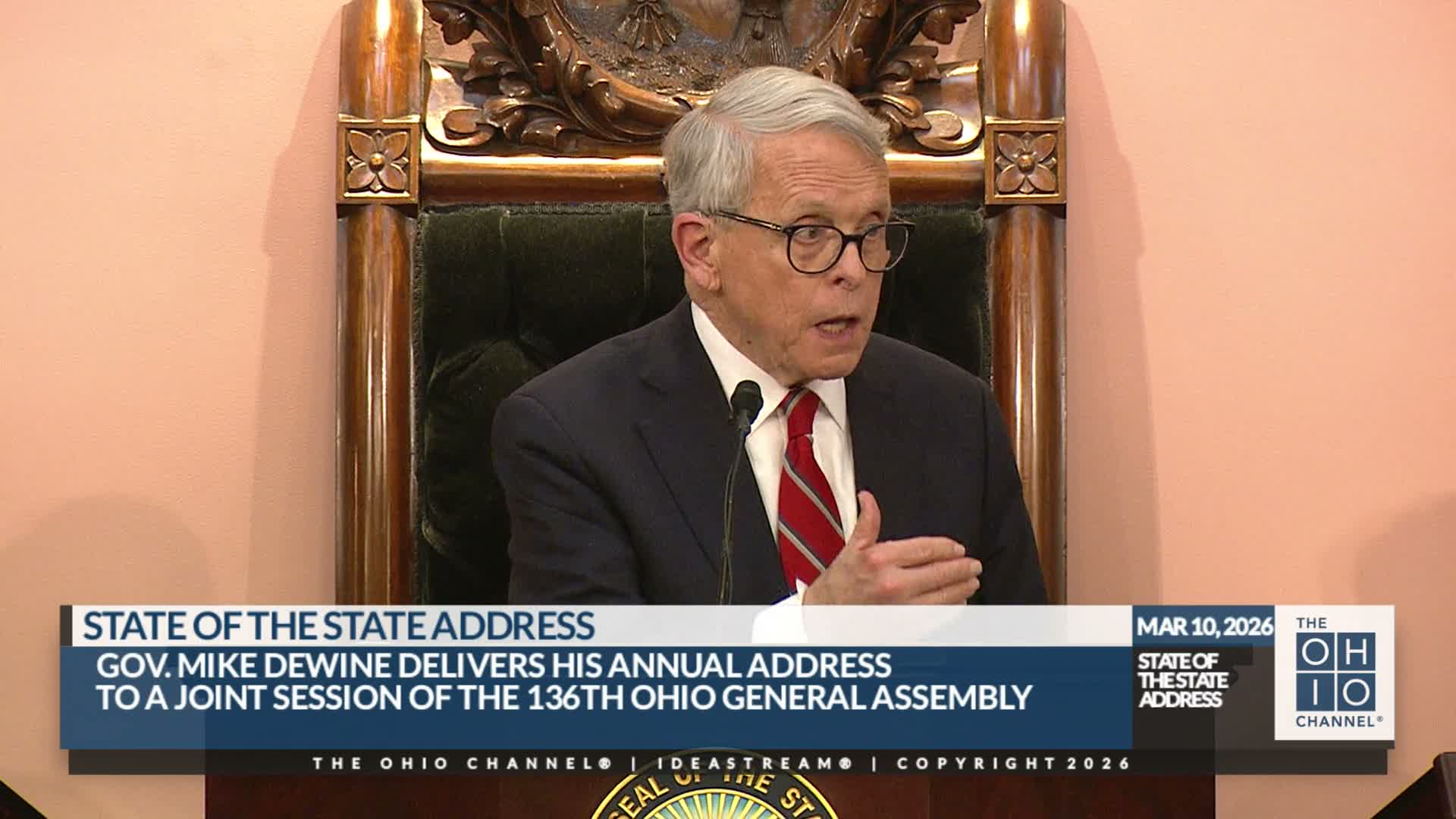
DeWine urges Ohio to adopt primary seat-belt law, cites safety gains and estimated lives saved
Summary
Gov. Mike DeWine urged lawmakers to adopt a primary seat-belt law, citing earlier distracted-driving enforcement results (18,000 fewer crashes; 280 fewer deaths) and a state analysis estimating a primary law could save about five lives per month.
Gov. Mike DeWine called on the Ohio legislature to adopt a primary seat-belt law, saying the measure would raise belt use and save lives.
DeWine cited results from a 2022 distracted-driving law, saying "if you compare the first two years of enforcement of this law to the two years before the enforcement began, Ohio has had 18,000 fewer crashes and 280 fewer traffic deaths." He argued those enforcement gains show laws can change behavior and save lives.
On seat belts specifically, DeWine said 88 percent of Ohioans wear seat belts and that the remaining 12 percent account for "more than 60 percent of those killed in car crashes." He referenced an analysis by the Ohio Traffic Safety Office that estimated a primary seat-belt law could "save five lives each and every month." "Passage of that bill would save 5 lives each and every month based on what we're seeing is happening in other states," he said.
Why it matters: A primary seat-belt law would allow an officer to stop a vehicle solely for an observed seat-belt violation; DeWine said it would align Ohio with 35 other states and could reduce fatalities and associated costs.
The governor urged lawmakers to act, but the address did not include statutory text or an immediate floor motion on the measure; any legal change would proceed through committee review and legislative votes.