Get Full Government Meeting Transcripts, Videos, & Alerts Forever!
Get email alerts on the Technology Child Protection topic
No spam. Unsubscribe anytime.
DeWine asks legislature to criminalize AI-made child sexual content and to hold tech firms accountable
Summary
Gov. Mike DeWine urged lawmakers to pass bills that would ban possession, creation and distribution of child sexual content generated by artificial intelligence, give prosecutors enforcement tools, and require default parental controls by device makers and platforms.
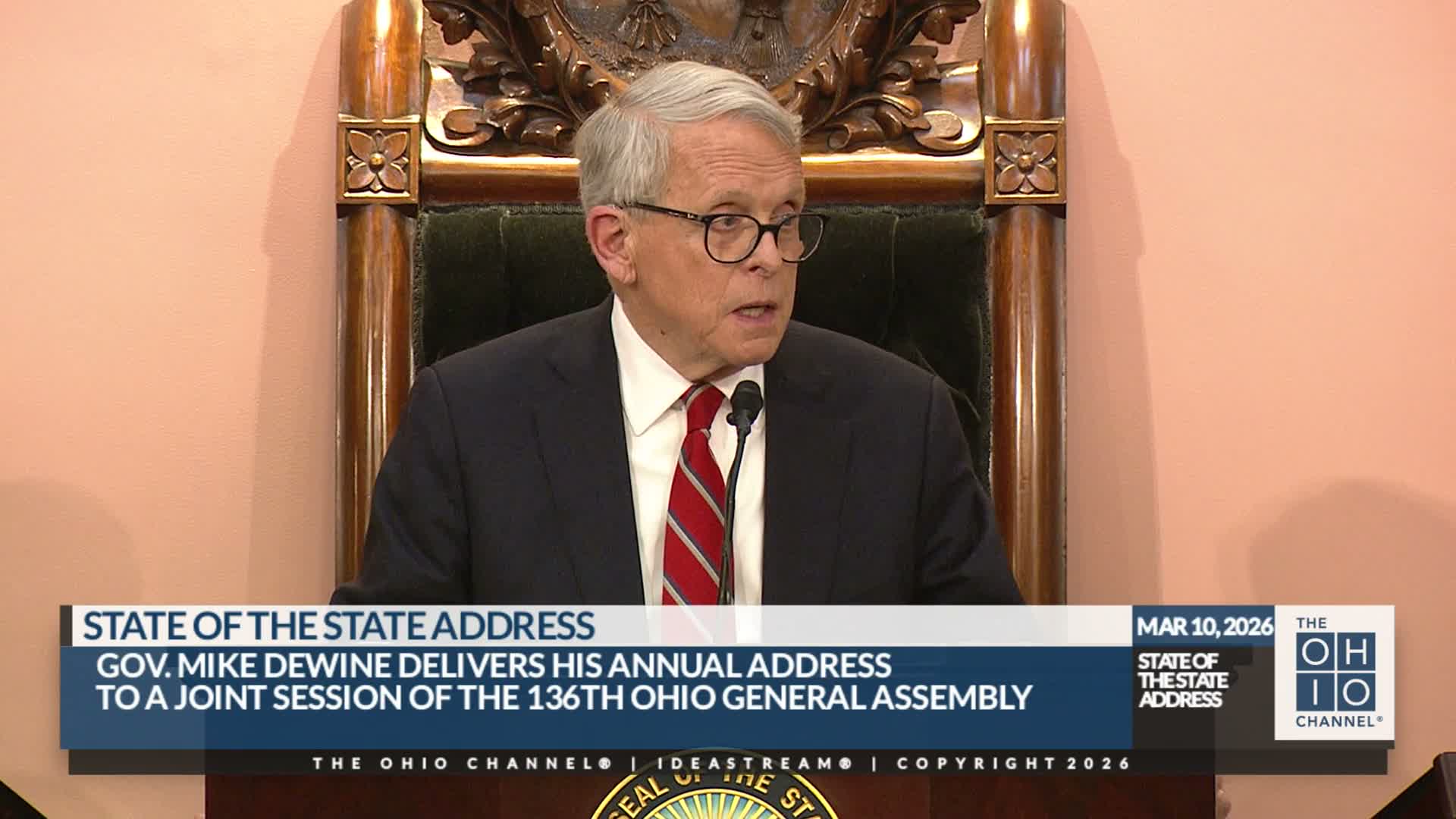
In remarks to a joint convention, Gov. Mike DeWine urged the Ohio General Assembly to pass a package of bills aimed at protecting children from harms linked to artificial intelligence and social media.
DeWine asked legislators to "pass legislation to make it illegal in the state of Ohio to possess, create, or distribute child *********** that is created by artificial intelligence," explicitly referencing a bill sponsored by Sen. Blessing and Sen. Johnson. He said the administration also wants laws "to hold tech companies accountable for allowing their artificial intelligence to encourage, assist, endorse, or instruct anyone ... to kill themselves, harm themselves, harm others, or kill others."
He further proposed requiring cell phone and technology companies to implement automatic parental-control features so parents can monitor and limit content and screen time.
Why it matters: DeWine tied the proposals to broader concerns about screen time, declining teen reading and documented exposure to violent or sexual content online. He said the measures would equip prosecutors and create civil and criminal consequences for platforms that facilitate harms.
The governor framed the package as three bills: (1) a ban on AI-created child sexual content; (2) accountability measures for tech companies for AI-driven harms; and (3) automatic parental-control requirements on devices. He noted that Ohio law needs "real consequences" and that the attorney general and county prosecutors should have clear legal tools to pursue violations.
The speech did not include statutory text or a timetable for committee referral; the referenced sponsors and bills will be the starting point for legislative drafting and committee review.