Get Full Government Meeting Transcripts, Videos, & Alerts Forever!
Get email alerts on the Pension Pickup topic
No spam. Unsubscribe anytime.
Representative Thomas proposes statewide ban on public pension pickups to increase taxpayer transparency
Summary
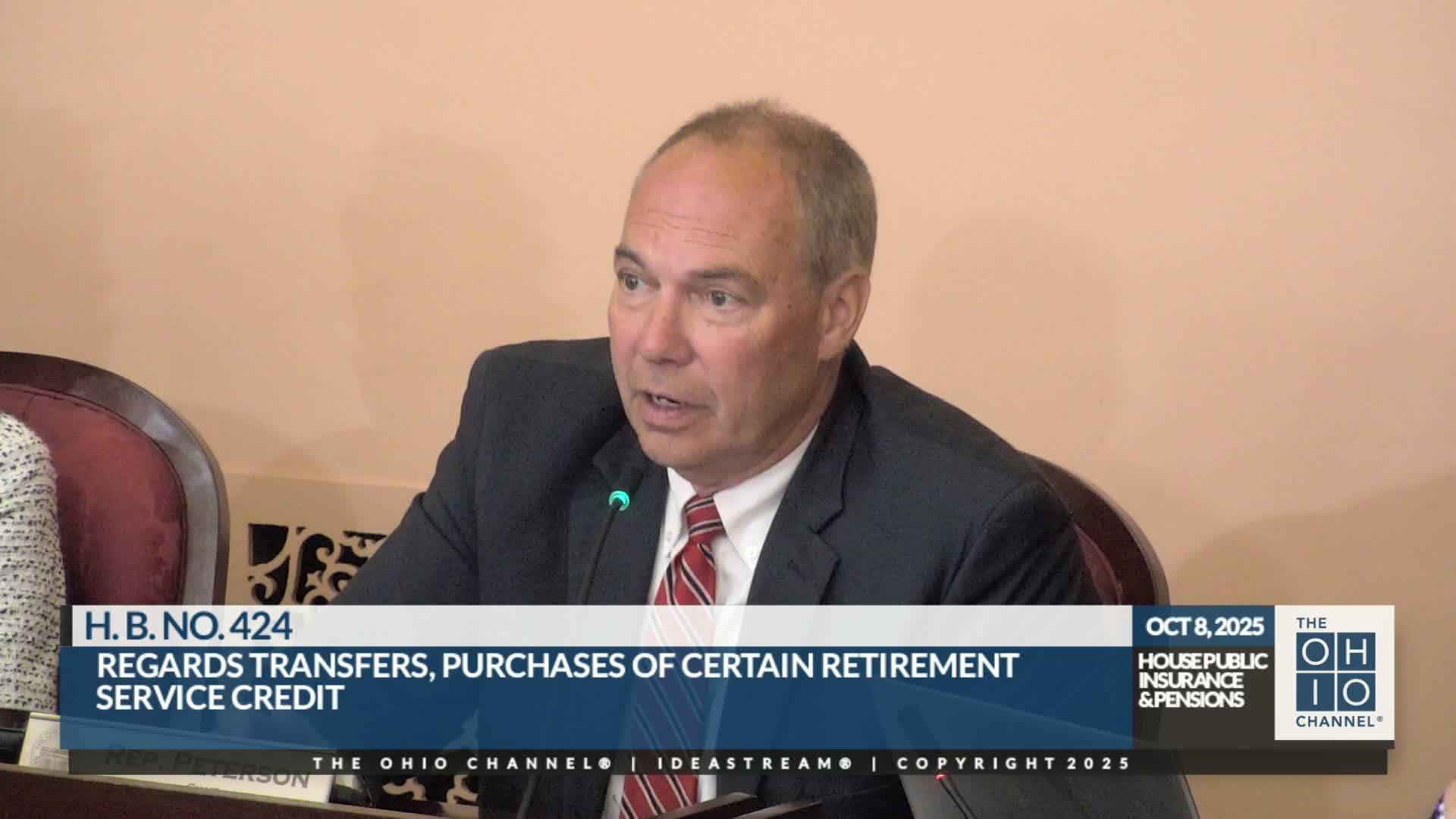
Representative Thomas told the committee HB 473 would prohibit public pension pickups for all public employees in new contracts after enactment, arguing pickups hide total compensation and create unequal treatment; members probed fiscal impacts and 'pickup on pickup' gross‑ups were explained as an added taxpayer cost.
Representative Thomas presented House Bill 473 as a transparency and equity measure that would ban public pension pickups for all Ohio public employees for any new contract signed after enactment. "I firmly believe public pension pick ups are bad," Thomas said, arguing that the practice boosts compensation without clear disclosure to taxpayers and can create unequal compensation and bidding‑war incentives among local employers.
Thomas noted that the Legislature earlier included a narrower ban on school administrator pickups in the budget this year, but that provision was vetoed by the governor; HB 473 would apply a similar restriction statewide and to all public employees, taking effect at the next contract negotiation rather than retroactively. She said the bill carves out a salary‑reduction option so employees could still receive tax‑efficient treatment where appropriate, and that a Legislative Service Commission fiscal analysis had not yet been completed.
Committee members asked whether banning pickups would force employers to raise hourly wages and thereby increase taxpayer costs. Thomas said some employers may increase salaries in response, but argued such changes would be transparent to taxpayers. Representative Romer and others explained "pickup on pickup," where an employer grosses up a pickup payment to cover the employee's tax bracket, increasing cost to taxpayers—Romer offered a numeric example to clarify the concept.
Members debated tradeoffs between competitiveness in hiring (for example, schools and local governments) and taxpayer transparency; Thomas said the bill is designed to apply moving forward only to new contracts and to give employers flexibility to determine compensation while making total costs visible. The committee concluded the first hearing with no vote; sponsors and members requested fiscal analysis and broader stakeholder testimony.