Get Full Government Meeting Transcripts, Videos, & Alerts Forever!
Get email alerts on the Unemployment Benefits topic
No spam. Unsubscribe anytime.
Representative Teska urges cutting maximum state unemployment weeks from 26 to 20
Summary
At a first hearing on HB 376, Representative Teska said the bill would reduce the maximum state unemployment benefit duration from 26 weeks to 20 weeks to protect the trust fund and encourage quicker reemployment; he cited a projected annual saving of $154,800,000 and warned about the fund's solvency in a recession.
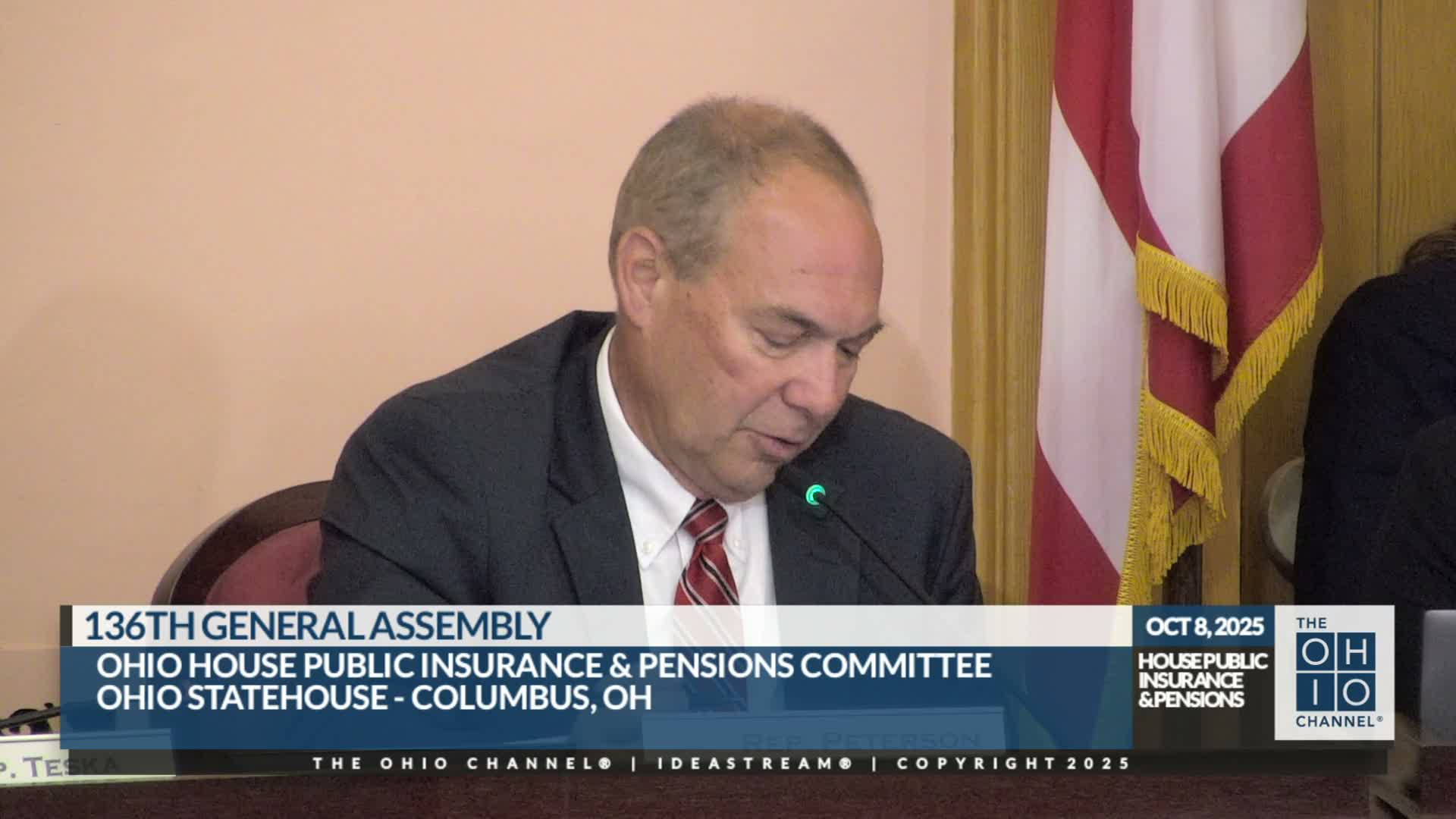
Representative Teska, the sponsor of House Bill 376, told the House Public Insurance and Pensions Committee that the bill would "simply put, reduce the maximum number of weeks that an individual may receive state unemployment benefits from 26 weeks to 20 weeks." He said the change is intended to protect the unemployment insurance trust fund and "encourage faster reemployment."
Teska told the committee that the Ohio Department of Job and Family Services projects the change "would save over 154,800,000.0 in charges to Ohio's trust fund annually," and warned the state has not met the federal target for trust‑fund solvency since 1974, saying the fund "would be insolvent within just 6 months if the state were to enter a recession."
The sponsor framed HB 376 as a modest reform that preserves a safety net while incentivizing earlier returns to work: "20 weeks is nearly 5 months of benefits, which allows time for a thorough job search while avoiding the unintended consequence of discouraging quicker reentry into the labor market." He said the bill "does not reduce eligibility or eliminate benefits for anyone" but shortens the maximum duration.
Committee members pressed the sponsor on alternatives. Chair Peterson asked whether the bill should include a sliding scale tied to unemployment levels; Teska answered he was "open to discussion" of that approach but had not included it in the current draft. No fiscal note or amendment was adopted during the hearing.
The committee concluded the first hearing on HB 376 with no formal action; the sponsor said he would take questions and work with members as the bill proceeds to further consideration.