Lifetime Citizen Portal Access — AI Briefings, Alerts & Unlimited Follows
Committee hears first-day testimony on bill to let PEOs file one unemployment report for multiple clients
Loading...
Summary
Senate Bill 263 would let professional employer organizations elect to file a single unemployment wage-and-contribution report under the PEO’s employer account rather than separate subaccounts for each client, proponents say this will reduce duplicative filings and administrative burden; ODJFS supports the change.
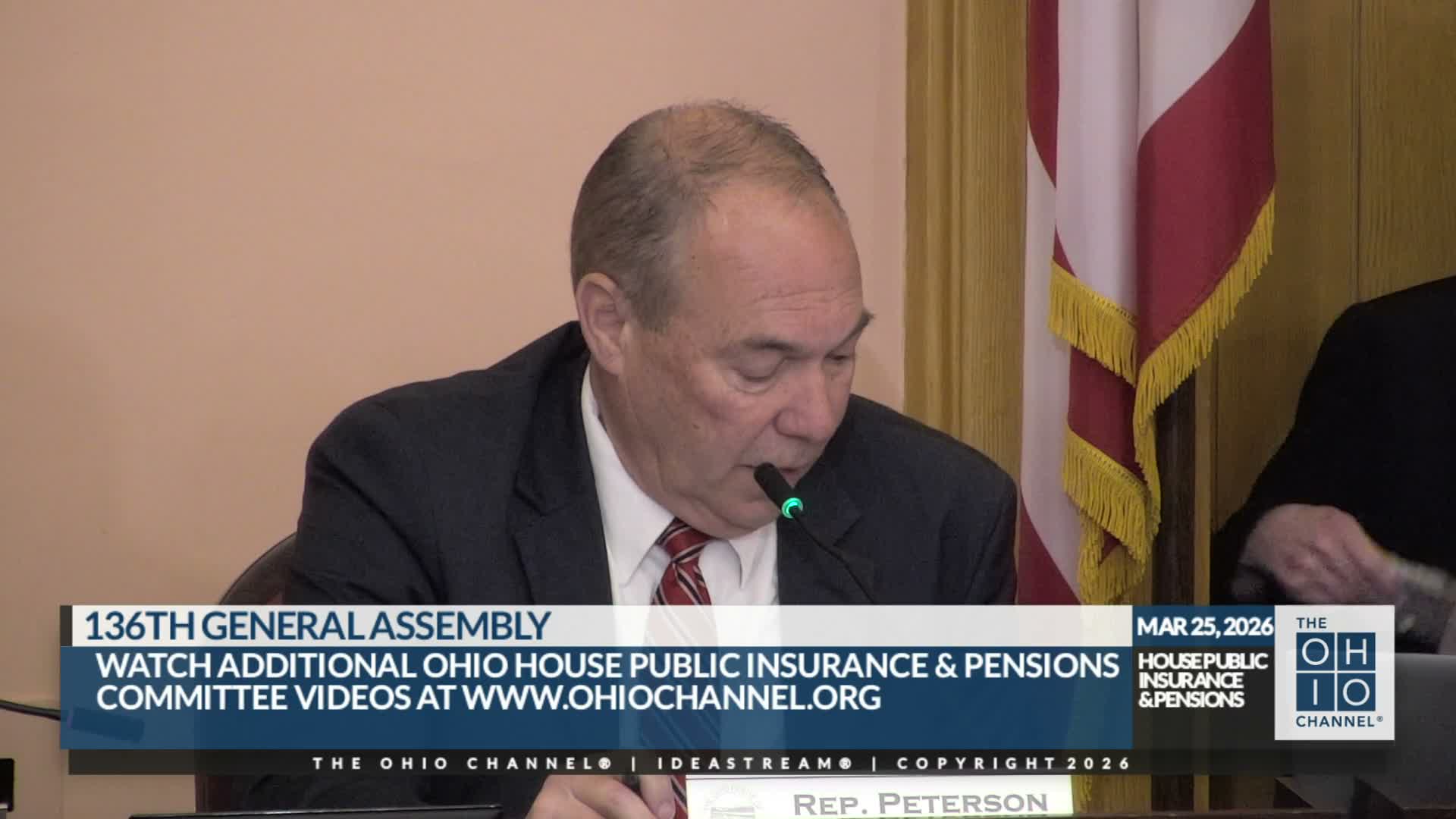
Senate Bill 263 received its first hearing before the House Public Insurance and Pensions Committee as sponsors and proponents outlined a technical change to Ohio’s unemployment reporting rules.
Senator Roegner told the committee SB 263 would allow professional employer organizations (PEOs) or professional employer organization reporting entities to elect to report shared employees of client employers under the PEO’s account and experience rate after giving notice to the Director. He said the change is intended to correct inconsistent Ohio Revised Code language (transcript references 41.41.24/41.41.13) and align statute with the intent of the common paymaster or concurrent employer programs.
Will Hart, vice president of payroll tax at Group Management Services (GMS), testified as a proponent and described how PEOs streamline human-resources functions for small and medium-sized employers. "PEO manages comprehensive human resource functions for small and medium sized businesses, streamlining the higher determination processes and policies," Hart said. He told the committee that GMS is certified under federal tax rules, maintains a $1,000,000 federal bond and undergoes quarterly audits. Hart said 21 states already permit PEOs to file under a single account and that SB 263 would reduce duplicative filings and cut government red tape.
Brad Barger, assistant director at the Ohio Department of Job and Family Services (ODJFS), testified that the department supports the bill. "This is a common-sense reform that would allow professional employer organizations to file unemployment wage contribution reports with ODJFS on behalf of their clients in one filing," Barger said, adding that for some firms the change could mean filing once rather than hundreds of times each quarter and that the department expects no cost to implement once enacted.
Committee members asked whether consolidating experience into a single PEO account could be used to reduce particular employers’ unemployment tax liability or obscure employer-level experience ratings. Hart explained that the paymaster program pools client experience into one combined rate and that an individual client’s former 1% or 8% experience would be merged into the pooled rate. Barger and Hart both said the consolidated account means the PEO receives the audit and reporting responsibility and would research taxable-wage errors when they arise.
Several members pressed for guardrails to prevent employers from "gaming" the system by moving into a pooled account to avoid penalty rates. Proponents acknowledged safeguards should be considered during rulemaking and implementation; ODJFS said it had worked with stakeholders when drafting the changes and that the department had undergone multiple audits and is open to further performance audits.
The committee took testimony and asked questions; no formal committee vote on the bill occurred during the hearing. The hearing record includes sponsor and proponent testimony and ODJFS support; members signaled interest in ensuring audit, transparency and rulemaking protections before any statutory change takes effect.