Get Full Government Meeting Transcripts, Videos, & Alerts Forever!
Get email alerts on the Pension topic
No spam. Unsubscribe anytime.
Committee hears broad support for bill to shore up Ohio Police & Fire pension fund
Summary
Witnesses including the OP&F director, police and fire union leaders, retirees and taxpayer advocates told the House Public Insurance and Pensions Committee that House Bill 280 would equalize employer contribution rates, impose a 30-year amortization cap and add actuarial guardrails to protect the fund's solvency and preserve retirement promises.
Ohio's House Public Insurance and Pensions Committee heard hours of proponent testimony on House Bill 280 on April 9, as police, firefighters, retirees and pension officials urged lawmakers to equalize employer contribution rates and impose automatic, actuarially based adjustments to keep the Ohio Police & Fire Pension Fund solvent.
Marybeth Foley, director of the Ohio Police and Fire Pension Fund, told the committee the fund has been structurally underfunded since its 1967 start and that active and retired members have already absorbed roughly $3.2 billion in benefit reductions. She said HB 280 is designed to "balance all the interests" by equalizing employer contribution rates for police and fire, preserving a 30-year amortization cap and giving the board limited authority to make small rate adjustments if solvency is at risk.
"If we do actuarily determined employer contributions, we should be sustained," Foley told members, adding that the Ohio Retirement Study Council performs independent actuarial reviews and that the fund already runs annual stress testing.
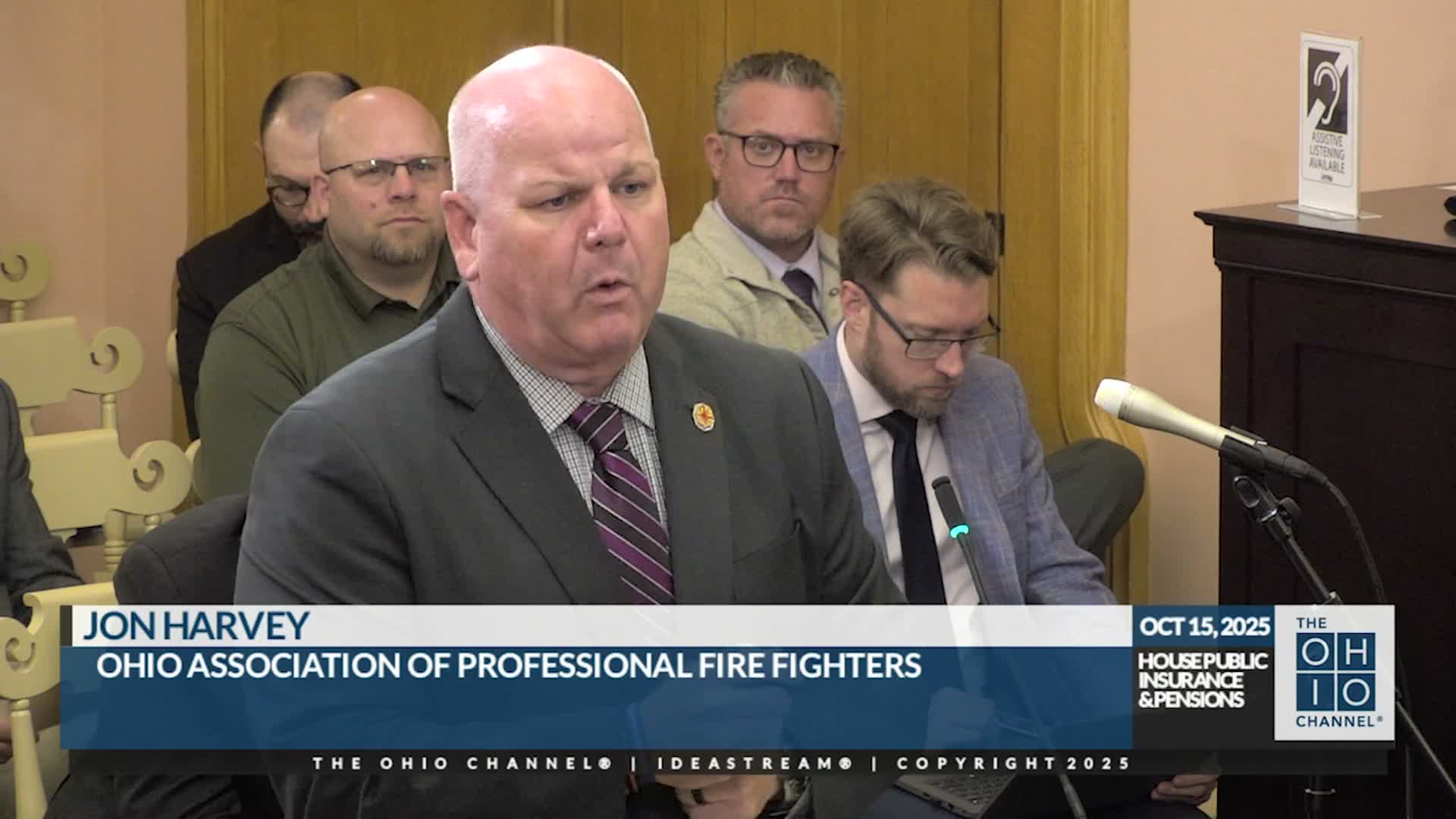
Union and association leaders framed the bill as necessary to stabilize recruitment and retention. Jay McDonald, a Marion police chief and president of the Fraternal Order of Police of Ohio, said HB 280 offers a "fair and rational solution" that will help keep officers in the profession and restore confidence in promised benefits. John Harvey, president of the Ohio Association of Professional Firefighters, described the proposal's core elements: phasing police employer rates from 19.5% up to 24% over five years to match firefighters, maintaining a 30-year cap on unfunded liabilities, and limiting the board to modest, actuarially justified annual rate changes (no more than 0.5% in a single year and 1.5% over three years).
Fiscal and local-government concerns were raised repeatedly. Several members asked for data and modeling showing how the phased employer increases would affect municipal budgets, bargaining agreements and local services. Foley and witnesses said the five-year phase-in and opportunities for collective-bargaining adjustments are intended to reduce short-term stress on local employers, but also urged lawmakers to view the change as an investment in public safety and a way to avoid larger costs later.
Taxpayer and policy groups supported the bill's move toward an ADEC (actuarially determined employer contribution) approach. Donovan O'Neil of Americans for Prosperity Ohio described the ADEC-style mechanism in HB 280 as a discipline tool that ties contributions to actuarial reality and reduces the risk of a future fiscal cliff.
Testimony also highlighted differences in contribution structure and benefits. Committee members and witnesses discussed employee and employer contribution rates for OPERS versus OP&F and asked whether offsets or other technical rules were needed when employees change systems.
No formal vote was taken. The committee heard written testimony from additional stakeholders and adjourned after hearing multiple proponent witnesses. Committee members repeatedly requested additional fiscal and actuarial analyses before advancing the measure.