Get Full Government Meeting Transcripts, Videos, & Alerts Forever!
Get email alerts on the Employee Health topic
No spam. Unsubscribe anytime.
Fire-department foundation offers free cardiac CT screenings to city employees
Summary
A fire-department-linked foundation is offering voluntary coronary calcium CT screenings to Madison Heights employees covered by city insurance (others may pay $200); organizers said the five-minute screening can reveal hidden risk and that a recent participant’s test led to urgent treatment.
A foundation formed after the on-duty death of a firefighter is offering voluntary coronary calcium CT screenings to Madison Heights employees, organizers told staff at an employee meeting. The program is free for employees covered by the city insurance for four weeks of sign-ups, will then open to covered dependents, and costs $200 for people who are not covered, organizers said.
Paul Bleddy, identified at the meeting as the city’s fire marshal and president of the foundation, said the program grew out of a colleague’s sudden cardiac death and is intended to spot calcium buildup in coronary arteries before a major event. “Our goal is to get every firefighter and every police officer in the state of Michigan one of these tests done for free,” Bleddy said, describing the foundation’s mission to expand access to screening for first responders.
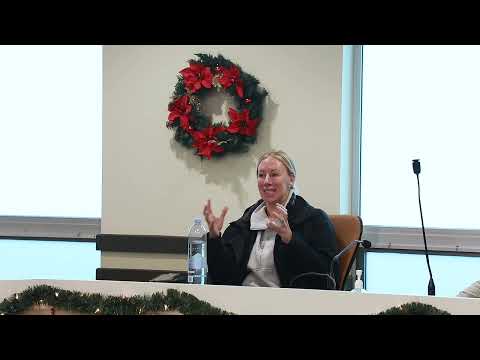
A family member and foundation representative, Christina Dalligan, described the screening as a preventive measure distinct from a physician-ordered diagnostic exam. “This is a screening purpose. You don't need a doctor's order for it,” she said, explaining that the CT scan itself takes only a few minutes and that a radiology specialist will review the images. Organizers said they partnered with an independent imaging provider and a cardiac radiology group led by Dr. Morales to read scans and, when needed, provide callbacks to employees with concerning results.
Captain Nicky Rowe recounted his personal experience with the screening and urged colleagues to participate. “I was in the 99 percentile for calcium score, but not in a good way,” Rowe said. He described follow-up testing that revealed a complete blockage in a coronary artery and led to urgent catheterization. Rowe credited the screening and the foundation’s assistance in connecting him to cardiology with giving him a second chance, and said the information allowed him to take steps both clinically and in daily life.
Organizers emphasized confidentiality and the program’s role as a connector, not a clinical provider. They said individual scan reports are sent only to the employee and, if requested, to the employee’s physician; the city receives only confirmation that an employee completed the screening so it can cover the cost for insured staff. If a screening result requires further diagnostic testing (for example, invasive angiography), organizers said that subsequent care becomes a medical diagnostic process and coverage for those follow-on procedures depends on the person’s insurance and a treating physician’s orders.
Practical details provided at the meeting included a sign-up via a Google Docs link, scheduling through the imaging center (organizers named its location as “12 and Telegraph”), weekday hours for appointments, and a promise that the foundation’s staff would help connect employees to cardiology when a follow-up is needed. Organizers urged employees to ask questions before deciding and reiterated that participation is voluntary.
The foundation and organizers said they will circulate scheduling information and the sign-up link to employees. The session ended with thanks from the presenters.